August 9, 2026
LATEST
New EU Gas Market Rules Take Effect With Consumer SafeguardsDeforestation Regulation Holds Its December Deadline Despite CutsDigital Omnibus Delays Europe’s High-Risk AI Deadline to 2027Europe’s Schools Confront a Widening Basic Skills GapRule of Law Report Finds Progress but Trust Still LagsIRIS2 Gains 66 Satellites as Brussels Signs the Rollout DealNature Restoration Plans Come Due as Member States Race a DeadlineECB Rates Hold at 2.25 Percent as Frankfurt Waits on the DataEU Budget Talks Turn to Cohesion as Ireland Takes OverWildfire Response Stretches Europe’s Emergency Fleet ThinCan Europe’s Quantum Plan Match Its Big Ambitions?Armenia Edges West as Moscow’s Grip Slips AwayEurope Inherits the World’s Aid Bill It Cannot Fully PayAir Passenger Rights Get Their First Overhaul in Two DecadesErasmus Opens a 5 Billion Euro Round for Skills and MobilityCeuta Crisis Pushes the EU Toward Faster Migrant ReturnsBulky Parcels Face a Packaging Crackdown From August 12Can Europe Build Its Drone Wall Before 2030 Arrives?Indonesia’s Trade Deal With Europe Nears Its Final SignatureEurope Leans on Beijing to Keep Climate Talks Alive Before AntalyaNew EU Gas Market Rules Take Effect With Consumer SafeguardsDeforestation Regulation Holds Its December Deadline Despite CutsDigital Omnibus Delays Europe’s High-Risk AI Deadline to 2027Europe’s Schools Confront a Widening Basic Skills GapRule of Law Report Finds Progress but Trust Still LagsIRIS2 Gains 66 Satellites as Brussels Signs the Rollout DealNature Restoration Plans Come Due as Member States Race a DeadlineECB Rates Hold at 2.25 Percent as Frankfurt Waits on the DataEU Budget Talks Turn to Cohesion as Ireland Takes OverWildfire Response Stretches Europe’s Emergency Fleet ThinCan Europe’s Quantum Plan Match Its Big Ambitions?Armenia Edges West as Moscow’s Grip Slips AwayEurope Inherits the World’s Aid Bill It Cannot Fully PayAir Passenger Rights Get Their First Overhaul in Two DecadesErasmus Opens a 5 Billion Euro Round for Skills and MobilityCeuta Crisis Pushes the EU Toward Faster Migrant ReturnsBulky Parcels Face a Packaging Crackdown From August 12Can Europe Build Its Drone Wall Before 2030 Arrives?Indonesia’s Trade Deal With Europe Nears Its Final SignatureEurope Leans on Beijing to Keep Climate Talks Alive Before Antalya
August 9, 2026
LATEST
New EU Gas Market Rules Take Effect With Consumer SafeguardsDeforestation Regulation Holds Its December Deadline Despite CutsDigital Omnibus Delays Europe’s High-Risk AI Deadline to 2027Europe’s Schools Confront a Widening Basic Skills GapRule of Law Report Finds Progress but Trust Still LagsIRIS2 Gains 66 Satellites as Brussels Signs the Rollout DealNature Restoration Plans Come Due as Member States Race a DeadlineECB Rates Hold at 2.25 Percent as Frankfurt Waits on the DataEU Budget Talks Turn to Cohesion as Ireland Takes OverWildfire Response Stretches Europe’s Emergency Fleet ThinCan Europe’s Quantum Plan Match Its Big Ambitions?Armenia Edges West as Moscow’s Grip Slips AwayEurope Inherits the World’s Aid Bill It Cannot Fully PayAir Passenger Rights Get Their First Overhaul in Two DecadesErasmus Opens a 5 Billion Euro Round for Skills and MobilityCeuta Crisis Pushes the EU Toward Faster Migrant ReturnsBulky Parcels Face a Packaging Crackdown From August 12Can Europe Build Its Drone Wall Before 2030 Arrives?Indonesia’s Trade Deal With Europe Nears Its Final SignatureEurope Leans on Beijing to Keep Climate Talks Alive Before AntalyaNew EU Gas Market Rules Take Effect With Consumer SafeguardsDeforestation Regulation Holds Its December Deadline Despite CutsDigital Omnibus Delays Europe’s High-Risk AI Deadline to 2027Europe’s Schools Confront a Widening Basic Skills GapRule of Law Report Finds Progress but Trust Still LagsIRIS2 Gains 66 Satellites as Brussels Signs the Rollout DealNature Restoration Plans Come Due as Member States Race a DeadlineECB Rates Hold at 2.25 Percent as Frankfurt Waits on the DataEU Budget Talks Turn to Cohesion as Ireland Takes OverWildfire Response Stretches Europe’s Emergency Fleet ThinCan Europe’s Quantum Plan Match Its Big Ambitions?Armenia Edges West as Moscow’s Grip Slips AwayEurope Inherits the World’s Aid Bill It Cannot Fully PayAir Passenger Rights Get Their First Overhaul in Two DecadesErasmus Opens a 5 Billion Euro Round for Skills and MobilityCeuta Crisis Pushes the EU Toward Faster Migrant ReturnsBulky Parcels Face a Packaging Crackdown From August 12Can Europe Build Its Drone Wall Before 2030 Arrives?Indonesia’s Trade Deal With Europe Nears Its Final SignatureEurope Leans on Beijing to Keep Climate Talks Alive Before Antalya

Cyprus Snub at COP31 Forces Brussels Into a Standoff With Ankara

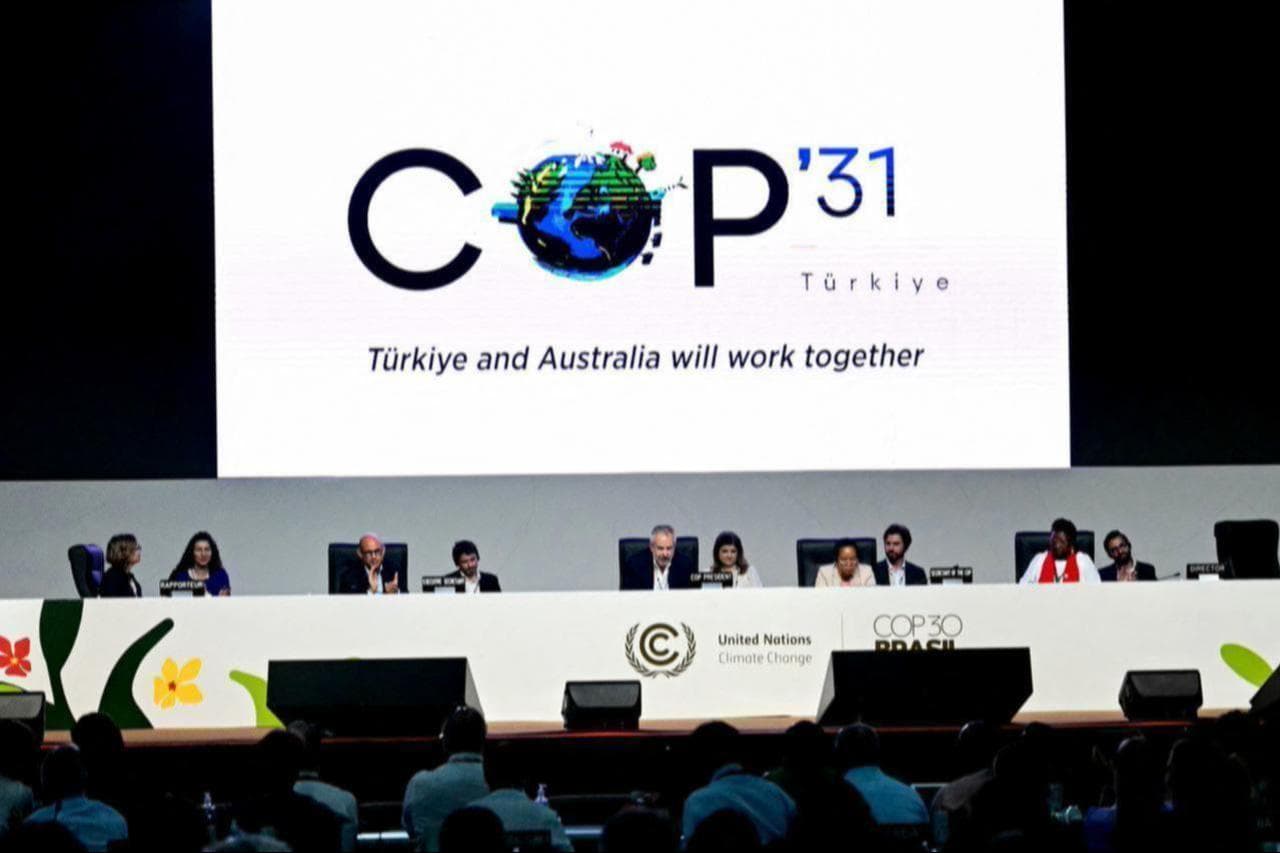
Nicosia: When Cyprus told fellow EU climate ministers that it had been left off the invitation list for two COP31 preparatory meetings in New York and Tokyo, the complaint read less like a scheduling oversight than a familiar political wound reopening. Turkey, which is hosting this year’s United Nations climate summit, confirmed that it had kept the Greek Cypriot government out of events it organised, offering no public justification. The omission has handed Brussels its sharpest friction with Ankara in months and revived a question the bloc rarely answers cleanly: how much leverage does it actually hold over a stalled candidate country that no longer behaves like one?

The roots of the quarrel are old. Turkey does not recognise the internationally recognised administration that governs the island’s south, dealing instead only with the Turkish Cypriot authority in the north that no other state acknowledges. That fifty-year division has long bled into unrelated files, from energy exploration in the eastern Mediterranean to Turkey’s frozen accession talks. What is new is the venue. By carrying the dispute into the machinery of a global climate conference, Ankara has tested whether a host government can quietly police who sits in which room, even when the guest is a full EU member state.

The European response was unusually quick and unusually unified. Climate Commissioner Wopke Hoekstra said all twenty-seven members stand together and insisted that every one of them must receive equal treatment. The bloc relayed its concern directly to both the United Nations and Turkey’s mission in Brussels, calling the exclusion unacceptable. That solidarity is easier to perform on a procedural slight than on the substance of climate policy, where member states still diverge on targets and money, and EU officials know it. Defending Nicosia costs little and signals much.

Yet the threat carries limits. Turkey cannot bar Cyprus from the formal UN negotiations, which run under their own rules. The exposure lies in the host’s discretionary space: side events, ministerial receptions and, most sensitively, the leaders’ segment where heads of state gather. Cyprus fears being shut out there too. Some European voices floated boycotting parts of the summit in response, while Ireland, about to assume the rotating presidency, urged solidarity paired with quiet engagement rather than escalation. The split is telling. A boycott would protect a principle while damaging the very climate diplomacy the EU claims to lead.

That is the real cost of the affair. COP31 is meant to convene close to two hundred countries around emissions, finance and adaptation, not around the cartography of a divided island. The longer the standoff runs, the more it drains political oxygen from talks that can ill afford the distraction, and the more it advertises that a recognition dispute can still hijack a multilateral process. For Brussels, the episode is a reminder that its enlargement leverage over Turkey has thinned to the point of symbolism, leaving warnings and statements where conditionality once sat.

What happens next will be measured in invitations. If Cyprus is granted equal access to the summit’s official events, the row deflates and both sides save face before November. If the exclusions persist into the leaders’ segment, expect sharper language, possible partial walkouts and a fresh chill over a relationship that was already running on management rather than ambition. Either way, the EU has learned again that unity is cheap when the principle is small, and that the harder test of cohesion still waits inside the negotiating hall.