August 10, 2026
LATEST
Europe’s Air Quality Improves but WHO Limits LoomTwelve New EU Medicines Win a Green Light from EMAFIFA Agent Rules Must Answer to Europe’s CourtsTachograph Rules Now Reach Vans Crossing Europe’s BordersNature Restoration Plans Come Due as a Hard Deadline NearsBrussels Opens a State Aid Probe Into Spain’s Renewables PayoutBrussels Extends Its Tariff Suspension on US Goods IndefinitelyFarmers Win Stronger Contract Rights Across the EU Supply ChainEurope Finally Locks In Its 348-Satellite Answer to StarlinkPlatform Work Rules Face a National Scramble Before DecemberDuty-Free Parcels Reach the End of the Line for EU ShoppersAfter Nine Years, Europe and Australia Seal a Trade PactBeijing Answers Europe’s Russia Sanctions in KindOne Year On, the EU-Japan Alliance Faces Its First TestEurope’s Chip Ambitions Still Run Through Taiwan’s FabsWhy South Korea Bet Its Research Future on Europe’s ProgrammeEurope and Japan Deepen Their Economic Alliance as Rivals CircleFive Joint Defence Projects Launch Europe’s Military ShieldElectrification Plan Aims to Make Europe First Electro ContinentHorizon Europe Budget Fight Heats Up as Ministers Push BackEurope’s Air Quality Improves but WHO Limits LoomTwelve New EU Medicines Win a Green Light from EMAFIFA Agent Rules Must Answer to Europe’s CourtsTachograph Rules Now Reach Vans Crossing Europe’s BordersNature Restoration Plans Come Due as a Hard Deadline NearsBrussels Opens a State Aid Probe Into Spain’s Renewables PayoutBrussels Extends Its Tariff Suspension on US Goods IndefinitelyFarmers Win Stronger Contract Rights Across the EU Supply ChainEurope Finally Locks In Its 348-Satellite Answer to StarlinkPlatform Work Rules Face a National Scramble Before DecemberDuty-Free Parcels Reach the End of the Line for EU ShoppersAfter Nine Years, Europe and Australia Seal a Trade PactBeijing Answers Europe’s Russia Sanctions in KindOne Year On, the EU-Japan Alliance Faces Its First TestEurope’s Chip Ambitions Still Run Through Taiwan’s FabsWhy South Korea Bet Its Research Future on Europe’s ProgrammeEurope and Japan Deepen Their Economic Alliance as Rivals CircleFive Joint Defence Projects Launch Europe’s Military ShieldElectrification Plan Aims to Make Europe First Electro ContinentHorizon Europe Budget Fight Heats Up as Ministers Push Back
August 10, 2026
LATEST
Europe’s Air Quality Improves but WHO Limits LoomTwelve New EU Medicines Win a Green Light from EMAFIFA Agent Rules Must Answer to Europe’s CourtsTachograph Rules Now Reach Vans Crossing Europe’s BordersNature Restoration Plans Come Due as a Hard Deadline NearsBrussels Opens a State Aid Probe Into Spain’s Renewables PayoutBrussels Extends Its Tariff Suspension on US Goods IndefinitelyFarmers Win Stronger Contract Rights Across the EU Supply ChainEurope Finally Locks In Its 348-Satellite Answer to StarlinkPlatform Work Rules Face a National Scramble Before DecemberDuty-Free Parcels Reach the End of the Line for EU ShoppersAfter Nine Years, Europe and Australia Seal a Trade PactBeijing Answers Europe’s Russia Sanctions in KindOne Year On, the EU-Japan Alliance Faces Its First TestEurope’s Chip Ambitions Still Run Through Taiwan’s FabsWhy South Korea Bet Its Research Future on Europe’s ProgrammeEurope and Japan Deepen Their Economic Alliance as Rivals CircleFive Joint Defence Projects Launch Europe’s Military ShieldElectrification Plan Aims to Make Europe First Electro ContinentHorizon Europe Budget Fight Heats Up as Ministers Push BackEurope’s Air Quality Improves but WHO Limits LoomTwelve New EU Medicines Win a Green Light from EMAFIFA Agent Rules Must Answer to Europe’s CourtsTachograph Rules Now Reach Vans Crossing Europe’s BordersNature Restoration Plans Come Due as a Hard Deadline NearsBrussels Opens a State Aid Probe Into Spain’s Renewables PayoutBrussels Extends Its Tariff Suspension on US Goods IndefinitelyFarmers Win Stronger Contract Rights Across the EU Supply ChainEurope Finally Locks In Its 348-Satellite Answer to StarlinkPlatform Work Rules Face a National Scramble Before DecemberDuty-Free Parcels Reach the End of the Line for EU ShoppersAfter Nine Years, Europe and Australia Seal a Trade PactBeijing Answers Europe’s Russia Sanctions in KindOne Year On, the EU-Japan Alliance Faces Its First TestEurope’s Chip Ambitions Still Run Through Taiwan’s FabsWhy South Korea Bet Its Research Future on Europe’s ProgrammeEurope and Japan Deepen Their Economic Alliance as Rivals CircleFive Joint Defence Projects Launch Europe’s Military ShieldElectrification Plan Aims to Make Europe First Electro ContinentHorizon Europe Budget Fight Heats Up as Ministers Push Back

Doha’s Gas Warning Puts Europe’s Green Rules on the Clock

Doha: The gas that keeps much of Europe warm now travels with a political warning attached. Qatar, which supplies a large share of the liquefied natural gas the European Union bought to replace Russian pipeline flows, has spent the past months telling Brussels in increasingly blunt terms that two pieces of European legislation could push it to sell its cargoes elsewhere. The dispute is, on its surface, about paperwork and emissions thresholds. Underneath it is a test of whether Europe can hold its climate ambitions and its energy security in the same hand.

The two laws at issue are the Corporate Sustainability Due Diligence Directive and the Methane Emissions Reduction Regulation. The first obliges large companies to police human rights and environmental harms along their supply chains, with financial penalties for failure. The second, phasing in from 2027, will require importers to verify the methane intensity of the gas they bring into the bloc, and from 2030 may bar cargoes that exceed a threshold the Commission has yet to finalise. To European legislators these are the logical extension of the Green Deal to the goods Europe consumes. To Doha they look like an attempt to impose European law on Qatari soil.

Qatar’s energy minister has not been subtle. Saad al-Kaabi has said publicly that he would rather leave the gas in the ground than accept a penalty of five percent of a company’s global turnover, and has warned that his country will seriously consider alternative markets if the rules proceed unchanged. The United States, the EU’s other major LNG supplier, has lined up behind the same complaint, arguing that tracking methane across long and complex supply chains is technically impractical. When the two largest sources of Europe’s seaborne gas raise the same objection, the threat is harder to wave away as bluster.

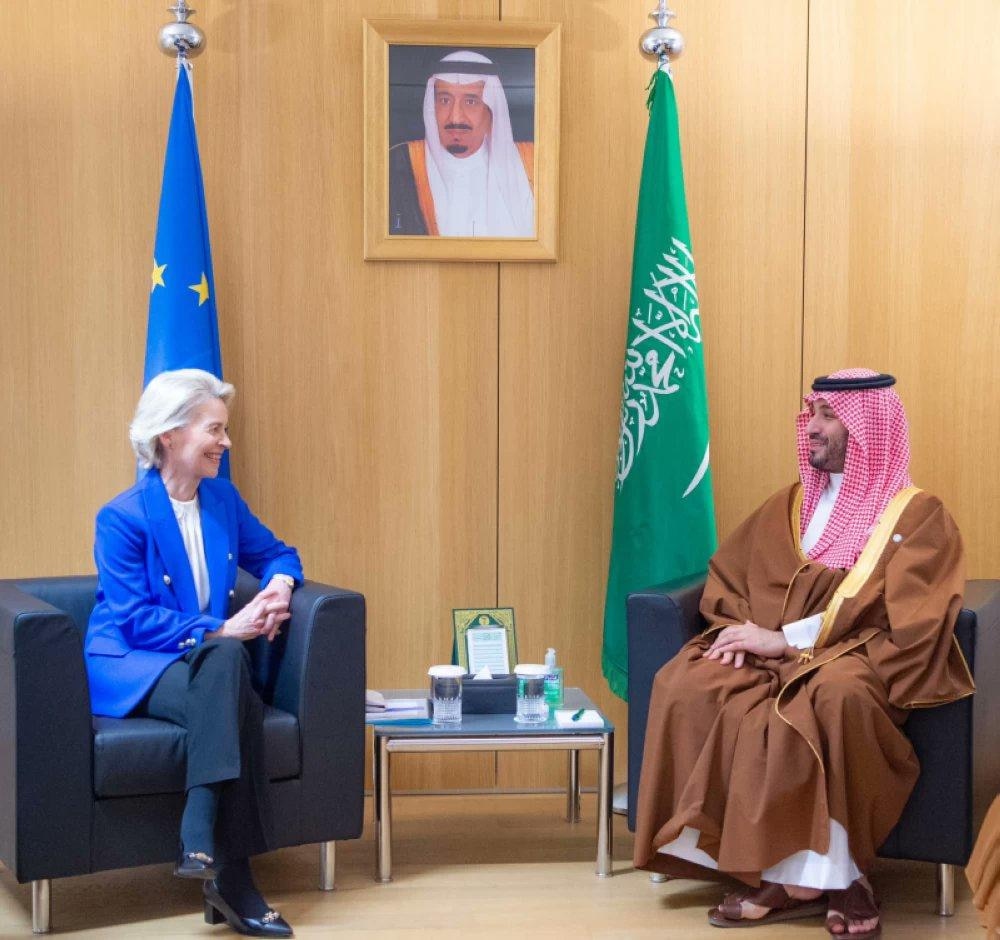
The awkwardness for Brussels is that it has spent three years courting precisely these suppliers. Qatar is named in the bloc’s own diversification plans as a partner for replacing Russian gas, and in December the two sides launched talks on a strategic partnership agreement. A meeting in March confirmed that energy cooperation continues. Yet the same Brussels that wants Qatari molecules also wants Qatari compliance with rules Doha regards as extraterritorial, and the contradiction has not been resolved so much as postponed.

There are signs the EU is searching for room to manoeuvre. Officials have signalled a new pragmatism on the timing and reach of the sustainability rules, and the broader simplification drive in Brussels offers cover for softening the hardest edges without abandoning the principle. Whether that is enough to satisfy a supplier holding multi-decade contracts and considerable leverage is another matter. The contracts that anchor Qatari supply to Europe run for as long as twenty-seven years, and decisions taken now will shape the continent’s gas security well into the 2040s.

The deeper question is one Europe has avoided answering directly. It built its post-Russia energy strategy on imported gas while legislating as though that gas would soon be gone. For a few years both could be true at once. The Qatari warning is a reminder that the moment of choosing between them is closer than the timeline of the Green Deal assumes, and that the partners Europe needs are no longer willing to wait quietly while it decides.