Brussels: For most of the past two decades, the European Union treated the Gulf monarchies as a reliable source of energy and little else, a region to be courted at trade fairs and otherwise managed at arm’s length. That posture is now obsolete. When EU and Gulf Cooperation Council leaders convene in Riyadh this autumn for only their second-ever summit, the asymmetry that once defined the relationship will have quietly inverted, and Brussels knows it.
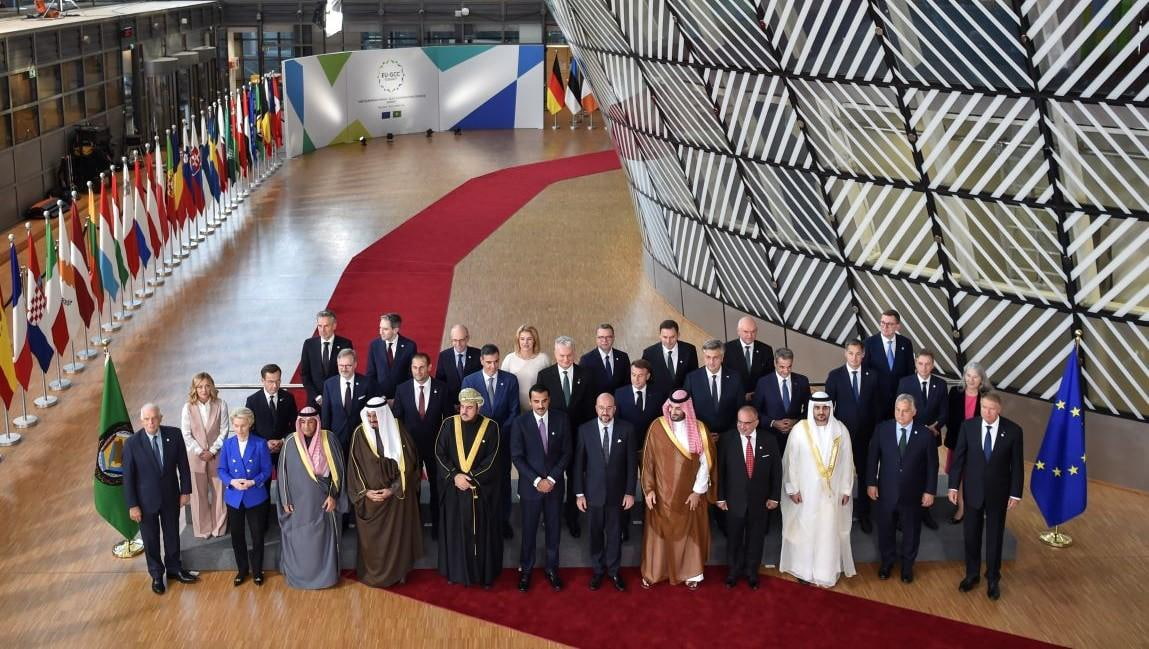
The first summit, held in Brussels a year and a half ago, was a ceremonial milestone more than a substantive one. The two blocs agreed to meet every two years and issued the customary language about shared interests. What has changed since is the strategic weather. A war involving Iran has rattled the Gulf’s sense of security, pushing Riyadh, Abu Dhabi and their neighbours to hedge more aggressively across partners. In late April the GCC states warned Tehran that an attack on one would be treated as an attack on all, a rare show of collective resolve. Days later the United Arab Emirates announced it was leaving OPEC and OPEC+ to pursue its own production interests, a reminder that Gulf unity has limits and that each capital is increasingly willing to act alone.
For Europe this is both an opportunity and a problem. The opportunity is obvious. Gulf sovereign wealth funds command capital that the EU’s own investment plans badly need, from hydrogen corridors to critical-minerals processing. Gulf states, in turn, want European technology, defence cooperation and a measure of diplomatic legitimacy that Washington no longer reliably confers. There is a genuine basis for a deeper bargain.
The problem is that the EU arrives in Riyadh with less leverage than it is used to. Its energy dependence has shifted but not vanished, its industrial base is under strain, and its internal divisions over how far to engage authoritarian partners remain unresolved. Gulf negotiators have noticed. The European Parliament’s own outreach to GCC counterparts in early May, billed as a strategic partnership conversation, read in places less like a courtship and more like an audition.
The deeper question the summit will not resolve is what Europe actually wants the relationship to be. A transactional energy-and-investment arrangement is achievable and probably the realistic ceiling. A values-based partnership of the kind the EU prefers to advertise is not, and pretending otherwise only invites the charge of hypocrisy that already dogs Brussels across the global south. The honest course is to be clear-eyed, to define the handful of concrete deliverables that matter on energy, capital and security, and to stop dressing the engagement in language neither side believes.
Riyadh in the autumn will produce a communiqué, a photograph and a list of working groups. Whether it produces anything durable depends on whether Europe can drop the reflex of treating the Gulf as a durable junior interlocutor. The monarchies are bargaining from strength now, and they have other suitors. A summit that acknowledges that reality would be worth holding. One that does not will be remembered, like its predecessor, mostly for the catering.