August 9, 2026
LATEST
New EU Gas Market Rules Take Effect With Consumer SafeguardsDeforestation Regulation Holds Its December Deadline Despite CutsDigital Omnibus Delays Europe’s High-Risk AI Deadline to 2027Europe’s Schools Confront a Widening Basic Skills GapRule of Law Report Finds Progress but Trust Still LagsIRIS2 Gains 66 Satellites as Brussels Signs the Rollout DealNature Restoration Plans Come Due as Member States Race a DeadlineECB Rates Hold at 2.25 Percent as Frankfurt Waits on the DataEU Budget Talks Turn to Cohesion as Ireland Takes OverWildfire Response Stretches Europe’s Emergency Fleet ThinCan Europe’s Quantum Plan Match Its Big Ambitions?Armenia Edges West as Moscow’s Grip Slips AwayEurope Inherits the World’s Aid Bill It Cannot Fully PayAir Passenger Rights Get Their First Overhaul in Two DecadesErasmus Opens a 5 Billion Euro Round for Skills and MobilityCeuta Crisis Pushes the EU Toward Faster Migrant ReturnsBulky Parcels Face a Packaging Crackdown From August 12Can Europe Build Its Drone Wall Before 2030 Arrives?Indonesia’s Trade Deal With Europe Nears Its Final SignatureEurope Leans on Beijing to Keep Climate Talks Alive Before AntalyaNew EU Gas Market Rules Take Effect With Consumer SafeguardsDeforestation Regulation Holds Its December Deadline Despite CutsDigital Omnibus Delays Europe’s High-Risk AI Deadline to 2027Europe’s Schools Confront a Widening Basic Skills GapRule of Law Report Finds Progress but Trust Still LagsIRIS2 Gains 66 Satellites as Brussels Signs the Rollout DealNature Restoration Plans Come Due as Member States Race a DeadlineECB Rates Hold at 2.25 Percent as Frankfurt Waits on the DataEU Budget Talks Turn to Cohesion as Ireland Takes OverWildfire Response Stretches Europe’s Emergency Fleet ThinCan Europe’s Quantum Plan Match Its Big Ambitions?Armenia Edges West as Moscow’s Grip Slips AwayEurope Inherits the World’s Aid Bill It Cannot Fully PayAir Passenger Rights Get Their First Overhaul in Two DecadesErasmus Opens a 5 Billion Euro Round for Skills and MobilityCeuta Crisis Pushes the EU Toward Faster Migrant ReturnsBulky Parcels Face a Packaging Crackdown From August 12Can Europe Build Its Drone Wall Before 2030 Arrives?Indonesia’s Trade Deal With Europe Nears Its Final SignatureEurope Leans on Beijing to Keep Climate Talks Alive Before Antalya
August 9, 2026
LATEST
New EU Gas Market Rules Take Effect With Consumer SafeguardsDeforestation Regulation Holds Its December Deadline Despite CutsDigital Omnibus Delays Europe’s High-Risk AI Deadline to 2027Europe’s Schools Confront a Widening Basic Skills GapRule of Law Report Finds Progress but Trust Still LagsIRIS2 Gains 66 Satellites as Brussels Signs the Rollout DealNature Restoration Plans Come Due as Member States Race a DeadlineECB Rates Hold at 2.25 Percent as Frankfurt Waits on the DataEU Budget Talks Turn to Cohesion as Ireland Takes OverWildfire Response Stretches Europe’s Emergency Fleet ThinCan Europe’s Quantum Plan Match Its Big Ambitions?Armenia Edges West as Moscow’s Grip Slips AwayEurope Inherits the World’s Aid Bill It Cannot Fully PayAir Passenger Rights Get Their First Overhaul in Two DecadesErasmus Opens a 5 Billion Euro Round for Skills and MobilityCeuta Crisis Pushes the EU Toward Faster Migrant ReturnsBulky Parcels Face a Packaging Crackdown From August 12Can Europe Build Its Drone Wall Before 2030 Arrives?Indonesia’s Trade Deal With Europe Nears Its Final SignatureEurope Leans on Beijing to Keep Climate Talks Alive Before AntalyaNew EU Gas Market Rules Take Effect With Consumer SafeguardsDeforestation Regulation Holds Its December Deadline Despite CutsDigital Omnibus Delays Europe’s High-Risk AI Deadline to 2027Europe’s Schools Confront a Widening Basic Skills GapRule of Law Report Finds Progress but Trust Still LagsIRIS2 Gains 66 Satellites as Brussels Signs the Rollout DealNature Restoration Plans Come Due as Member States Race a DeadlineECB Rates Hold at 2.25 Percent as Frankfurt Waits on the DataEU Budget Talks Turn to Cohesion as Ireland Takes OverWildfire Response Stretches Europe’s Emergency Fleet ThinCan Europe’s Quantum Plan Match Its Big Ambitions?Armenia Edges West as Moscow’s Grip Slips AwayEurope Inherits the World’s Aid Bill It Cannot Fully PayAir Passenger Rights Get Their First Overhaul in Two DecadesErasmus Opens a 5 Billion Euro Round for Skills and MobilityCeuta Crisis Pushes the EU Toward Faster Migrant ReturnsBulky Parcels Face a Packaging Crackdown From August 12Can Europe Build Its Drone Wall Before 2030 Arrives?Indonesia’s Trade Deal With Europe Nears Its Final SignatureEurope Leans on Beijing to Keep Climate Talks Alive Before Antalya

Hybrid Threats And Space Headline Second EU Korea Seoul Round

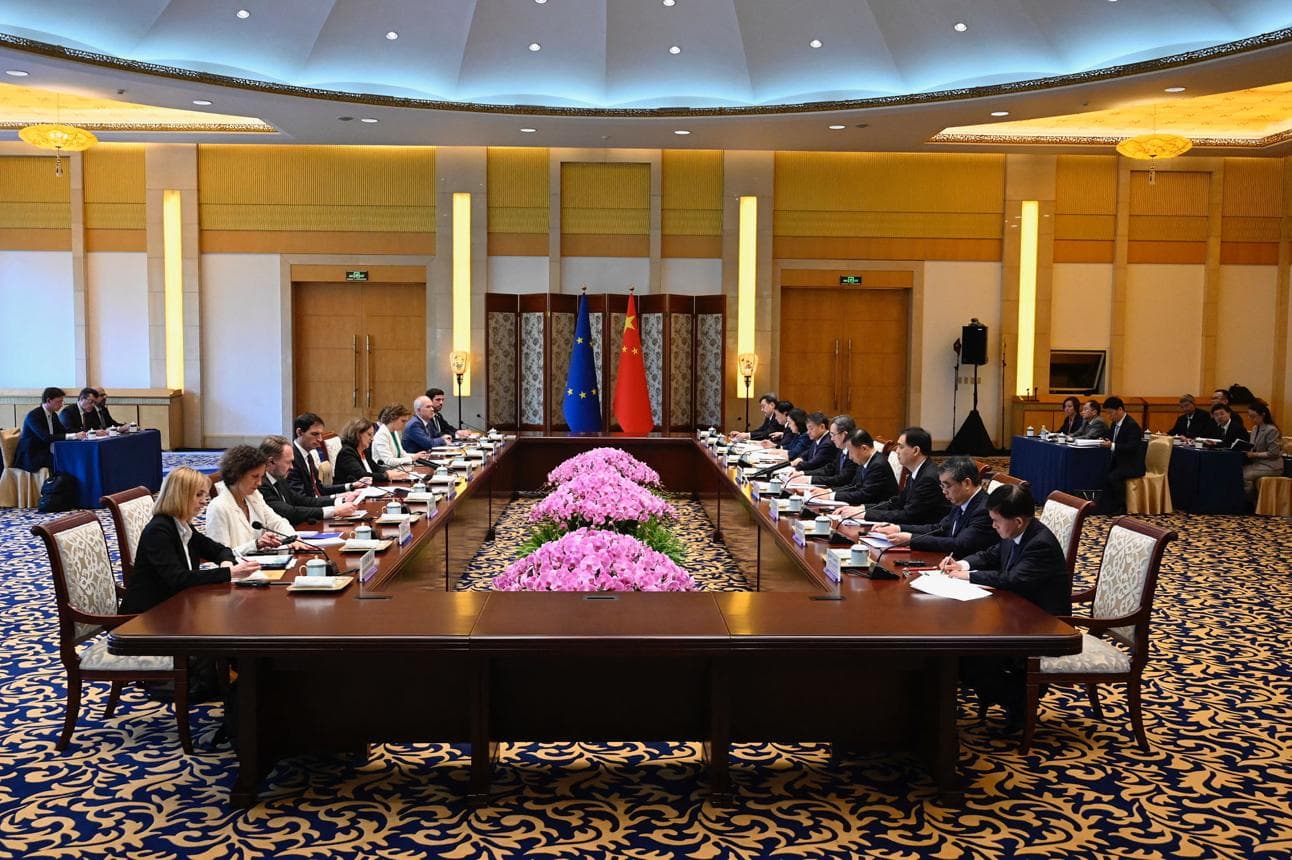
Seoul: The second European Union and Republic of Korea Security and Defence Dialogue, held in the South Korean capital on the fifteenth of May, has moved the bilateral track from framework setting to substantive cooperation across seven defined fields. Benedikta von Seherr-Thoss, Managing Director for Peace, Security and Defence at the European External Action Service, co-chaired the meeting with Wieyoung Ha of the Ministry of Foreign Affairs and Kwangsuk Lee of the Ministry of National Defence. Their joint readout lists maritime security, cybersecurity, crisis management, space security, foreign information manipulation and interference, non-proliferation and disarmament, and the women peace and security agenda as the seven cooperation streams now in active use.

The substantive shift is the centrality of hybrid and space domains. The first dialogue in 2025 had treated cyber and counter-disinformation as exploratory items requiring scoping work. The May meeting moved both into structured exchanges that include analyst-to-analyst cooperation on attribution and on the regulatory architecture South Korea is constructing under its 2026 amendments to electronic communications law. Seoul has put serious bureaucratic mass behind countering foreign information manipulation since the previous administration formalised a whole-of-government FIMI framework, and the alignment with the European External Action Service Stratcom division now opens a channel for shared taxonomy and incident tagging.

Space cooperation may be the more consequential track. South Korea’s Korea AeroSpace Administration, operational since May 2024, has reached the stage where it needs partner constellations to validate situational awareness data. The European Union’s Galileo and IRIS² programmes provide both technical complement and political ballast at a moment when the United States is recalibrating its space data sharing under successive presidential national security directives. Officials present in Seoul described the conversation on space domain awareness as the most operationally specific portion of the dialogue, including discussion of joint civilian and military protocols for sensor fusion that neither side has previously formalised with a partner outside the Atlantic alliance.

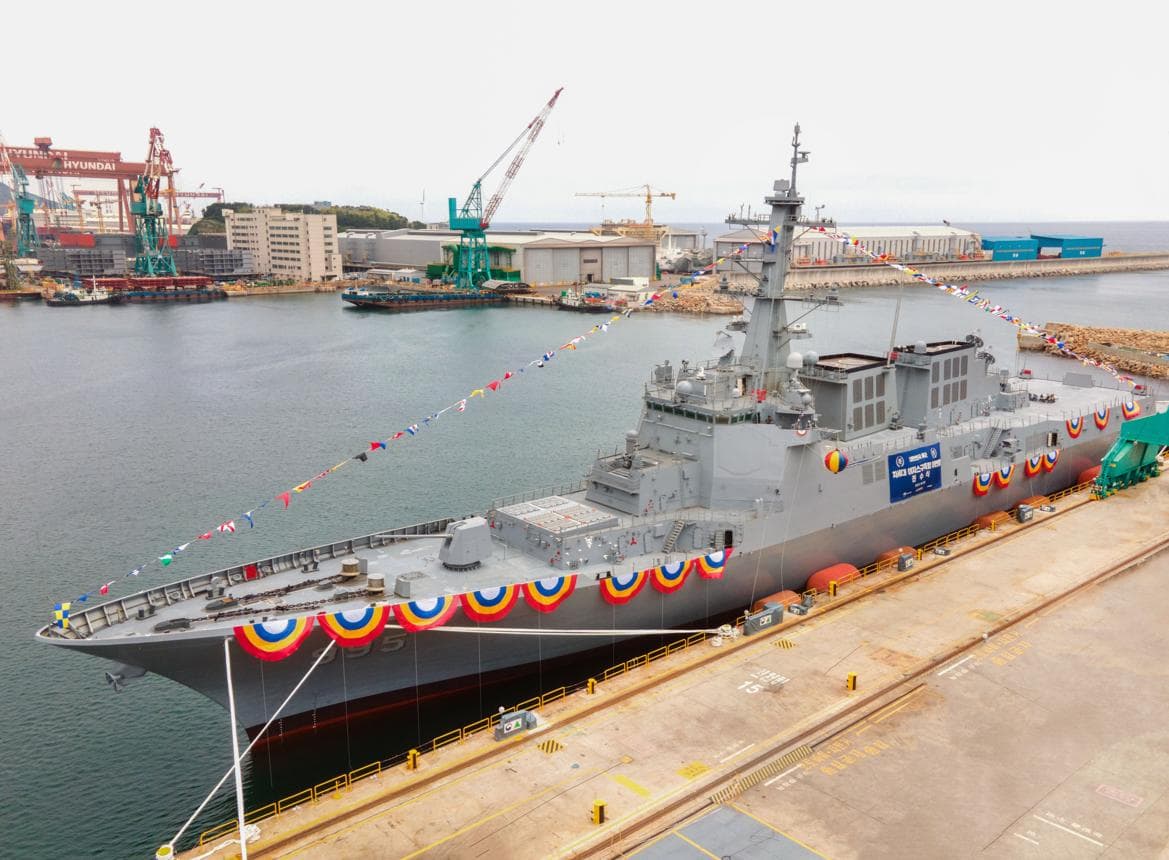
The dialogue also opened a defence industry track that runs in parallel to the partnership but increasingly overlaps with it. Polish purchases of Korean K2 main battle tanks, K9 self-propelled howitzers and FA-50 light fighters, totalling well above twelve billion dollars, have made South Korea a de facto European supplier even before any binding framework has been negotiated. Romanian, Estonian and Czech defence ministries have all opened technical exchanges with Korean primes Hanwha and KAI in the past year. The Security and Defence Partnership now provides a political instrument under which capitals can discuss compensatory cooperation, including European participation in Korean platform variants and Korean industrial partnership in European programmes.

What is missing from the Seoul readout is a clear deliverable on North Korean cyber operations and sanctions enforcement, despite both sides flagging non-proliferation as a partnership pillar. The Korea and Japan two-plus-two security dialogue, held earlier in May, produced more detailed language on Pyongyang’s drone exports and crypto laundering than the European track did. That gap likely reflects European reticence about over-extending its sanctions architecture in the Indo-Pacific rather than disagreement on the substance. The next dialogue, planned for Brussels in 2027, will be measured against whether the seven streams turn into seven sets of joint outputs or remain rhetorical pillars in search of bureaucratic mass.