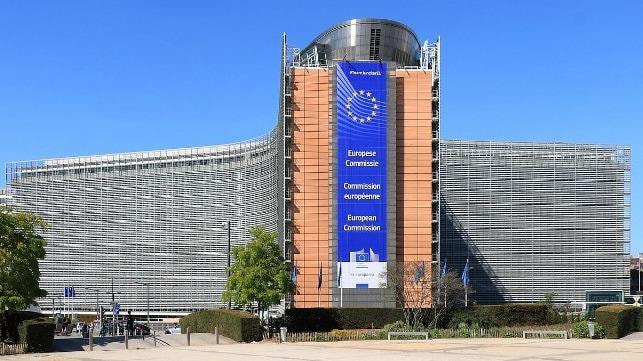
New Delhi: When Narendra Modi and Ursula von der Leyen stood together at Hyderabad House in January to announce that the European Union and India had finally closed their free trade agreement, the symbolism almost outran the substance. Talks first opened in 2007, collapsed in 2013, and limped back to life only when the pandemic and a hardening rivalry with Beijing convinced both sides that economic comfort was a luxury they could no longer afford. Nearly two decades later, the result is the largest trade deal either party has ever signed, binding together roughly two billion people and close to a quarter of global output.
The numbers tell part of the story. More than 99 percent of Indian exports by value will enter the European market on preferential terms, while New Delhi has agreed to cut its notoriously steep tariffs on European cars from as high as 110 percent toward 10 percent over five years, opening a quota for a quarter of a million vehicles a year. For a country that built its modern economy behind protective walls, that is a genuine concession, and one that India’s own carmakers and dairy lobby fought hard to soften. Brussels, in turn, swallowed sensitivities of its own on textiles, generic medicines and the movement of skilled Indian professionals.
Yet it would be a mistake to read this as a simple commercial bargain. The agreement is the clearest expression yet of Europe’s attempt to diversify away from China without naming it. India offers scale, a young workforce and a government eager to position itself as the democratic alternative in Asian supply chains. Europe offers capital, technology and a market that Indian exporters covet. Each is using the other to reduce a dependence neither will discuss in public.
The harder truths lie in the gap between signature and reality. The text still faces legal vetting, translation, a Council vote and the consent of the European Parliament before it can take effect, a process unlikely to conclude before 2027. Implementation will test whether India’s federal states actually lower the barriers their negotiators signed away, and whether European firms can navigate a regulatory landscape that remains, for all the new tariff lines, formidably complex. Sustainability chapters on labour and environmental standards are written in the careful language of aspiration rather than enforcement, a compromise that satisfied negotiators but may not satisfy the parliaments now asked to ratify it.
For all those caveats, the strategic logic is hard to dispute. Europe spent the last decade discovering the cost of concentrated dependence, first on Russian gas and then on Chinese manufacturing. A durable partnership with the world’s most populous democracy is the kind of insurance that looks expensive until the moment it is needed. The deal will not rebalance global trade on its own, and the celebrations in New Delhi and Brussels were always going to outpace the slow grind of ratification. But after eighteen years of false starts, the more remarkable fact is simply that it exists at all.