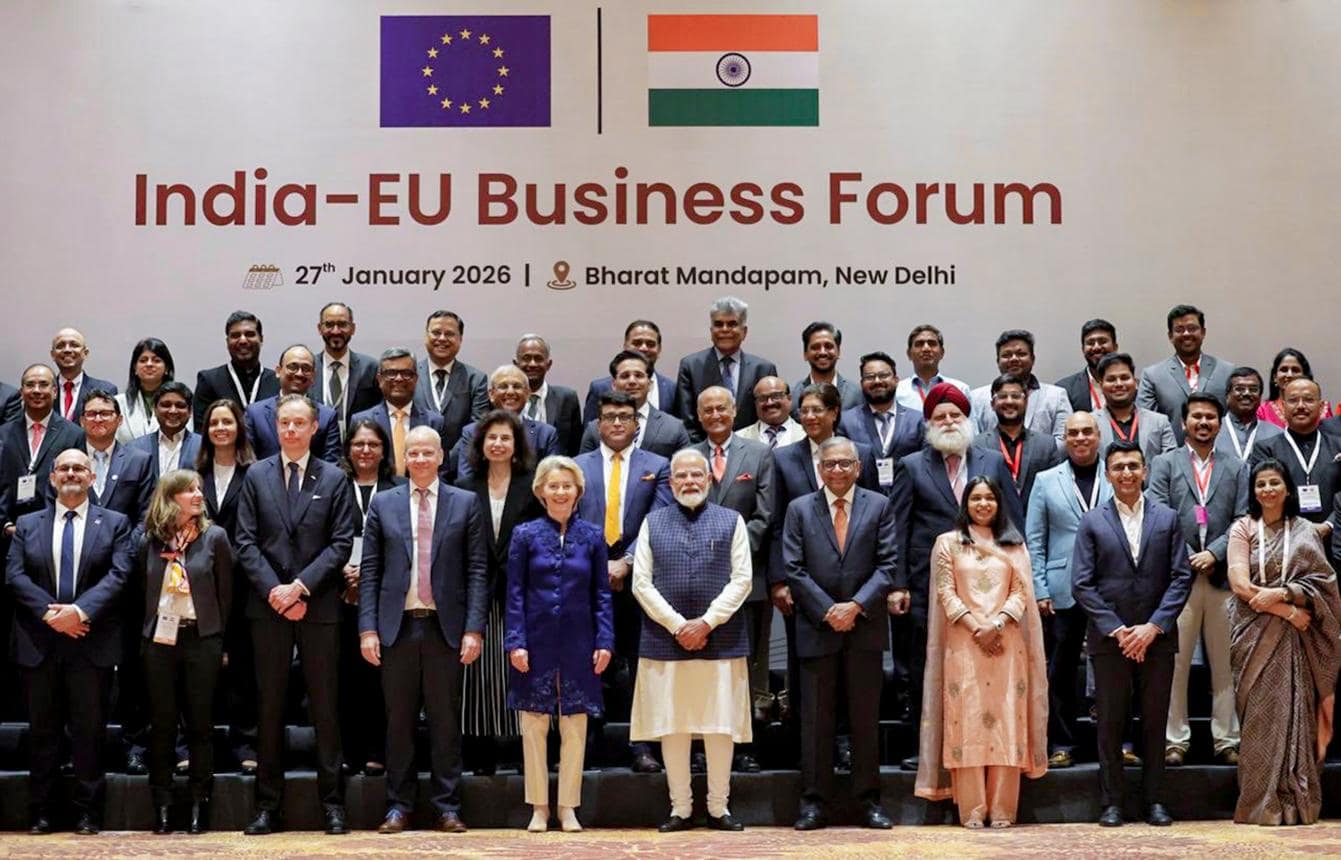
New Delhi: After nearly two decades of false starts, the European Union and India have done the thing that trade negotiators on both sides had begun to treat as permanently out of reach. On 27 January, the two governments announced that they had concluded talks on a free trade agreement, closing a file first opened in 2007, shelved in 2013, and revived only in 2022. The European Commission describes it as the largest such deal it has ever struck, and on the raw arithmetic that claim is hard to dispute. Together the two markets hold roughly two billion people and account for close to a quarter of global output.
The economics tilt toward sectors that have long complained of being shut out of the Indian market. The agreement removes or reduces tariffs on around 97 percent of European exports, a shift the Commission estimates will spare European firms as much as four billion euros in duties each year. The headline concession is on cars. India, which has protected its domestic manufacturers behind tariffs that can reach 110 percent, agreed to cut them to 10 percent over five years and to open a quota for 250,000 European vehicles annually. For German and Italian carmakers facing slowing demand at home and fierce price competition in China, that opening matters more than the figure alone suggests.
Yet the deal that was announced is not the deal that will take effect, and the gap between the two deserves more attention than the celebratory language has given it. What concluded in January was the trade chapter. The parallel investment protection agreement, the instrument that actually reassures European companies their factories will not be expropriated or their disputes left to languish, remains unfinished. Without it, the headline tariff cuts arrive ahead of the legal architecture that would let firms commit capital with confidence.
Ratification is its own obstacle course. The text must clear legal scrubbing and translation, then win the approval of the Council, the consent of the European Parliament, and sign-off in New Delhi. Each of those steps invites the lobbying that trade agreements always attract. European farmers, already restive over earlier deals, will scrutinise what the agreement means for sensitive agricultural lines. Indian negotiators, for their part, guarded the country’s dairy sector and its data rules closely, and the compromises struck there will be picked over by domestic critics.
The strategic logic is what finally carried the deal across the line after so many years of drift. Brussels has spent the past three years trying to reduce its exposure to China without pretending it can leave the Asian market behind. India offers something close to the ideal hedge: a large, growing, democratic economy that is itself wary of Beijing and hungry for technology, investment and a counterweight. The agreement sits alongside Europe’s deepening ties with Vietnam, Japan and Australia as part of a wider attempt to build an Indo-Pacific footprint out of trade rather than troops.
Whether it delivers will depend on the unglamorous work still ahead. Trade agreements are judged not on the day they are announced but on whether the promised access survives implementation, the carve-outs and the political weather of two very different democracies. For now, Europe and India have proved they can finish what they start. The harder test is making it count.