September 16, 2026
LATEST
Six Billion in Promised Savings Rests on a Digital WalletAuditors Question the rescEU Budget Before the Fleet ArrivesDuty-Free Access for Armenian Exports Comes With a Conditions ListA Mirror Measure Closed Europe to Brazilian Meat in One DayEurope’s Creative Sectors Wait on an AI Strategy DraftSoftware Makers Face Europe’s Product Liability Deadline in DecemberMetro 3 Overran by 477 Percent and the Line Sits FrozenCage-Free Promises Land Before the Transport File Is FinishedTwo New Calls Will Test How Flexible Horizon Europe Really IsEurope’s Innovation Act Counts 10 Billion It Has Not Found YetProcurement Is the Chapter That Could Stall the Thailand DealMobility Week Returns With a Test of Intergenerational FairnessMinisters Debate the Chips Act Next Week With No Money AttachedTaiwan Wants Tax Treaties That Brussels Has No Power to SignNorth Korea Now Earns From Europe Without Shipping AnythingPalm Oil Is the Last Hard Question Before the Indonesia SigningCan One Year Deliver Both a Trade Deal and a Sea CodeVietnam Reached Europe’s Top Partnership Tier With Little DetailLeaked Draft Puts Europe’s Social Media Age Limit at FifteenFP10 Clears Committee and the Budget Gap Stays Wide OpenSix Billion in Promised Savings Rests on a Digital WalletAuditors Question the rescEU Budget Before the Fleet ArrivesDuty-Free Access for Armenian Exports Comes With a Conditions ListA Mirror Measure Closed Europe to Brazilian Meat in One DayEurope’s Creative Sectors Wait on an AI Strategy DraftSoftware Makers Face Europe’s Product Liability Deadline in DecemberMetro 3 Overran by 477 Percent and the Line Sits FrozenCage-Free Promises Land Before the Transport File Is FinishedTwo New Calls Will Test How Flexible Horizon Europe Really IsEurope’s Innovation Act Counts 10 Billion It Has Not Found YetProcurement Is the Chapter That Could Stall the Thailand DealMobility Week Returns With a Test of Intergenerational FairnessMinisters Debate the Chips Act Next Week With No Money AttachedTaiwan Wants Tax Treaties That Brussels Has No Power to SignNorth Korea Now Earns From Europe Without Shipping AnythingPalm Oil Is the Last Hard Question Before the Indonesia SigningCan One Year Deliver Both a Trade Deal and a Sea CodeVietnam Reached Europe’s Top Partnership Tier With Little DetailLeaked Draft Puts Europe’s Social Media Age Limit at FifteenFP10 Clears Committee and the Budget Gap Stays Wide Open
September 16, 2026
LATEST
Six Billion in Promised Savings Rests on a Digital WalletAuditors Question the rescEU Budget Before the Fleet ArrivesDuty-Free Access for Armenian Exports Comes With a Conditions ListA Mirror Measure Closed Europe to Brazilian Meat in One DayEurope’s Creative Sectors Wait on an AI Strategy DraftSoftware Makers Face Europe’s Product Liability Deadline in DecemberMetro 3 Overran by 477 Percent and the Line Sits FrozenCage-Free Promises Land Before the Transport File Is FinishedTwo New Calls Will Test How Flexible Horizon Europe Really IsEurope’s Innovation Act Counts 10 Billion It Has Not Found YetProcurement Is the Chapter That Could Stall the Thailand DealMobility Week Returns With a Test of Intergenerational FairnessMinisters Debate the Chips Act Next Week With No Money AttachedTaiwan Wants Tax Treaties That Brussels Has No Power to SignNorth Korea Now Earns From Europe Without Shipping AnythingPalm Oil Is the Last Hard Question Before the Indonesia SigningCan One Year Deliver Both a Trade Deal and a Sea CodeVietnam Reached Europe’s Top Partnership Tier With Little DetailLeaked Draft Puts Europe’s Social Media Age Limit at FifteenFP10 Clears Committee and the Budget Gap Stays Wide OpenSix Billion in Promised Savings Rests on a Digital WalletAuditors Question the rescEU Budget Before the Fleet ArrivesDuty-Free Access for Armenian Exports Comes With a Conditions ListA Mirror Measure Closed Europe to Brazilian Meat in One DayEurope’s Creative Sectors Wait on an AI Strategy DraftSoftware Makers Face Europe’s Product Liability Deadline in DecemberMetro 3 Overran by 477 Percent and the Line Sits FrozenCage-Free Promises Land Before the Transport File Is FinishedTwo New Calls Will Test How Flexible Horizon Europe Really IsEurope’s Innovation Act Counts 10 Billion It Has Not Found YetProcurement Is the Chapter That Could Stall the Thailand DealMobility Week Returns With a Test of Intergenerational FairnessMinisters Debate the Chips Act Next Week With No Money AttachedTaiwan Wants Tax Treaties That Brussels Has No Power to SignNorth Korea Now Earns From Europe Without Shipping AnythingPalm Oil Is the Last Hard Question Before the Indonesia SigningCan One Year Deliver Both a Trade Deal and a Sea CodeVietnam Reached Europe’s Top Partnership Tier With Little DetailLeaked Draft Puts Europe’s Social Media Age Limit at FifteenFP10 Clears Committee and the Budget Gap Stays Wide Open

India Trade Deal Reaches the Council With 96 Percent on the Table

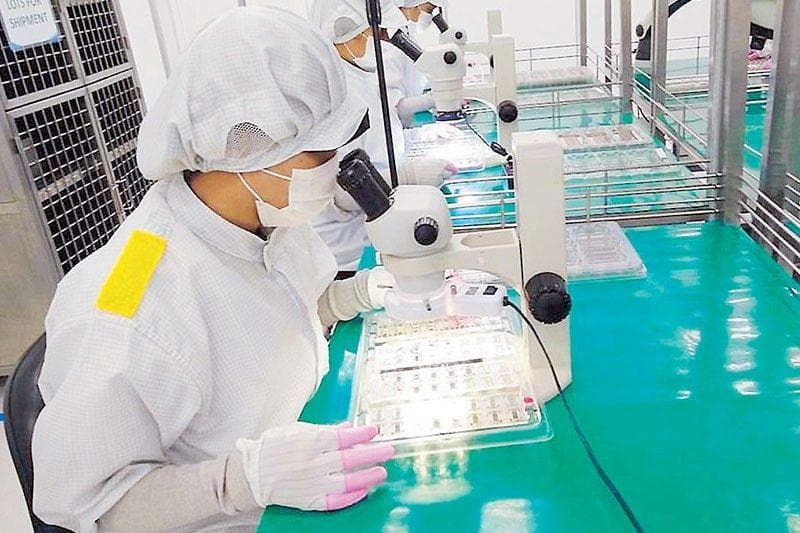
Tiruppur: The knitwear mills of this Tamil Nadu city load containers of cotton shirts for European buyers under duty rates that have barely shifted in two decades. Brussels finally moved the machinery that could change them on 11 September, when the European Commission asked the Council to sign and conclude the trade agreement it settled with India in January.

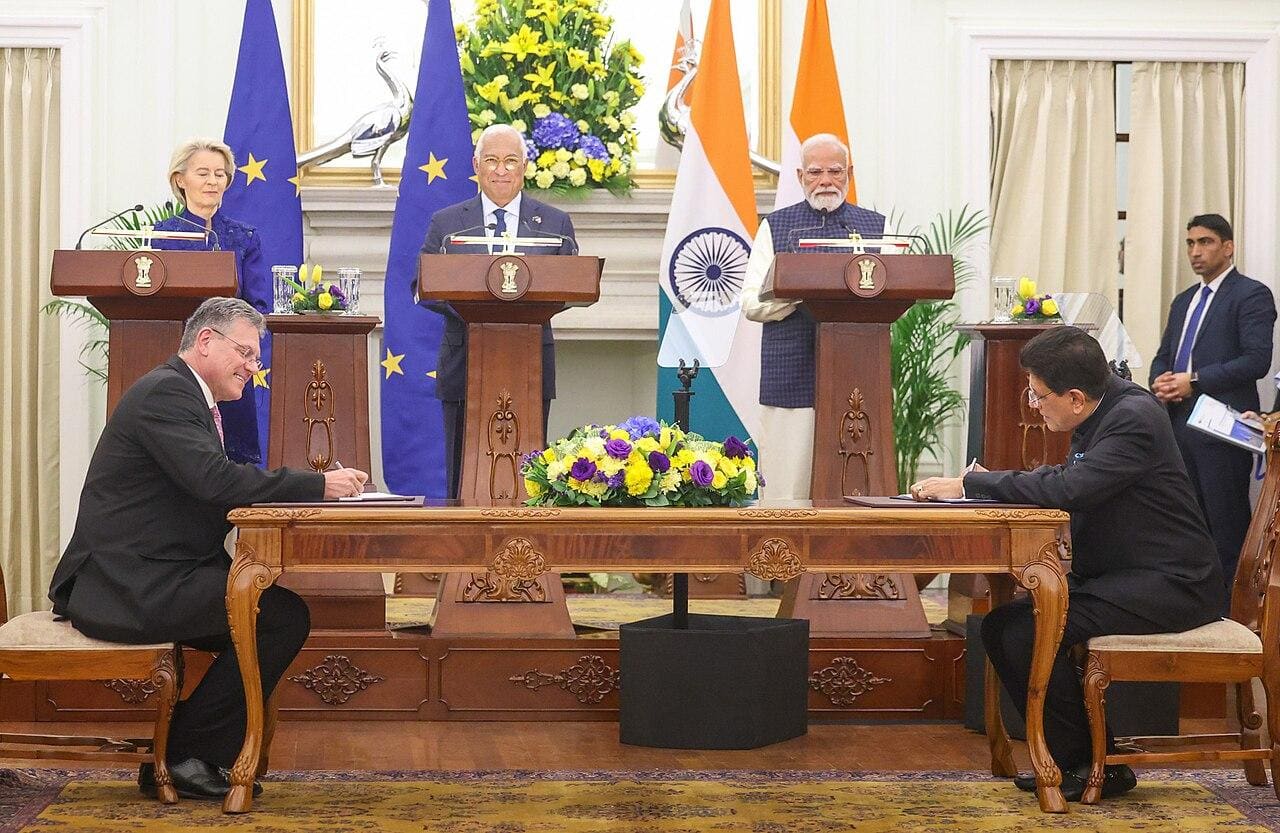
Negotiators closed the text on 27 January after years of stop-start bargaining. Closing a text and putting a treaty into force are separate exercises, and European trade files have stalled in the gap between them often enough that nobody in Brussels treats the remaining steps as paperwork. The Council must authorise signature. The European Parliament must give consent. India must ratify on its own timetable. Tariff schedules move only once all three happen.

The Commission calls this the largest agreement either side has concluded, and the arithmetic backs the claim. The deal removes or reduces tariffs on 96 percent of EU goods exports to India, and it ties together two economies holding roughly two billion people and about a quarter of world output. The Commission sets out the headline terms on its EU-India trade agreement page.

Trade and Economic Security Commissioner Maroš Šefčovič has driven an accelerated route through the institutions, and the motive reads as defensive rather than triumphant. Both sides negotiated inside a trading system that no longer supplies reliable rules, and each wanted market access that does not depend on the mood of a third government. Speed here buys insurance, not celebration.

The commercial logic runs in both directions and it runs unevenly. Indian textile, leather and generic medicine exporters gain from European tariff cuts almost immediately. European carmakers, machinery firms and spirits producers gain far more slowly, because India phases its own reductions over long transition periods and guards its farm sector closely. Anyone reading the deal as symmetrical will misread the first five years of it.

Three frictions survive the signature. Investment protection sits outside this text and continues on a separate track, which leaves European investors in India without the treaty cover the trade chapters imply. The carbon border levy remains a standing Indian grievance that no tariff schedule resolves. And the sustainability chapter carries commitments whose enforcement depends on consultation rather than penalty, a design European civil society groups have criticised in every recent agreement.

The ratification map deserves more attention than the tariff map. If member states treat this as an EU-only agreement, the Council and Parliament finish the job between them. If any capital argues for mixed treatment, national parliaments enter the picture and the timetable stretches by years. That question, not the Indian ratification calendar, decides when the mills in Tiruppur see a different invoice. A Council decision on signature is now the first thing worth watching, and the Commission’s 11 September proposal starts that clock.