Pyongyang: For most of the past two decades, the European Union’s relationship with North Korea amounted to a sanctions list and a closed embassy. That distance is now a strategic liability. The deepening military partnership between Pyongyang and Moscow has turned a faraway pariah into a direct supplier to the war on Europe’s own continent, and Brussels is discovering how little leverage it holds over a state it has spent years isolating.
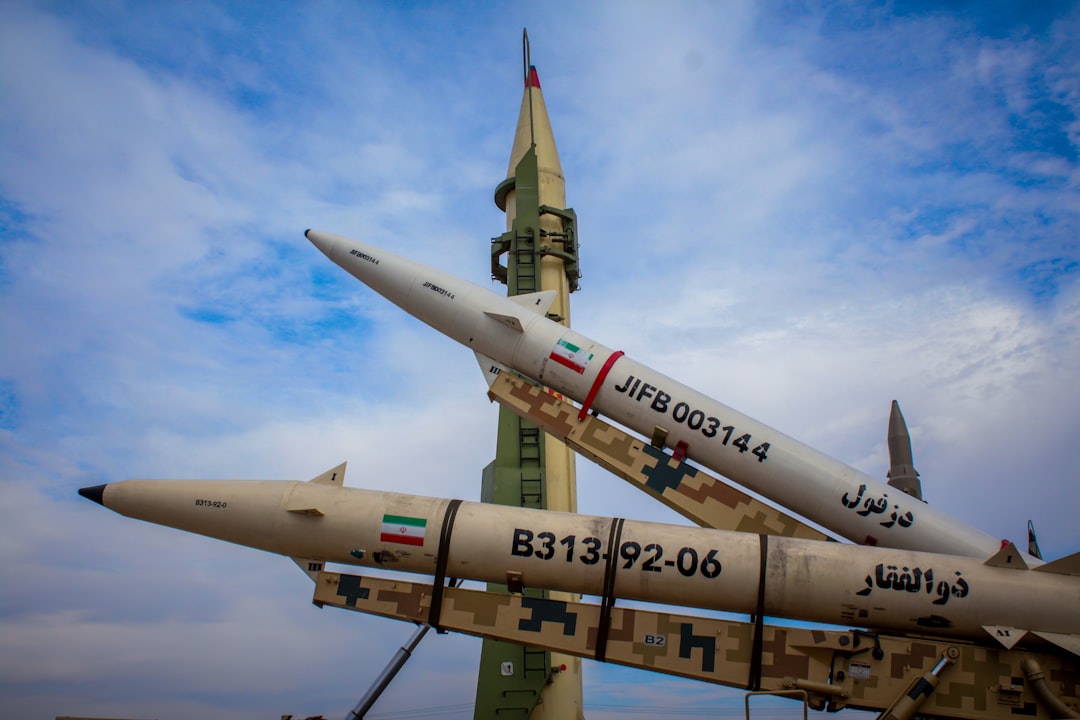
The evidence of that partnership has hardened from rumour into infrastructure. Since early 2026, Russia and North Korea have accelerated work on a road bridge across the Tuman River, the first of its kind on their short shared border, explicitly designed to ease the movement of goods between the two countries. Western governments assess that the same logistics carry North Korean KN-23 and KN-24 short-range ballistic missiles and large volumes of artillery shells westward, munitions that end up striking Ukrainian cities. In return, Pyongyang is widely judged to be receiving food, fuel, hard currency and, more worryingly, technical help for its missile and satellite programmes.
The European response has leaned on the only instrument it possesses at such range. The EU has layered sanctions on North Korea for its nuclear and ballistic activity and, more recently, for its support of Russia’s aggression, coordinating with Washington and Seoul to designate the generals commanding the troops Pyongyang deployed to Russian soil. Those measures carry real symbolic weight and complicate the financial plumbing that sustains the arms trade. What they cannot do is sever a supply line that runs overland between two sanctioned economies already operating outside the Western financial system.
That is the uncomfortable core of the problem. Sanctions work best against states that want into the global economy and fear exclusion from it. North Korea has built its entire strategic posture on the opposite assumption, and its alignment with Russia has handed it a patron with a UN Security Council veto and an appetite for exactly the weapons it can mass-produce. The multilateral monitoring team that replaced the UN panel Russia vetoed out of existence documents the violations meticulously, but documentation is not enforcement.
For Brussels the episode is a lesson in the limits of distance. Europe cannot project hard power into Northeast Asia, and its diplomatic channels to Pyongyang are effectively dead. Its practical options are indirect: tightening secondary measures against the networks that move North Korean cargo, deepening intelligence-sharing with South Korea and Japan, and pressing China, the one actor with genuine influence over Pyongyang, to constrain a relationship that destabilises Beijing’s own neighbourhood.
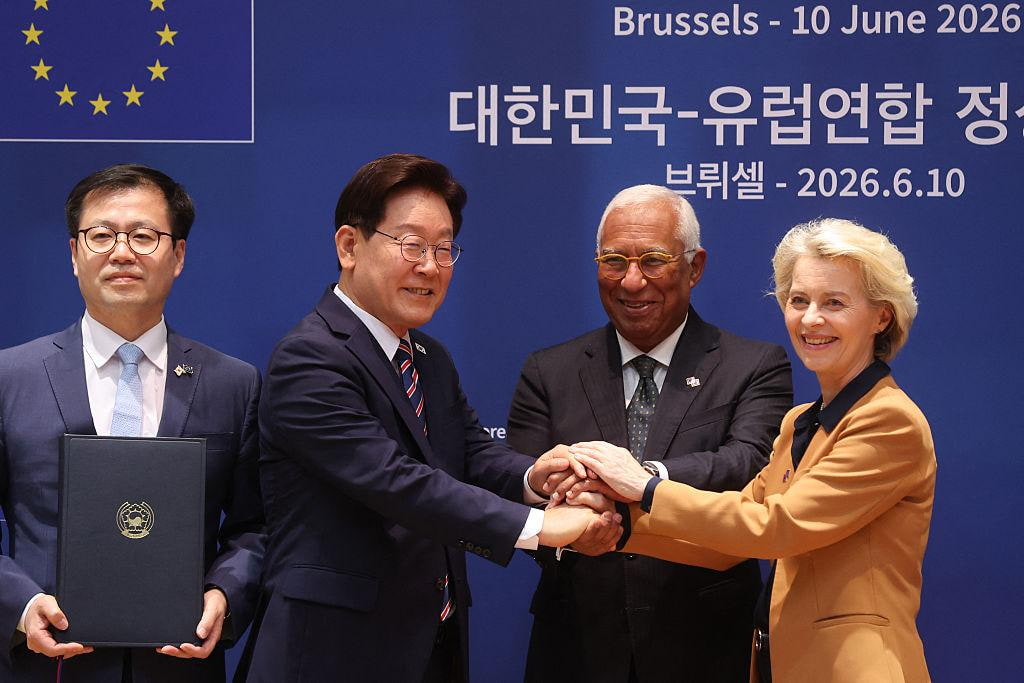
There are faint signs the calculus could shift. At the recent G7 gathering, South Korea’s president suggested that the war had weakened the international sanctions architecture and that a different approach to Pyongyang might eventually be needed. For Europe, any softening raises a hard question: whether the goal is still denuclearisation, or simply cutting the pipeline feeding the war in Ukraine. Those two aims are no longer obviously the same, and the gap between them is where European policy will have to find its footing.