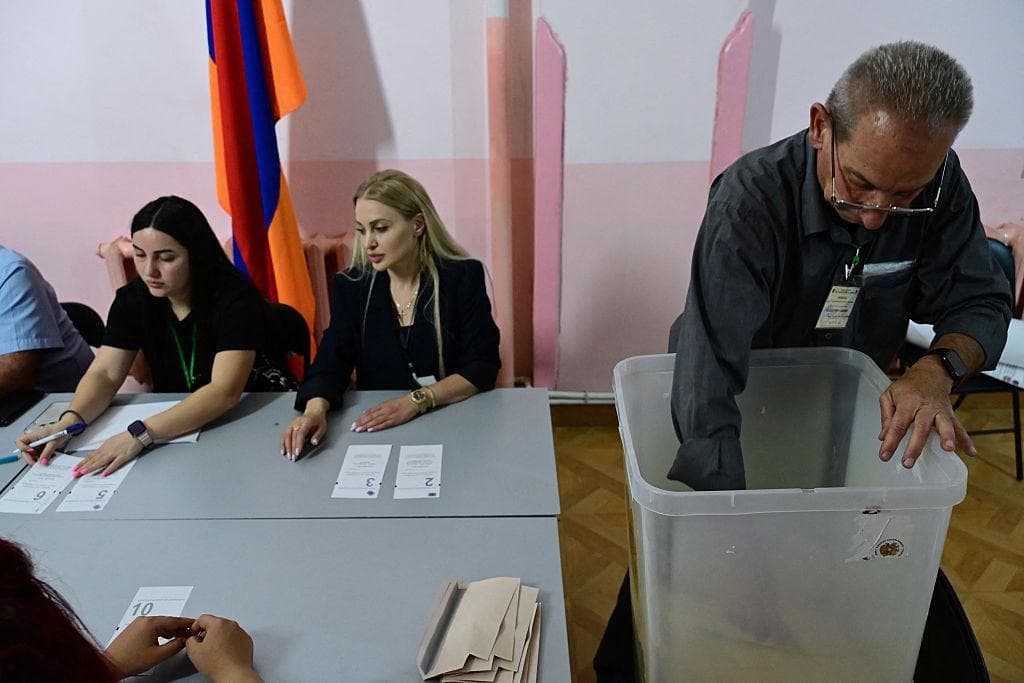
Yerevan: The certification of Nikol Pashinyan’s electoral victory has quietly settled one of the most consequential questions in the South Caucasus this year. His Civil Contract party took 49.7 percent of the vote on 7 June, comfortably ahead of the Strong Armenia bloc on 23.2 percent and the Armenia Alliance on 9.9 percent, on a turnout of 58.9 percent that was the highest for a scheduled parliamentary election since 2018. The opposition’s recount demands and allegations of irregularities have not dislodged the result. For Brussels, the practical meaning is straightforward. The government that has spent four years steering Armenia away from Moscow’s orbit will remain in place, and the European institutions that bet on that trajectory have, for now, been vindicated.
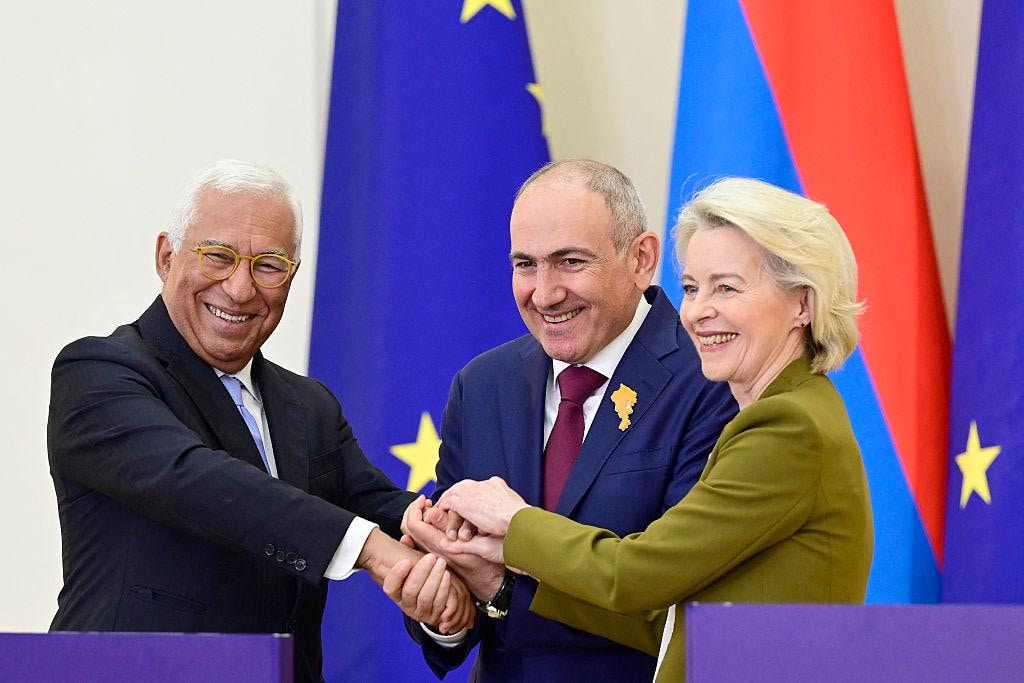
That bet was never subtle. The first ever EU-Armenia summit in Yerevan on 5 May arrived barely a month before polling day, and the joint statement’s language on connectivity, security and economic development read less like routine diplomacy than an endorsement. Pro-Russian voices inside Armenia said as much, complaining that European visibility amounted to unfair interference in the campaign. The complaint is not baseless. Summits are signals, and the timing of this one signalled which outcome the Union preferred. Brussels gambled that association with a popular reform agenda would help rather than hurt, and the arithmetic suggests it judged the mood correctly.
The deeper shift sits beneath the headline numbers. In April the Union agreed to deploy a European Union Partnership Mission to Armenia for two years, explicitly framed around resilience to external threats, and Frontex signed a working arrangement with the Armenian interior ministry. A connectivity partnership now binds Yerevan to European infrastructure and standards. None of this is membership, and Armenia is not a candidate. But it is the scaffolding of a relationship that is being built to outlast any single election, and the vote has given it room to keep rising.
The risks are real and should not be smoothed over. Armenia remains militarily exposed after losing Nagorno-Karabakh, and its normalisation track with Azerbaijan is unfinished and fragile. A European mission and a connectivity deal do not substitute for a security guarantee, and Brussels has been careful never to imply one. There is a danger that Yerevan reads political warmth as strategic commitment, and a larger danger that Moscow, still hosting a base on Armenian soil, decides the Western drift has gone far enough. The Union’s instruments in the region remain civilian and economic, which is precisely their limitation when the threats are not.
What the election clarifies is that the constituency for the European choice is durable rather than a passing reaction to Russian failure. Pashinyan did not win on foreign policy alone, but he won having made the Western tilt central and visible, and the electorate did not punish him for it. That is the data point Brussels wanted. The harder work now is matching the symbolism of summits with the slower business of trade access, visa facilitation and credible security cooperation, so that the partnership delivers something voters can feel before the next ballot tests their patience.
For a Union often accused of arriving late to its own neighbourhood, Armenia is a rare case of engagement that preceded rather than followed a crisis. Whether it amounts to lasting influence or simply a friendlier government in a still dangerous corner of the map will depend on what comes after the applause.