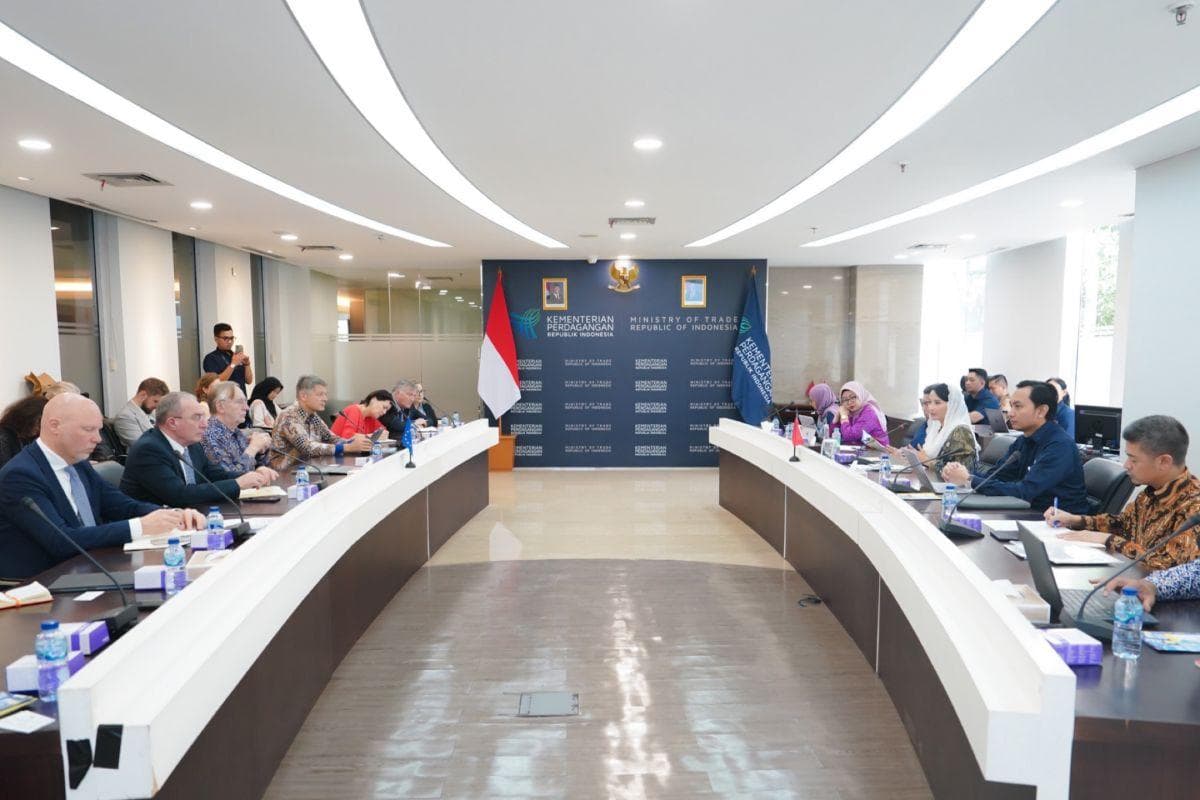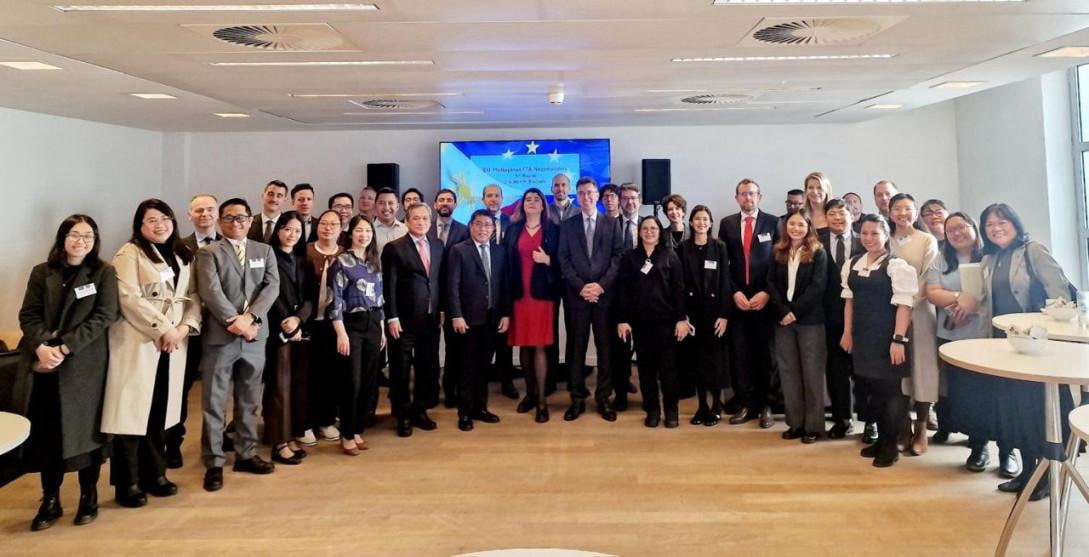
Manila: The sixth round of negotiations for an EU-Philippines Free Trade Agreement closed on 22 May with both delegations reporting measurable progress on government procurement, agricultural market access, and investment chapters, leaving a seventh round in Brussels from 29 June to 3 July as the candidate window for political conclusion.
Trade Secretary Cristina Roque has been explicit about the target. She told reporters at the close of the round that Manila wants the FTA wrapped before the parliamentary summer recess in Strasbourg, ideally before mid-July, and the Philippine Department of Trade and Industry’s chief negotiator Allan Gepty followed by saying he is optimistic that the seventh round would be the final one. Brussels has not pushed back publicly on that timetable, although Directorate-General Trade is signalling internally that one further short technical round in September cannot be ruled out if the digital trade and intellectual property texts need additional cleaning.
The procurement chapter is the most consequential outcome from the Manila round. Philippine ministries had resisted reciprocal access to provincial-level procurement during the early rounds, citing the Bayanihan procurement framework’s domestic content preferences. The negotiated solution, on current reports, is a phased market opening that mirrors the carve-outs the EU accepted with Vietnam, with thresholds that lift only after a four-year transition. For European bidders in construction, environmental services, and rail-linked transport, that creates a measurable, if delayed, addressable market in a country whose annual public procurement spend is reported above 20 billion US dollars.
Agriculture remained the most politically charged file. Manila pressed for asymmetric concessions on tropical fruit, tuna, and coconut derivatives, while the European side held out for clearer geographical indication protection on cheeses and processed pork, particularly given Philippine demand from the expatriate retail segment. Negotiators appear to have moved toward a balanced quota-and-tariff-rate-quota package, although the final architecture will only be visible when the consolidated text is shared with Council member states.
Rules of origin, intellectual property, and digital trade were also reported as moving forward. The digital trade chapter is significant because it will be the first Indo-Pacific FTA built on the standalone Digital Trade Agreement template the EU has been iterating after the Singapore precedent. Cross-border data flows, source code protection, and electronic authentication clauses have been the main negotiating axes.
The strategic stakes go beyond bilateral arithmetic. The Philippines is the EU’s fifth-largest trading partner in ASEAN, with bilateral trade in goods around 18 billion euros in 2024. More importantly, an EU-Philippines FTA would slot into the EU’s Indo-Pacific Strategy alongside the Vietnam and Singapore pacts, giving the bloc a contiguous tariff-reduction band across maritime Southeast Asia. For Manila, the deal would diversify export markets at a moment when the United States’ trade posture is more transactional and China’s economic deceleration is visible in Philippine semiconductor and electronics flows.
There are still discrete risks. Human rights and labour standards under the sustainable development chapter remain politically sensitive in Brussels, particularly among Parliament rapporteurs who tracked the 2018 freeze of the original talks. A clean conclusion in July would require the Commission to land a credible compliance and dialogue mechanism that can hold up to scrutiny during ratification. Roque’s confidence implies the architecture is in place. The June round in Brussels will show whether the timetable matches it.