August 10, 2026
LATEST
Europe’s Air Quality Improves but WHO Limits LoomTwelve New EU Medicines Win a Green Light from EMAFIFA Agent Rules Must Answer to Europe’s CourtsTachograph Rules Now Reach Vans Crossing Europe’s BordersNature Restoration Plans Come Due as a Hard Deadline NearsBrussels Opens a State Aid Probe Into Spain’s Renewables PayoutBrussels Extends Its Tariff Suspension on US Goods IndefinitelyFarmers Win Stronger Contract Rights Across the EU Supply ChainEurope Finally Locks In Its 348-Satellite Answer to StarlinkPlatform Work Rules Face a National Scramble Before DecemberDuty-Free Parcels Reach the End of the Line for EU ShoppersAfter Nine Years, Europe and Australia Seal a Trade PactBeijing Answers Europe’s Russia Sanctions in KindOne Year On, the EU-Japan Alliance Faces Its First TestEurope’s Chip Ambitions Still Run Through Taiwan’s FabsWhy South Korea Bet Its Research Future on Europe’s ProgrammeEurope and Japan Deepen Their Economic Alliance as Rivals CircleFive Joint Defence Projects Launch Europe’s Military ShieldElectrification Plan Aims to Make Europe First Electro ContinentHorizon Europe Budget Fight Heats Up as Ministers Push BackEurope’s Air Quality Improves but WHO Limits LoomTwelve New EU Medicines Win a Green Light from EMAFIFA Agent Rules Must Answer to Europe’s CourtsTachograph Rules Now Reach Vans Crossing Europe’s BordersNature Restoration Plans Come Due as a Hard Deadline NearsBrussels Opens a State Aid Probe Into Spain’s Renewables PayoutBrussels Extends Its Tariff Suspension on US Goods IndefinitelyFarmers Win Stronger Contract Rights Across the EU Supply ChainEurope Finally Locks In Its 348-Satellite Answer to StarlinkPlatform Work Rules Face a National Scramble Before DecemberDuty-Free Parcels Reach the End of the Line for EU ShoppersAfter Nine Years, Europe and Australia Seal a Trade PactBeijing Answers Europe’s Russia Sanctions in KindOne Year On, the EU-Japan Alliance Faces Its First TestEurope’s Chip Ambitions Still Run Through Taiwan’s FabsWhy South Korea Bet Its Research Future on Europe’s ProgrammeEurope and Japan Deepen Their Economic Alliance as Rivals CircleFive Joint Defence Projects Launch Europe’s Military ShieldElectrification Plan Aims to Make Europe First Electro ContinentHorizon Europe Budget Fight Heats Up as Ministers Push Back
August 10, 2026
LATEST
Europe’s Air Quality Improves but WHO Limits LoomTwelve New EU Medicines Win a Green Light from EMAFIFA Agent Rules Must Answer to Europe’s CourtsTachograph Rules Now Reach Vans Crossing Europe’s BordersNature Restoration Plans Come Due as a Hard Deadline NearsBrussels Opens a State Aid Probe Into Spain’s Renewables PayoutBrussels Extends Its Tariff Suspension on US Goods IndefinitelyFarmers Win Stronger Contract Rights Across the EU Supply ChainEurope Finally Locks In Its 348-Satellite Answer to StarlinkPlatform Work Rules Face a National Scramble Before DecemberDuty-Free Parcels Reach the End of the Line for EU ShoppersAfter Nine Years, Europe and Australia Seal a Trade PactBeijing Answers Europe’s Russia Sanctions in KindOne Year On, the EU-Japan Alliance Faces Its First TestEurope’s Chip Ambitions Still Run Through Taiwan’s FabsWhy South Korea Bet Its Research Future on Europe’s ProgrammeEurope and Japan Deepen Their Economic Alliance as Rivals CircleFive Joint Defence Projects Launch Europe’s Military ShieldElectrification Plan Aims to Make Europe First Electro ContinentHorizon Europe Budget Fight Heats Up as Ministers Push BackEurope’s Air Quality Improves but WHO Limits LoomTwelve New EU Medicines Win a Green Light from EMAFIFA Agent Rules Must Answer to Europe’s CourtsTachograph Rules Now Reach Vans Crossing Europe’s BordersNature Restoration Plans Come Due as a Hard Deadline NearsBrussels Opens a State Aid Probe Into Spain’s Renewables PayoutBrussels Extends Its Tariff Suspension on US Goods IndefinitelyFarmers Win Stronger Contract Rights Across the EU Supply ChainEurope Finally Locks In Its 348-Satellite Answer to StarlinkPlatform Work Rules Face a National Scramble Before DecemberDuty-Free Parcels Reach the End of the Line for EU ShoppersAfter Nine Years, Europe and Australia Seal a Trade PactBeijing Answers Europe’s Russia Sanctions in KindOne Year On, the EU-Japan Alliance Faces Its First TestEurope’s Chip Ambitions Still Run Through Taiwan’s FabsWhy South Korea Bet Its Research Future on Europe’s ProgrammeEurope and Japan Deepen Their Economic Alliance as Rivals CircleFive Joint Defence Projects Launch Europe’s Military ShieldElectrification Plan Aims to Make Europe First Electro ContinentHorizon Europe Budget Fight Heats Up as Ministers Push Back

Savings and Investments Union Pushes for Deeper Capital Markets

Brussels: The European Union’s renewed push to integrate its capital markets, now rebranded as the Savings and Investments Union, is producing legislative traction but continues to encounter the same structural obstacles that have slowed every prior effort since the original Capital Markets Union project launched in 2015. The Commission’s strategy, presented in March 2025 and refined through subsequent communications, aims to channel a larger share of European household savings into productive equity and bond financing, particularly for the green and digital transitions and for the bloc’s defence-industrial base.

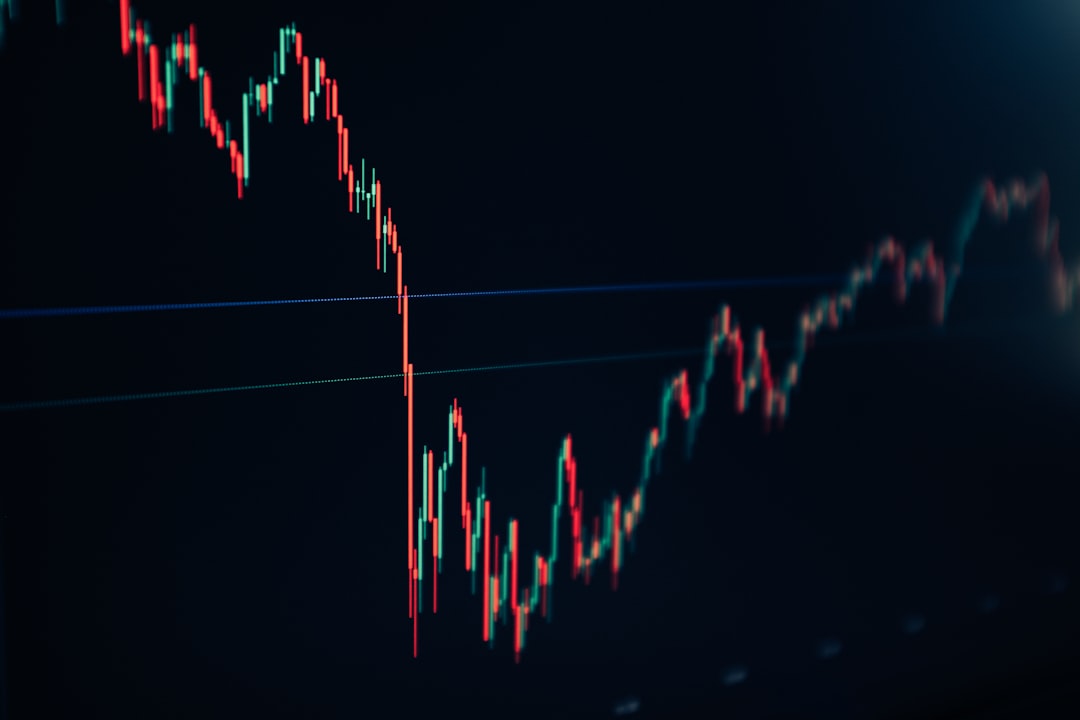
The numerical case is well-established. European households hold a disproportionate share of their financial wealth in bank deposits compared with American counterparts, where retirement and brokerage accounts mediate a much larger flow of capital into equity markets. Successive reports, including the Letta report of April 2024 and the Draghi report of September 2024, framed this asymmetry as a binding constraint on European competitiveness, productivity growth and the financing of long-horizon industrial transformation.

The legislative response operates on three tracks. The first is supervisory convergence: a debate, contested by several smaller member states, over whether the European Securities and Markets Authority should be granted direct supervisory powers over large cross-border market participants, reducing the fragmentation that currently arises from twenty-seven national supervisors interpreting the same rulebook differently. The Commission’s draft proposes a phased approach, beginning with the most cross-border categories of participants, but the political resistance from smaller financial centres remains significant.

The second track concerns the supply of investable products. The Commission has tabled changes to the Undertakings for Collective Investment in Transferable Securities and the Alternative Investment Fund Managers Directive frameworks, alongside revisions to the European Long-Term Investment Fund regime that was substantially recalibrated in 2023. New legislation is in preparation to encourage pan-European savings products, including a possible voluntary pension framework that would be portable across member states. The aim is to give households a simple, comparable and tax-efficient vehicle for long-term equity exposure.

The third track addresses the demand side. Securitisation, particularly of small and medium-sized enterprise loans and of green assets, is being reformed to reduce the disproportionate capital requirements that European banks face relative to their American peers. A reform of the prospectus regime, a simplification of listing requirements for growth companies, and a recalibration of the Markets in Financial Instruments Directive inducement rules are also in the legislative pipeline. The European Listings Act, adopted in 2024, has begun to take effect but is widely seen as insufficient on its own.

National fiscal arrangements remain the most stubborn obstacle. Tax treatment of dividends, capital gains and savings vehicles varies sharply across member states. The Commission has proposed coordination through soft-law instruments and recommendations, but tax measures require unanimity under Article 113 of the Treaty on the Functioning of the European Union, which renders meaningful harmonisation politically improbable in the short term. Without convergence on the fiscal layer, the integration benefits of regulatory harmonisation will remain bounded.

The defence-financing dimension has added urgency to the agenda. As the ReArm Europe Plan mobilises additional national and EU-level defence spending, the question of how to finance European defence industrial capacity through private capital markets has moved from a marginal concern to a strategic priority. The European Investment Bank has expanded its mandate to cover dual-use technologies, and discussions on a dedicated defence-equity facility have advanced within the Council.

The institutional politics will determine the outcome. Paris and Berlin have aligned on the need for ambitious integration, but their preferences diverge on supervisory architecture. Smaller member states with significant financial centres, including Ireland, Luxembourg, the Netherlands and the Czech Republic, are cautious about transfers of competence to ESMA. The European Parliament, more aggressive than the Council on integration, has signalled support for the Commission’s broad direction. The next eighteen months will test whether political momentum can overcome a decade of inertia.