August 9, 2026
LATEST
New EU Gas Market Rules Take Effect With Consumer SafeguardsDeforestation Regulation Holds Its December Deadline Despite CutsDigital Omnibus Delays Europe’s High-Risk AI Deadline to 2027Europe’s Schools Confront a Widening Basic Skills GapRule of Law Report Finds Progress but Trust Still LagsIRIS2 Gains 66 Satellites as Brussels Signs the Rollout DealNature Restoration Plans Come Due as Member States Race a DeadlineECB Rates Hold at 2.25 Percent as Frankfurt Waits on the DataEU Budget Talks Turn to Cohesion as Ireland Takes OverWildfire Response Stretches Europe’s Emergency Fleet ThinCan Europe’s Quantum Plan Match Its Big Ambitions?Armenia Edges West as Moscow’s Grip Slips AwayEurope Inherits the World’s Aid Bill It Cannot Fully PayAir Passenger Rights Get Their First Overhaul in Two DecadesErasmus Opens a 5 Billion Euro Round for Skills and MobilityCeuta Crisis Pushes the EU Toward Faster Migrant ReturnsBulky Parcels Face a Packaging Crackdown From August 12Can Europe Build Its Drone Wall Before 2030 Arrives?Indonesia’s Trade Deal With Europe Nears Its Final SignatureEurope Leans on Beijing to Keep Climate Talks Alive Before AntalyaNew EU Gas Market Rules Take Effect With Consumer SafeguardsDeforestation Regulation Holds Its December Deadline Despite CutsDigital Omnibus Delays Europe’s High-Risk AI Deadline to 2027Europe’s Schools Confront a Widening Basic Skills GapRule of Law Report Finds Progress but Trust Still LagsIRIS2 Gains 66 Satellites as Brussels Signs the Rollout DealNature Restoration Plans Come Due as Member States Race a DeadlineECB Rates Hold at 2.25 Percent as Frankfurt Waits on the DataEU Budget Talks Turn to Cohesion as Ireland Takes OverWildfire Response Stretches Europe’s Emergency Fleet ThinCan Europe’s Quantum Plan Match Its Big Ambitions?Armenia Edges West as Moscow’s Grip Slips AwayEurope Inherits the World’s Aid Bill It Cannot Fully PayAir Passenger Rights Get Their First Overhaul in Two DecadesErasmus Opens a 5 Billion Euro Round for Skills and MobilityCeuta Crisis Pushes the EU Toward Faster Migrant ReturnsBulky Parcels Face a Packaging Crackdown From August 12Can Europe Build Its Drone Wall Before 2030 Arrives?Indonesia’s Trade Deal With Europe Nears Its Final SignatureEurope Leans on Beijing to Keep Climate Talks Alive Before Antalya
August 9, 2026
LATEST
New EU Gas Market Rules Take Effect With Consumer SafeguardsDeforestation Regulation Holds Its December Deadline Despite CutsDigital Omnibus Delays Europe’s High-Risk AI Deadline to 2027Europe’s Schools Confront a Widening Basic Skills GapRule of Law Report Finds Progress but Trust Still LagsIRIS2 Gains 66 Satellites as Brussels Signs the Rollout DealNature Restoration Plans Come Due as Member States Race a DeadlineECB Rates Hold at 2.25 Percent as Frankfurt Waits on the DataEU Budget Talks Turn to Cohesion as Ireland Takes OverWildfire Response Stretches Europe’s Emergency Fleet ThinCan Europe’s Quantum Plan Match Its Big Ambitions?Armenia Edges West as Moscow’s Grip Slips AwayEurope Inherits the World’s Aid Bill It Cannot Fully PayAir Passenger Rights Get Their First Overhaul in Two DecadesErasmus Opens a 5 Billion Euro Round for Skills and MobilityCeuta Crisis Pushes the EU Toward Faster Migrant ReturnsBulky Parcels Face a Packaging Crackdown From August 12Can Europe Build Its Drone Wall Before 2030 Arrives?Indonesia’s Trade Deal With Europe Nears Its Final SignatureEurope Leans on Beijing to Keep Climate Talks Alive Before AntalyaNew EU Gas Market Rules Take Effect With Consumer SafeguardsDeforestation Regulation Holds Its December Deadline Despite CutsDigital Omnibus Delays Europe’s High-Risk AI Deadline to 2027Europe’s Schools Confront a Widening Basic Skills GapRule of Law Report Finds Progress but Trust Still LagsIRIS2 Gains 66 Satellites as Brussels Signs the Rollout DealNature Restoration Plans Come Due as Member States Race a DeadlineECB Rates Hold at 2.25 Percent as Frankfurt Waits on the DataEU Budget Talks Turn to Cohesion as Ireland Takes OverWildfire Response Stretches Europe’s Emergency Fleet ThinCan Europe’s Quantum Plan Match Its Big Ambitions?Armenia Edges West as Moscow’s Grip Slips AwayEurope Inherits the World’s Aid Bill It Cannot Fully PayAir Passenger Rights Get Their First Overhaul in Two DecadesErasmus Opens a 5 Billion Euro Round for Skills and MobilityCeuta Crisis Pushes the EU Toward Faster Migrant ReturnsBulky Parcels Face a Packaging Crackdown From August 12Can Europe Build Its Drone Wall Before 2030 Arrives?Indonesia’s Trade Deal With Europe Nears Its Final SignatureEurope Leans on Beijing to Keep Climate Talks Alive Before Antalya

The Pyongyang Problem Europe Cannot Sanction Away

Seoul: The European Union trades almost nothing with North Korea, exchanges no ambassadors of consequence with it, and holds no leverage over its economy. Yet Brussels keeps adding names to its sanctions list against Pyongyang, and the reason has less to do with the Korean peninsula than with a battlefield thousands of kilometres to the west.

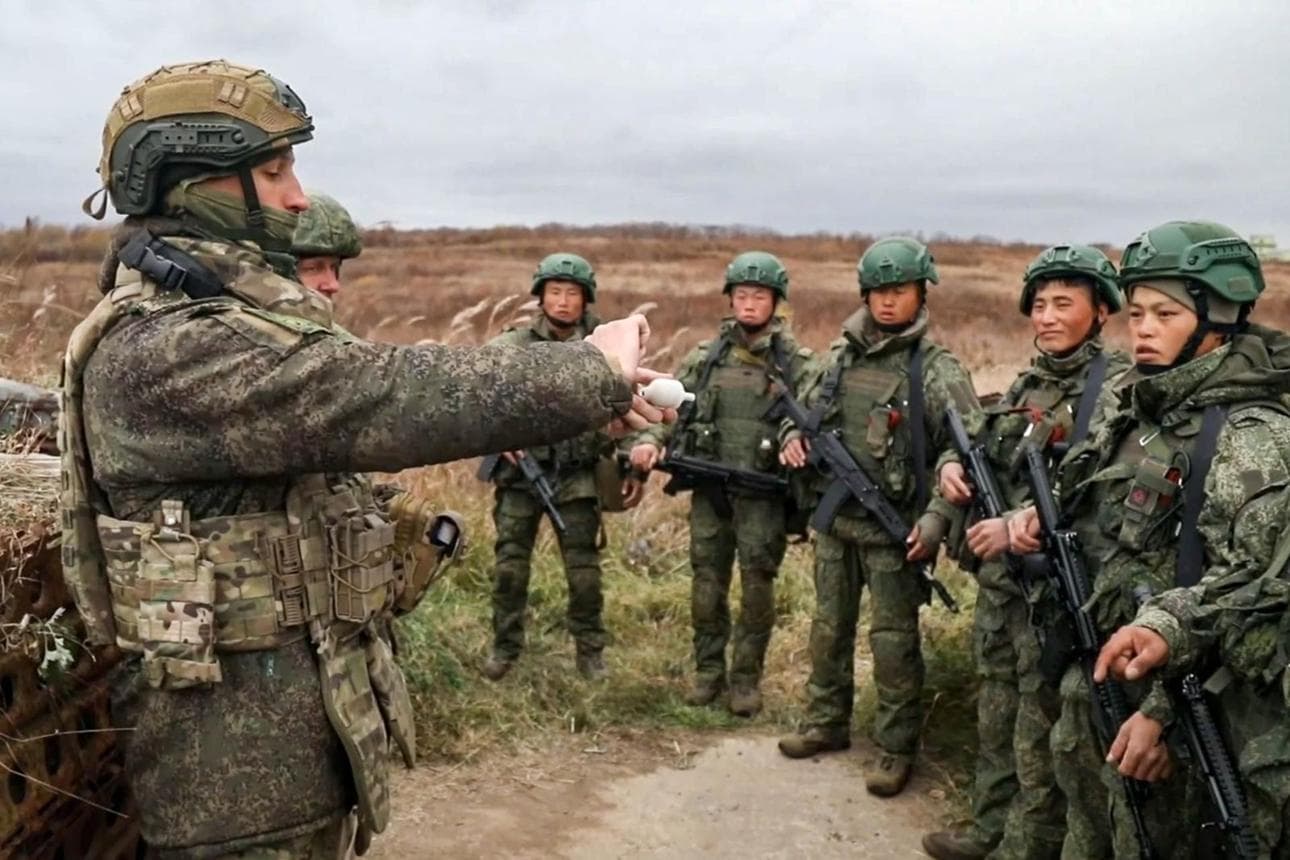
North Korea has become a material participant in Russia’s war against Ukraine. According to South Korean assessments, Pyongyang had dispatched four separate troop deployments to Russia by the end of 2025, totalling around 21,000 personnel, alongside a steady flow of artillery shells and missiles. In response, the United States, the EU and South Korea moved together to sanction North Korean military officers commanding those deployments, a rare piece of trilateral coordination that stretched a transatlantic tool into the Indo-Pacific.

The logic is not that sanctions will bankrupt a regime already among the most isolated on earth. It is that Europe’s measures against North Korea are really an extension of its Russia policy. Every shell fired from a North Korean factory into Ukraine is a shell Moscow did not have to make, and every sanctioned general is a signal that the coalition backing Kyiv sees the Russia-North Korea axis as a single problem rather than two distant ones. The EU’s sanctions regime, originally built around Pyongyang’s nuclear and ballistic-missile programmes, has been quietly repurposed to punish its support for Russia’s aggression.

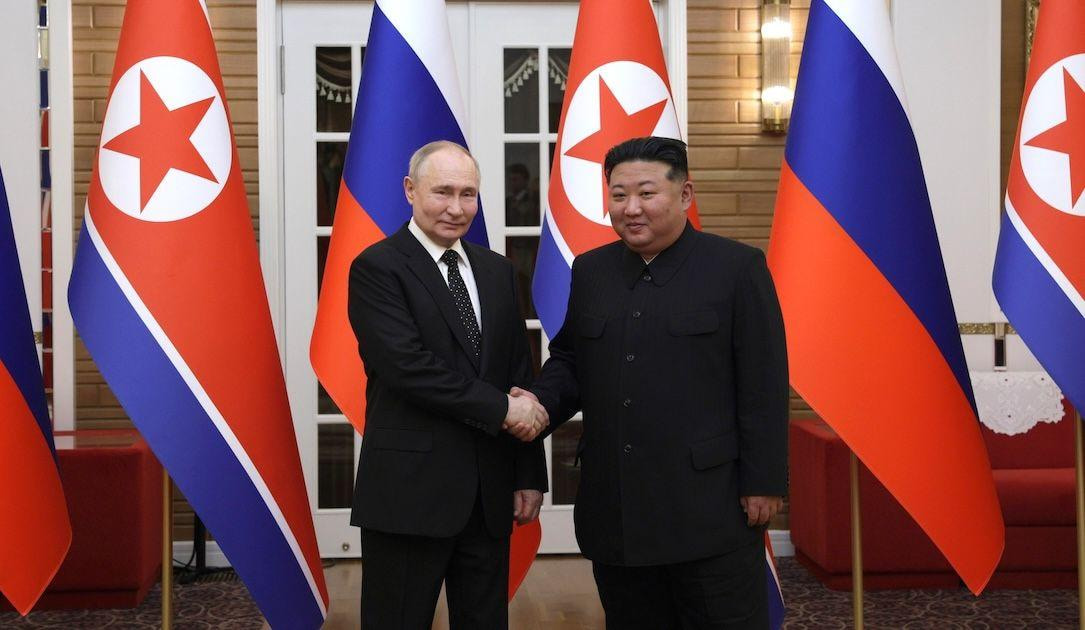
The deepening of that axis is what worries planners most. Russia’s defence minister reportedly travelled to Pyongyang in April 2026 to negotiate military cooperation covering the 2027 to 2031 period, building on the mutual-defence treaty the two signed in 2024. That points to an institutionalised partnership rather than a wartime marriage of convenience, and it raises the prospect of Russian technology, in satellites, submarines or missile guidance, flowing back to North Korea in exchange for manpower and munitions. For Europe, a Pyongyang that emerges from this war with upgraded capabilities is a direct complication for allies in Asia and a longer-term proliferation risk.

This is where the limits of the sanctions instrument become obvious. Designations impose costs on individuals and constrain financial networks, but they cannot sever a relationship that both parties value for reasons sanctions do not touch. North Korea is not seeking European markets; it is seeking Russian cash, food, fuel and know-how. The EU’s measures are therefore best understood as an exercise in coalition maintenance and signalling rather than coercion, a way of keeping European, American and Asian partners aligned around a shared reading of the threat.

The harder question is what comes after the sanctions. If Brussels wants to shape the Russia-North Korea relationship rather than merely condemn it, it will need to invest in intelligence-sharing with Indo-Pacific partners, tighten enforcement against the third-country networks that move sanctioned goods, and prepare for a post-war North Korea that is more capable and more entangled with Moscow than before. Sanctioning generals is the easy part. Managing the partnership they serve is the problem Europe has not yet solved.