August 9, 2026
LATEST
New EU Gas Market Rules Take Effect With Consumer SafeguardsDeforestation Regulation Holds Its December Deadline Despite CutsDigital Omnibus Delays Europe’s High-Risk AI Deadline to 2027Europe’s Schools Confront a Widening Basic Skills GapRule of Law Report Finds Progress but Trust Still LagsIRIS2 Gains 66 Satellites as Brussels Signs the Rollout DealNature Restoration Plans Come Due as Member States Race a DeadlineECB Rates Hold at 2.25 Percent as Frankfurt Waits on the DataEU Budget Talks Turn to Cohesion as Ireland Takes OverWildfire Response Stretches Europe’s Emergency Fleet ThinCan Europe’s Quantum Plan Match Its Big Ambitions?Armenia Edges West as Moscow’s Grip Slips AwayEurope Inherits the World’s Aid Bill It Cannot Fully PayAir Passenger Rights Get Their First Overhaul in Two DecadesErasmus Opens a 5 Billion Euro Round for Skills and MobilityCeuta Crisis Pushes the EU Toward Faster Migrant ReturnsBulky Parcels Face a Packaging Crackdown From August 12Can Europe Build Its Drone Wall Before 2030 Arrives?Indonesia’s Trade Deal With Europe Nears Its Final SignatureEurope Leans on Beijing to Keep Climate Talks Alive Before AntalyaNew EU Gas Market Rules Take Effect With Consumer SafeguardsDeforestation Regulation Holds Its December Deadline Despite CutsDigital Omnibus Delays Europe’s High-Risk AI Deadline to 2027Europe’s Schools Confront a Widening Basic Skills GapRule of Law Report Finds Progress but Trust Still LagsIRIS2 Gains 66 Satellites as Brussels Signs the Rollout DealNature Restoration Plans Come Due as Member States Race a DeadlineECB Rates Hold at 2.25 Percent as Frankfurt Waits on the DataEU Budget Talks Turn to Cohesion as Ireland Takes OverWildfire Response Stretches Europe’s Emergency Fleet ThinCan Europe’s Quantum Plan Match Its Big Ambitions?Armenia Edges West as Moscow’s Grip Slips AwayEurope Inherits the World’s Aid Bill It Cannot Fully PayAir Passenger Rights Get Their First Overhaul in Two DecadesErasmus Opens a 5 Billion Euro Round for Skills and MobilityCeuta Crisis Pushes the EU Toward Faster Migrant ReturnsBulky Parcels Face a Packaging Crackdown From August 12Can Europe Build Its Drone Wall Before 2030 Arrives?Indonesia’s Trade Deal With Europe Nears Its Final SignatureEurope Leans on Beijing to Keep Climate Talks Alive Before Antalya
August 9, 2026
LATEST
New EU Gas Market Rules Take Effect With Consumer SafeguardsDeforestation Regulation Holds Its December Deadline Despite CutsDigital Omnibus Delays Europe’s High-Risk AI Deadline to 2027Europe’s Schools Confront a Widening Basic Skills GapRule of Law Report Finds Progress but Trust Still LagsIRIS2 Gains 66 Satellites as Brussels Signs the Rollout DealNature Restoration Plans Come Due as Member States Race a DeadlineECB Rates Hold at 2.25 Percent as Frankfurt Waits on the DataEU Budget Talks Turn to Cohesion as Ireland Takes OverWildfire Response Stretches Europe’s Emergency Fleet ThinCan Europe’s Quantum Plan Match Its Big Ambitions?Armenia Edges West as Moscow’s Grip Slips AwayEurope Inherits the World’s Aid Bill It Cannot Fully PayAir Passenger Rights Get Their First Overhaul in Two DecadesErasmus Opens a 5 Billion Euro Round for Skills and MobilityCeuta Crisis Pushes the EU Toward Faster Migrant ReturnsBulky Parcels Face a Packaging Crackdown From August 12Can Europe Build Its Drone Wall Before 2030 Arrives?Indonesia’s Trade Deal With Europe Nears Its Final SignatureEurope Leans on Beijing to Keep Climate Talks Alive Before AntalyaNew EU Gas Market Rules Take Effect With Consumer SafeguardsDeforestation Regulation Holds Its December Deadline Despite CutsDigital Omnibus Delays Europe’s High-Risk AI Deadline to 2027Europe’s Schools Confront a Widening Basic Skills GapRule of Law Report Finds Progress but Trust Still LagsIRIS2 Gains 66 Satellites as Brussels Signs the Rollout DealNature Restoration Plans Come Due as Member States Race a DeadlineECB Rates Hold at 2.25 Percent as Frankfurt Waits on the DataEU Budget Talks Turn to Cohesion as Ireland Takes OverWildfire Response Stretches Europe’s Emergency Fleet ThinCan Europe’s Quantum Plan Match Its Big Ambitions?Armenia Edges West as Moscow’s Grip Slips AwayEurope Inherits the World’s Aid Bill It Cannot Fully PayAir Passenger Rights Get Their First Overhaul in Two DecadesErasmus Opens a 5 Billion Euro Round for Skills and MobilityCeuta Crisis Pushes the EU Toward Faster Migrant ReturnsBulky Parcels Face a Packaging Crackdown From August 12Can Europe Build Its Drone Wall Before 2030 Arrives?Indonesia’s Trade Deal With Europe Nears Its Final SignatureEurope Leans on Beijing to Keep Climate Talks Alive Before Antalya

Translation Backlog Slips EU Indonesia CEPA Past January Stamp

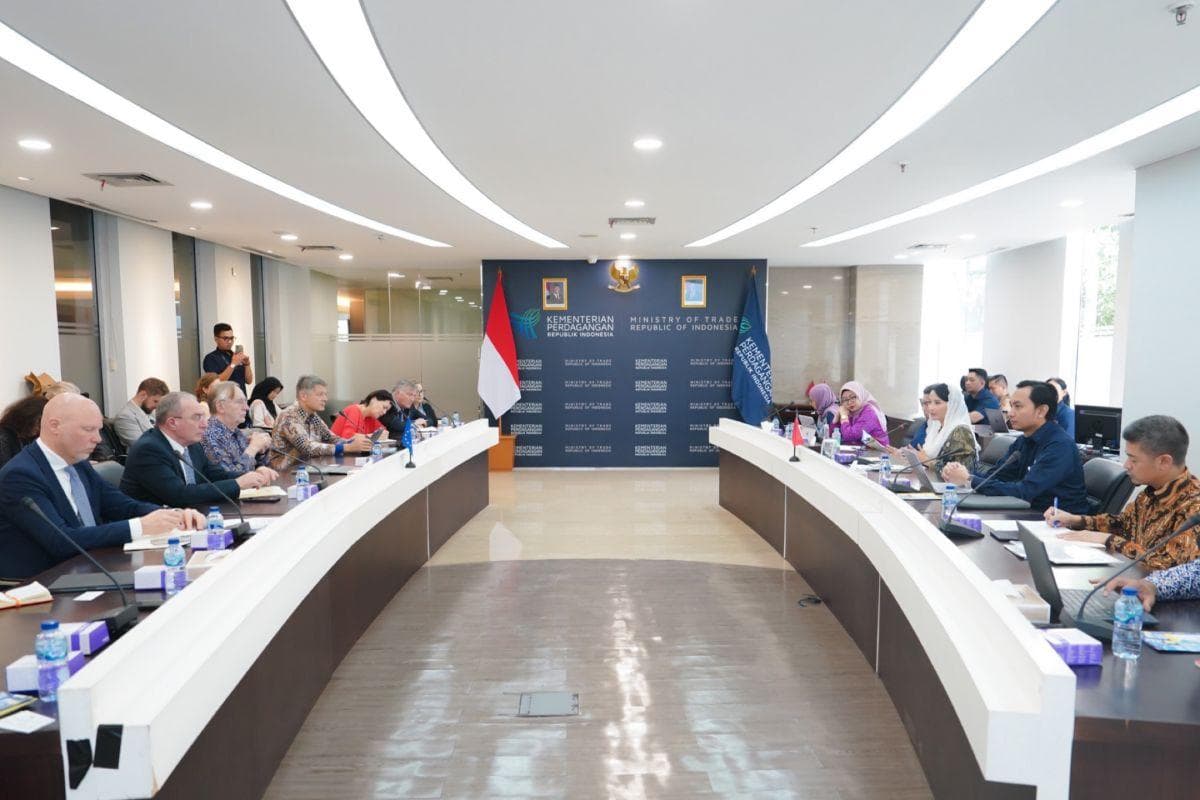
Jakarta: The legal scrubbing phase of the EU-Indonesia Comprehensive Economic Partnership Agreement has overshot the January 2026 signature target set by Trade Minister Budi Santoso, with lawyers from both sides still working through final text alignment before the European External Action Service can release clean copies for translation into the bloc’s 24 official languages.

Political conclusion came on 23 September 2025, when both delegations announced agreement on the CEPA package and on a parallel Investment Protection Agreement. The post-agreement timetable was treated, at the time, as a procedural sprint. Reality has been less linear. Scrubbing on this scale, spanning trade in goods, services, investment, government procurement, sustainable development, and a separate IPA, has generated thicker margin notes than either team anticipated. The chokepoints sit mostly on regulatory cooperation chapters and on rules-of-origin annexes for processed nickel and palm derivatives, where Jakarta’s preference for permissive cumulation language ran up against Brussels’ template after the experience of policing the Korea agreement.

Translation, more than the scrub itself, is the structural delay most outside observers underweight. The Commission’s Directorate-General for Translation handles every language version in parallel, and complex trade texts typically consume eight to ten months on the conveyor before being lockable as authentic. Officials in DG Trade and the Indonesian Coordinating Ministry for Economic Affairs now describe an internal working assumption that signature slides into the second half of 2026, with Council and Parliament consent procedures pushing implementation closer to early 2027 rather than the January 2027 commercial start Jakarta has been signalling to exporters.

The slippage carries asymmetric costs. For Indonesia, every quarter without provisional application keeps tariffs on processed fishery products, footwear, and palm oil derivatives at most-favoured-nation rates while Vietnam and Singapore, already inside the bloc’s ASEAN tariff perimeter, continue to bank the diversion gains. Jakarta’s Ministry of Trade has estimated that the CEPA, once running, could lift bilateral trade by 60 percent over a decade and remove duties on 98.5 percent of tariff lines. Those numbers are sensitive to a 2027 start. Push entry-into-force into 2028 and the headline gains shrink markedly in present-value terms.

The European side faces a different kind of cost. The CEPA was meant to anchor a three-track Indo-Pacific delivery story alongside negotiations with the Philippines and Thailand, all framed under the Global Gateway envelope. A scrub-induced drag reads, fairly or not, as evidence that the bloc’s pact-to-paper pipeline is structurally slower than the bilateral plumbing of competitors such as the United Kingdom and Australia. The CPTPP secretariat has already begun citing the comparison in track-two settings.

A substantive snag also sits in the implementation window. The Deforestation Regulation enters compliance enforcement on 30 December 2026, which lands inside the same period during which CEPA’s sustainable development chapter is meant to bed in. Indonesian palm and rubber exporters will face EUDR due diligence before any tariff cuts crystallise. That sequencing inverts the political logic Jakarta sold domestically, namely tariff wins first and regulatory adjustment later, and is already shaping how Santoso frames the deal before parliament.

The next signal worth watching is the agenda of the Council’s Trade Policy Committee in late June. If a draft proposal for signature appears on the table, the second-half window is real. If the slot stays empty, the CEPA’s clock now runs into 2027, and Indonesian exporters will need to plan around a year of further competitive lag.