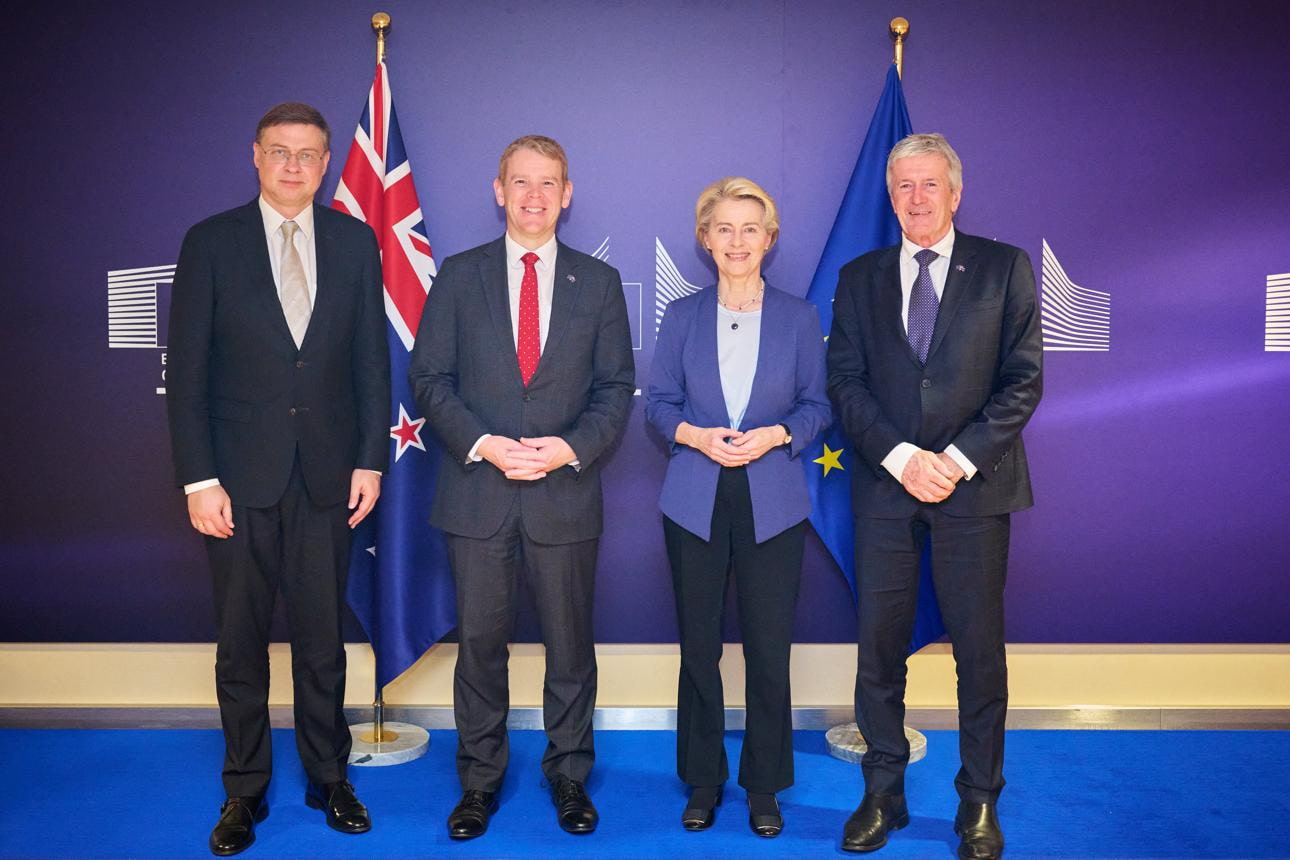
Wellington: The free trade agreement between the European Union and New Zealand was sold as a model deal, and the first hard numbers suggest the pitch was not empty. Since it entered into force in May 2024, two-way trade in goods and services has climbed to a record, and both governments used the pact’s inaugural Trade Committee to argue that liberalisation still pays even in a protectionist age.
The design was ambitious from the start. The agreement scrapped tariffs on the entirety of EU goods exports to New Zealand and cut roughly a hundred and forty million euros a year in duties for European firms from day one. A Commission overview projects bilateral trade could swell by up to thirty percent over the coming decade if the momentum holds.
For a bloc of nearly four hundred and fifty million people, New Zealand is a modest market, and the deal’s value was always as much symbolic as commercial. It bound the first sustainability chapter Europe could enforce with trade sanctions, tying preferential access to labour and climate commitments. Brussels wanted proof that its newer, greener template could be signed, ratified and made to work.
Wellington’s motives were more concrete. The European Union ranks among its largest trading partners, second only to China, and diversifying away from a single dominant buyer has become a strategic priority as Pacific trade grows more contested. Preferential entry for dairy, meat and wine into a wealthy, standards-driven market offers exporters both revenue and reputation.
The first review was not without friction. New Zealand farmers have long complained that the quotas granted for their most competitive products fall short of the openness Europe demanded elsewhere, a reminder that even model deals protect the politically sensitive. European producers, meanwhile, watch the sustainability provisions closely, wary that enforcement could tighten in ways that reshape their own obligations.
What gives the agreement wider significance is its timing. Struck as tariffs and industrial subsidies return to fashion across the major economies, it stands as a counter-example, an argument that open, rules-based trade among like-minded partners remains achievable. Every quarter of rising commerce strengthens the case that the European Commission makes when it opens the next negotiation.
The task now is to keep the numbers moving. Trade Committees can lapse into ceremony, and the gap between headline growth and the experience of individual exporters can breed complacency. If the pact’s second review shows the sustainability rules working and the trade lines still climbing, Europe will have the durable proof of concept it has been seeking.