August 9, 2026
LATEST
New EU Gas Market Rules Take Effect With Consumer SafeguardsDeforestation Regulation Holds Its December Deadline Despite CutsDigital Omnibus Delays Europe’s High-Risk AI Deadline to 2027Europe’s Schools Confront a Widening Basic Skills GapRule of Law Report Finds Progress but Trust Still LagsIRIS2 Gains 66 Satellites as Brussels Signs the Rollout DealNature Restoration Plans Come Due as Member States Race a DeadlineECB Rates Hold at 2.25 Percent as Frankfurt Waits on the DataEU Budget Talks Turn to Cohesion as Ireland Takes OverWildfire Response Stretches Europe’s Emergency Fleet ThinCan Europe’s Quantum Plan Match Its Big Ambitions?Armenia Edges West as Moscow’s Grip Slips AwayEurope Inherits the World’s Aid Bill It Cannot Fully PayAir Passenger Rights Get Their First Overhaul in Two DecadesErasmus Opens a 5 Billion Euro Round for Skills and MobilityCeuta Crisis Pushes the EU Toward Faster Migrant ReturnsBulky Parcels Face a Packaging Crackdown From August 12Can Europe Build Its Drone Wall Before 2030 Arrives?Indonesia’s Trade Deal With Europe Nears Its Final SignatureEurope Leans on Beijing to Keep Climate Talks Alive Before AntalyaNew EU Gas Market Rules Take Effect With Consumer SafeguardsDeforestation Regulation Holds Its December Deadline Despite CutsDigital Omnibus Delays Europe’s High-Risk AI Deadline to 2027Europe’s Schools Confront a Widening Basic Skills GapRule of Law Report Finds Progress but Trust Still LagsIRIS2 Gains 66 Satellites as Brussels Signs the Rollout DealNature Restoration Plans Come Due as Member States Race a DeadlineECB Rates Hold at 2.25 Percent as Frankfurt Waits on the DataEU Budget Talks Turn to Cohesion as Ireland Takes OverWildfire Response Stretches Europe’s Emergency Fleet ThinCan Europe’s Quantum Plan Match Its Big Ambitions?Armenia Edges West as Moscow’s Grip Slips AwayEurope Inherits the World’s Aid Bill It Cannot Fully PayAir Passenger Rights Get Their First Overhaul in Two DecadesErasmus Opens a 5 Billion Euro Round for Skills and MobilityCeuta Crisis Pushes the EU Toward Faster Migrant ReturnsBulky Parcels Face a Packaging Crackdown From August 12Can Europe Build Its Drone Wall Before 2030 Arrives?Indonesia’s Trade Deal With Europe Nears Its Final SignatureEurope Leans on Beijing to Keep Climate Talks Alive Before Antalya
August 9, 2026
LATEST
New EU Gas Market Rules Take Effect With Consumer SafeguardsDeforestation Regulation Holds Its December Deadline Despite CutsDigital Omnibus Delays Europe’s High-Risk AI Deadline to 2027Europe’s Schools Confront a Widening Basic Skills GapRule of Law Report Finds Progress but Trust Still LagsIRIS2 Gains 66 Satellites as Brussels Signs the Rollout DealNature Restoration Plans Come Due as Member States Race a DeadlineECB Rates Hold at 2.25 Percent as Frankfurt Waits on the DataEU Budget Talks Turn to Cohesion as Ireland Takes OverWildfire Response Stretches Europe’s Emergency Fleet ThinCan Europe’s Quantum Plan Match Its Big Ambitions?Armenia Edges West as Moscow’s Grip Slips AwayEurope Inherits the World’s Aid Bill It Cannot Fully PayAir Passenger Rights Get Their First Overhaul in Two DecadesErasmus Opens a 5 Billion Euro Round for Skills and MobilityCeuta Crisis Pushes the EU Toward Faster Migrant ReturnsBulky Parcels Face a Packaging Crackdown From August 12Can Europe Build Its Drone Wall Before 2030 Arrives?Indonesia’s Trade Deal With Europe Nears Its Final SignatureEurope Leans on Beijing to Keep Climate Talks Alive Before AntalyaNew EU Gas Market Rules Take Effect With Consumer SafeguardsDeforestation Regulation Holds Its December Deadline Despite CutsDigital Omnibus Delays Europe’s High-Risk AI Deadline to 2027Europe’s Schools Confront a Widening Basic Skills GapRule of Law Report Finds Progress but Trust Still LagsIRIS2 Gains 66 Satellites as Brussels Signs the Rollout DealNature Restoration Plans Come Due as Member States Race a DeadlineECB Rates Hold at 2.25 Percent as Frankfurt Waits on the DataEU Budget Talks Turn to Cohesion as Ireland Takes OverWildfire Response Stretches Europe’s Emergency Fleet ThinCan Europe’s Quantum Plan Match Its Big Ambitions?Armenia Edges West as Moscow’s Grip Slips AwayEurope Inherits the World’s Aid Bill It Cannot Fully PayAir Passenger Rights Get Their First Overhaul in Two DecadesErasmus Opens a 5 Billion Euro Round for Skills and MobilityCeuta Crisis Pushes the EU Toward Faster Migrant ReturnsBulky Parcels Face a Packaging Crackdown From August 12Can Europe Build Its Drone Wall Before 2030 Arrives?Indonesia’s Trade Deal With Europe Nears Its Final SignatureEurope Leans on Beijing to Keep Climate Talks Alive Before Antalya

Why Vietnam Became Europe’s Closest Partner In Southeast Asia

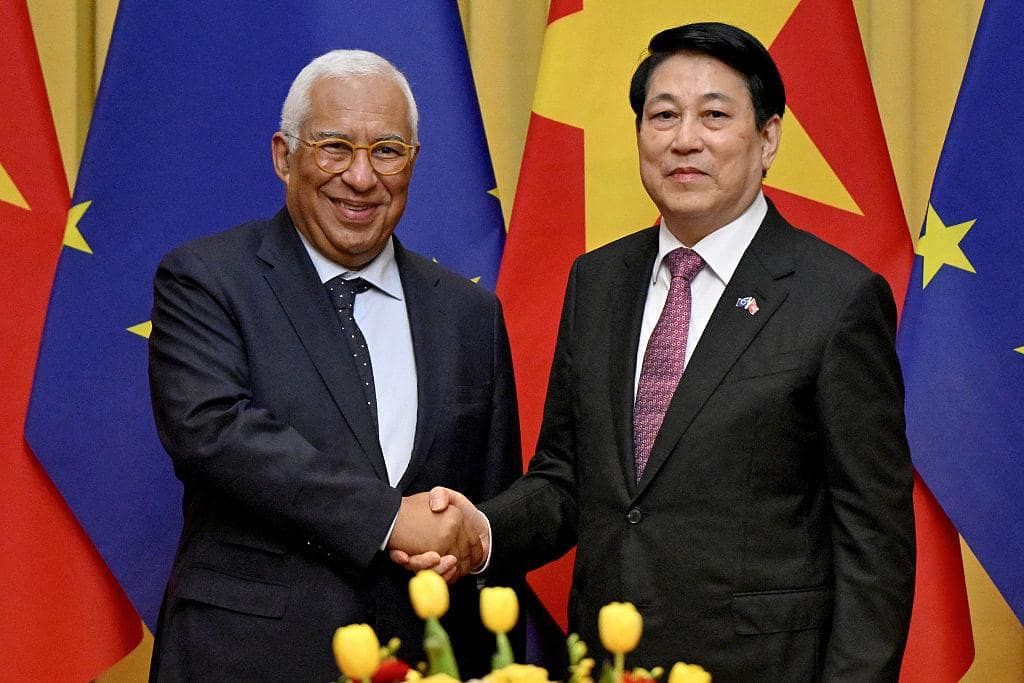
Hanoi: For a country that spent much of the twentieth century at war with European powers, Vietnam’s diplomatic arrival in Brussels has been quietly remarkable. On 29 January the European Union and Vietnam elevated their relationship to a comprehensive strategic partnership, the highest tier the bloc maintains, and the first it has granted to any member of the Association of Southeast Asian Nations. The upgrade is more than protocol. It signals that Europe now regards Hanoi not as a peripheral trading counterpart but as a structural partner in a region it has long struggled to anchor itself in.

The foundation was laid five years earlier. The EU-Vietnam free trade agreement, in force since August 2020, has matured into one of the bloc’s more successful experiments in Asian commerce. It eliminates more than 99 percent of tariffs once the phase-in is complete, and the results are visible in the numbers. Bilateral trade in the first eleven months of 2025 passed 66 billion dollars, up nearly seven percent on the year, and the agreement has channelled close to 300 billion dollars in trade across its five years. Vietnam is now the EU’s largest trading partner in Southeast Asia, a position once assumed to belong to wealthier neighbours.

What makes the partnership strategically interesting is what sits beneath the trade figures. At the EU-Vietnam business forum in Hanoi, the Commission committed more than 560 million euros to sustainable transport and clean energy under its Global Gateway initiative, the bloc’s answer to China’s Belt and Road. The sums are modest beside Beijing’s, but the framing is deliberate. Europe is offering infrastructure tied to standards, transparency and local employment rather than to debt. For a government in Hanoi that practises a careful equidistance between Washington and Beijing, a third partner with capital but no security agenda is precisely the kind of relationship it prizes.

The timing is not accidental either. The partnership was sealed in the same week that Brussels concluded its trade talks with India, and the two moves should be read together. Europe’s Indo-Pacific strategy has long been criticised as a document in search of substance, a list of intentions unmatched by commitments. The Vietnam upgrade and the India agreement begin to give it weight, anchoring the bloc’s presence through deep, rules-based partnerships with the two Asian economies most eager for an alternative to dependence on a single great power.

There are limits worth naming. Vietnam’s human rights record remains a recurring source of friction in the European Parliament, where ratification of the investment side of the relationship was once slowed by precisely those concerns. The comprehensive partnership does not dissolve that tension; it brackets it in the name of strategic convenience, a trade-off Europe makes more readily in Asia than it likes to admit. And Hanoi’s prized autonomy cuts both ways. A partner that refuses to choose sides is, by definition, a partner Europe cannot fully count on.

Still, the direction is clear. As the ASEAN bloc gathers this week in Hanoi for its Future Forum, with Vietnam positioning itself as a bridge between the trans-Pacific trade pact and the European market, the EU has signalled that its Asian ambitions will be built partner by partner rather than declared all at once. Vietnam, improbably, has become the template.