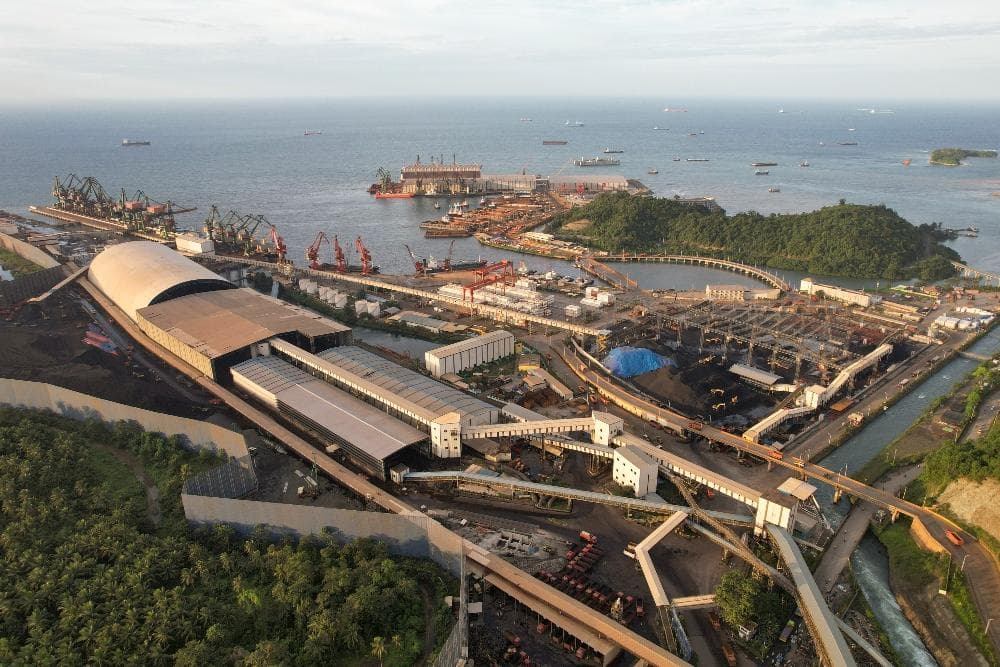
Morowali: The industrial park on Sulawesi’s eastern coast smelts more nickel than most countries mine. Chinese capital built it, Indonesian law required it, and European policymakers have spent six years arguing about whether either of those facts is acceptable.
Indonesia banned exports of unprocessed nickel ore in 2020 and added bauxite in 2023. The policy worked on its own terms. Investors who wanted Indonesian ore had to build smelters in Indonesia, and they did, overwhelmingly with Chinese money and Chinese technology. Jakarta captured processing value that previously accrued elsewhere. It also handed effective control of a strategic supply chain to a single foreign investor base.
Brussels challenged the ban at the World Trade Organization and won. A panel found in November 2022 that the export prohibition and the domestic processing requirement breached the General Agreement on Tariffs and Trade. Indonesia then appealed into a body that no longer functions, freezing the ruling indefinitely. The case demonstrated both that Europe was right on the law and that being right on the law now settles very little.
The Comprehensive Economic Partnership Agreement is the second attempt. Negotiators concluded the text and the Commission has proposed eliminating duties on roughly 98.5 percent of tariff lines. Jakarta aims to sign in the final quarter of this year, with ratification by the European Parliament and the Indonesian legislature to follow and entry into force targeted for the start of 2027. Palm oil and market access dominate the public commentary. The energy and raw materials chapter deserves more of it.
Europe went into these talks seeking disciplines on export restrictions and the elimination of export duties on raw materials. Indonesia went in determined to protect the downstreaming policy that has become the centrepiece of its industrial strategy. Those positions cannot both be fully satisfied, and the compromise will reveal what the Union’s economic security doctrine is actually worth when a partner says no.
The wider question is whether trade agreements can deliver supply chain security at all. A raw materials chapter binds a government. It does not bind the companies that own the smelters, and in Morowali those companies answer to shareholders in another jurisdiction entirely. Europe could win perfect legal access to Indonesian nickel and still find that the refined product moves under contracts written in Chinese, priced against Chinese demand and shipped to Chinese battery plants.
That is the uncomfortable lesson of the past decade. Access is a legal category and control is a commercial one, and European instruments address the first far better than the second. The Critical Raw Materials Act sets processing and recycling targets precisely because officials recognise the gap. Meeting those targets requires refineries in Europe, which requires electricity prices and permitting timelines that member states have not yet delivered.
None of this argues against the agreement. Indonesia is the fourth most populous country on earth, its economy is growing steadily, and a trade relationship governed by rules beats one governed by episodic disputes. It argues instead for honesty about what the deal achieves. Signing it will not give Europe nickel. It will give Europe a forum in which to ask for it, which is a genuine improvement on a frozen appeal at a paralysed tribunal.
The original panel report remains on the World Trade Organization case file, and the Commission set out its reading of the ruling in a 2022 statement.