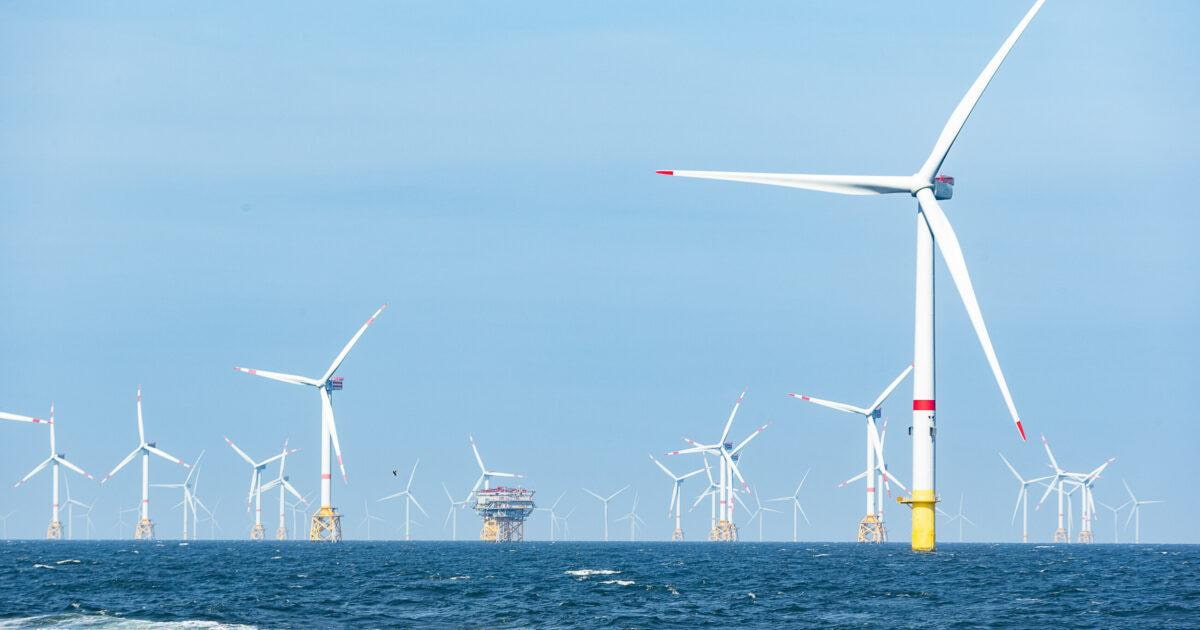
Ostend: The European Commission cleared €2.04 billion in Belgian offshore wind aid on 10 November 2026, giving Belgium a fresh legal basis to restart the first tender in the Princess Elisabeth zone of the North Sea. The approval covers a single site, known as lot 1, where a farm of up to 735 MW could generate as much as 2.6 TWh of renewable electricity each year.
The decision closes a frustrating chapter for Belgian energy planners. In 2024 the Commission had approved a smaller measure, reported at €682 million, under the Temporary Crisis and Transition Framework. Belgium never granted that money before the 31 December 2025 deadline because it suspended the tender as grid-infrastructure costs climbed sharply. The new Belgian offshore wind aid replaces that lapsed measure with a larger maximum budget and a longer horizon.
Officials assessed the Belgian offshore wind aid under the Clean Industrial Deal State Aid Framework, known as CISAF, which the Commission adopted on 25 June 2025. They relied on sections 3 and 4.1.2 of that framework and on Article 107(3)(c) of the Treaty on the Functioning of the European Union, which allows aid that develops an economic activity without distorting competition against the common interest.
The support runs for 20 years and takes the form of a monthly variable premium under a two-way contract for difference. When the reference market price falls below the winning bid, the Belgian state pays the difference. When the market price rises above the bid, the operator pays money back. This symmetric design limits windfall profits and protects public finances during price spikes.
The scheme also breaks with older models in one technical respect. Compensation is capability-based, meaning the state calculates payments on what the turbines could produce rather than on actual output. As a result, the operator receives no support in hours when electricity has a negative market value, which removes any incentive to keep generating into an oversupplied grid.
Belgium will award the contract through a transparent, non-discriminatory competitive bidding process, with results expected in the fourth quarter of 2027. Bidders must also meet prequalification criteria drawn from the Net Zero Industry Act, including requirements to diversify supply chains for turbines and main components away from dependence on non-European imports. That clause links the Belgian offshore wind aid directly to the wider EU agenda on industrial resilience.
Teresa Ribera, Executive Vice-President for a Clean, Just and Competitive Transition, framed the decision around energy independence. She argued that every unit of power produced in Europe is one that Europe does not need to import, and said the scheme supports both decarbonisation and security of supply.
For Belgium, the stakes go beyond one wind farm. The Princess Elisabeth zone sits at the heart of the national plan to expand offshore capacity, and the earlier suspension showed how quickly rising network costs can stall a flagship project. Developers will now watch whether the Belgian offshore wind aid, with its bigger budget and contract-for-difference structure, attracts enough competitive bids in 2027.
If the tender succeeds, the Belgian offshore wind aid will become one of the first large renewable schemes approved under CISAF to move from paper to steel in the North Sea. Its outcome will also show other Member States how far the new framework can carry projects squeezed by grid costs and supply-chain risks.