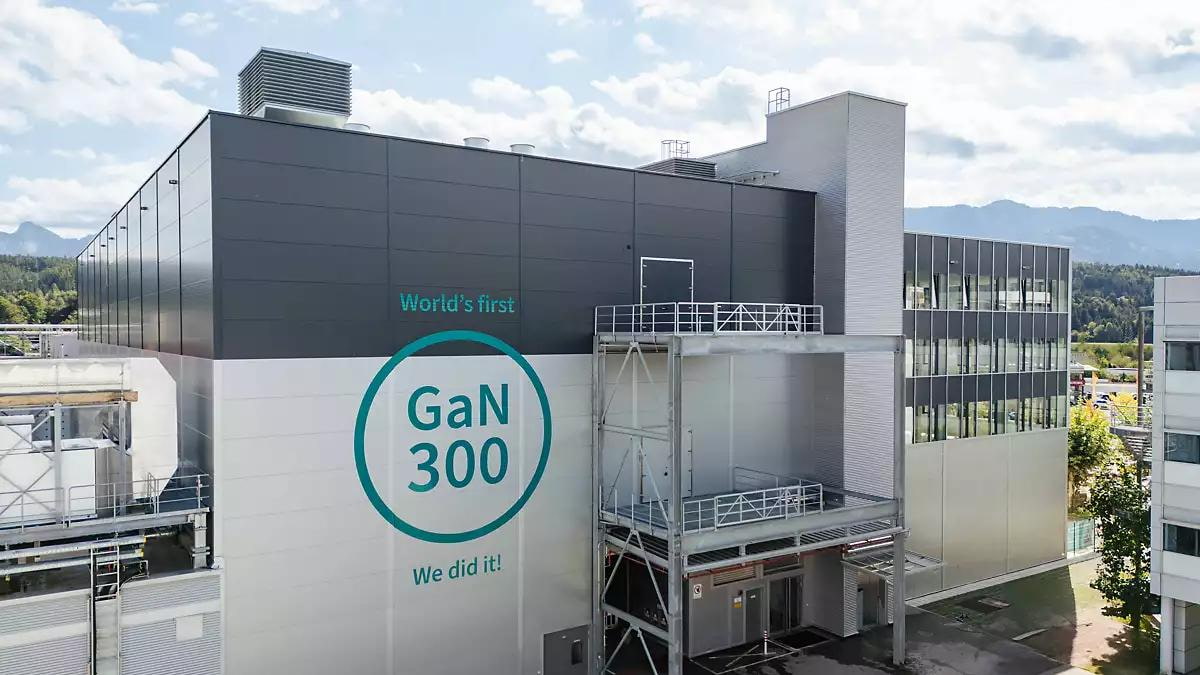
Villach: The European Commission has approved €319 million in Austrian State aid for an Infineon GaN plant in Villach, Carinthia, in a decision announced on 28 October 2026. The direct grant supports Infineon Technologies Austria AG as it upgrades its existing site to mass-produce power semiconductors made from gallium nitride on 300 mm wafers.
The Commission calls the Infineon GaN plant first-of-a-kind in the European Union. Today, European manufacturers produce power gallium nitride, or GaN, only on wafers of up to 200 mm. Moving to 300 mm wafers yields about 2.3 times more chips per wafer, which cuts unit costs and could help European suppliers compete with Asian and American rivals in a fast-growing market.
Infineon calls the investment its Empowering Fab project and plans to spend around €1.1 billion in Villach by 2034. The company will reuse existing cleanroom infrastructure rather than build a new shell, which shortens timelines. Industry reports put the start of high-volume production at the end of 2027, while the full set of upgrades should run until 2034.
The Commission assessed the Infineon GaN plant under Article 107(3)(c) of the Treaty on the Functioning of the European Union, read in light of the principles of the European Chips Act. Officials concluded that the aid has an incentive effect, that Infineon faced a proven funding gap, and that the grant stays proportionate with limited effects on competition. The case carries the reference SA.113427, and the Commission will publish a non-confidential version of the decision later.
The approval comes with conditions designed to spread benefits beyond one company. Infineon must widen the impact of the project across the EU value chain by working more closely with start-ups, small and medium-sized enterprises, universities and research organisations. That cooperation includes access to hardware and software kits and to laboratory facilities. The company must also run education and skills programmes, and it will share with Austria any project profits that exceed current expectations.
Power GaN chips matter because they switch electricity more efficiently than traditional silicon devices. Engineers use them in fast chargers, data-centre power supplies, solar inverters and electric vehicles, all sectors where Europe wants stronger domestic supply after the chip shortages of recent years.
Austrian leaders welcomed the decision. Chancellor Christian Stocker described it as one of the largest single investments in the history of Austrian high-tech industry. Infineon chief executive Jochen Hanebeck said the Infineon GaN plant would make the group the first company worldwide to bring GaN power electronics into volume production.
The Villach site, home to the new Infineon GaN plant, already anchors the regional economy. Infineon Austria employs about 5,800 people, roughly 4,800 of them at the Villach plant, although the company has not published a figure for new jobs linked to the upgrade.
For EU digital and industrial policy, the Infineon GaN plant offers a test of whether targeted aid can turn European research strengths into manufacturing scale. If production starts on schedule in late 2027, Villach could become a reference point for the next wave of Chips Act support across the Union.