August 9, 2026
LATEST
New EU Gas Market Rules Take Effect With Consumer SafeguardsDeforestation Regulation Holds Its December Deadline Despite CutsDigital Omnibus Delays Europe’s High-Risk AI Deadline to 2027Europe’s Schools Confront a Widening Basic Skills GapRule of Law Report Finds Progress but Trust Still LagsIRIS2 Gains 66 Satellites as Brussels Signs the Rollout DealNature Restoration Plans Come Due as Member States Race a DeadlineECB Rates Hold at 2.25 Percent as Frankfurt Waits on the DataEU Budget Talks Turn to Cohesion as Ireland Takes OverWildfire Response Stretches Europe’s Emergency Fleet ThinCan Europe’s Quantum Plan Match Its Big Ambitions?Armenia Edges West as Moscow’s Grip Slips AwayEurope Inherits the World’s Aid Bill It Cannot Fully PayAir Passenger Rights Get Their First Overhaul in Two DecadesErasmus Opens a 5 Billion Euro Round for Skills and MobilityCeuta Crisis Pushes the EU Toward Faster Migrant ReturnsBulky Parcels Face a Packaging Crackdown From August 12Can Europe Build Its Drone Wall Before 2030 Arrives?Indonesia’s Trade Deal With Europe Nears Its Final SignatureEurope Leans on Beijing to Keep Climate Talks Alive Before AntalyaNew EU Gas Market Rules Take Effect With Consumer SafeguardsDeforestation Regulation Holds Its December Deadline Despite CutsDigital Omnibus Delays Europe’s High-Risk AI Deadline to 2027Europe’s Schools Confront a Widening Basic Skills GapRule of Law Report Finds Progress but Trust Still LagsIRIS2 Gains 66 Satellites as Brussels Signs the Rollout DealNature Restoration Plans Come Due as Member States Race a DeadlineECB Rates Hold at 2.25 Percent as Frankfurt Waits on the DataEU Budget Talks Turn to Cohesion as Ireland Takes OverWildfire Response Stretches Europe’s Emergency Fleet ThinCan Europe’s Quantum Plan Match Its Big Ambitions?Armenia Edges West as Moscow’s Grip Slips AwayEurope Inherits the World’s Aid Bill It Cannot Fully PayAir Passenger Rights Get Their First Overhaul in Two DecadesErasmus Opens a 5 Billion Euro Round for Skills and MobilityCeuta Crisis Pushes the EU Toward Faster Migrant ReturnsBulky Parcels Face a Packaging Crackdown From August 12Can Europe Build Its Drone Wall Before 2030 Arrives?Indonesia’s Trade Deal With Europe Nears Its Final SignatureEurope Leans on Beijing to Keep Climate Talks Alive Before Antalya
August 9, 2026
LATEST
New EU Gas Market Rules Take Effect With Consumer SafeguardsDeforestation Regulation Holds Its December Deadline Despite CutsDigital Omnibus Delays Europe’s High-Risk AI Deadline to 2027Europe’s Schools Confront a Widening Basic Skills GapRule of Law Report Finds Progress but Trust Still LagsIRIS2 Gains 66 Satellites as Brussels Signs the Rollout DealNature Restoration Plans Come Due as Member States Race a DeadlineECB Rates Hold at 2.25 Percent as Frankfurt Waits on the DataEU Budget Talks Turn to Cohesion as Ireland Takes OverWildfire Response Stretches Europe’s Emergency Fleet ThinCan Europe’s Quantum Plan Match Its Big Ambitions?Armenia Edges West as Moscow’s Grip Slips AwayEurope Inherits the World’s Aid Bill It Cannot Fully PayAir Passenger Rights Get Their First Overhaul in Two DecadesErasmus Opens a 5 Billion Euro Round for Skills and MobilityCeuta Crisis Pushes the EU Toward Faster Migrant ReturnsBulky Parcels Face a Packaging Crackdown From August 12Can Europe Build Its Drone Wall Before 2030 Arrives?Indonesia’s Trade Deal With Europe Nears Its Final SignatureEurope Leans on Beijing to Keep Climate Talks Alive Before AntalyaNew EU Gas Market Rules Take Effect With Consumer SafeguardsDeforestation Regulation Holds Its December Deadline Despite CutsDigital Omnibus Delays Europe’s High-Risk AI Deadline to 2027Europe’s Schools Confront a Widening Basic Skills GapRule of Law Report Finds Progress but Trust Still LagsIRIS2 Gains 66 Satellites as Brussels Signs the Rollout DealNature Restoration Plans Come Due as Member States Race a DeadlineECB Rates Hold at 2.25 Percent as Frankfurt Waits on the DataEU Budget Talks Turn to Cohesion as Ireland Takes OverWildfire Response Stretches Europe’s Emergency Fleet ThinCan Europe’s Quantum Plan Match Its Big Ambitions?Armenia Edges West as Moscow’s Grip Slips AwayEurope Inherits the World’s Aid Bill It Cannot Fully PayAir Passenger Rights Get Their First Overhaul in Two DecadesErasmus Opens a 5 Billion Euro Round for Skills and MobilityCeuta Crisis Pushes the EU Toward Faster Migrant ReturnsBulky Parcels Face a Packaging Crackdown From August 12Can Europe Build Its Drone Wall Before 2030 Arrives?Indonesia’s Trade Deal With Europe Nears Its Final SignatureEurope Leans on Beijing to Keep Climate Talks Alive Before Antalya

Brussels reopens nuclear track in response to Middle East shock

Strasbourg: The European Commission’s AccelerateEU communication, presented on 22 April 2026, marks a pivot in the Union’s energy architecture. Drafted in response to a renewed price shock following the closure of the Strait of Hormuz, the document binds short-term emergency measures to the long-arc strategy of building a sovereign energy union by 2030. The Commission estimated that the disruption added 22 billion euros to the bloc’s fossil fuel import bill within forty-four days, with no additional supply secured.

The communication is built around five intervention areas. First, immediate consumer relief, channelled through the Citizens’ Energy Package adopted in March, prioritises vulnerable households facing energy poverty. Second, coordination among Member States is reinforced to fill gas storage facilities, manage cross-border flows and conduct joint purchases where possible. Third, electrification of industry, buildings and transport is given quantified targets, alongside the removal of regulatory barriers that have slowed the conversion away from gas boilers and combustion engines. Fourth, grid modernisation accelerates through the implementation of the Grids Package and Energy Highways projects. Fifth, private capital mobilisation will be supported through a high-level Clean Energy Investment Summit later in 2026.

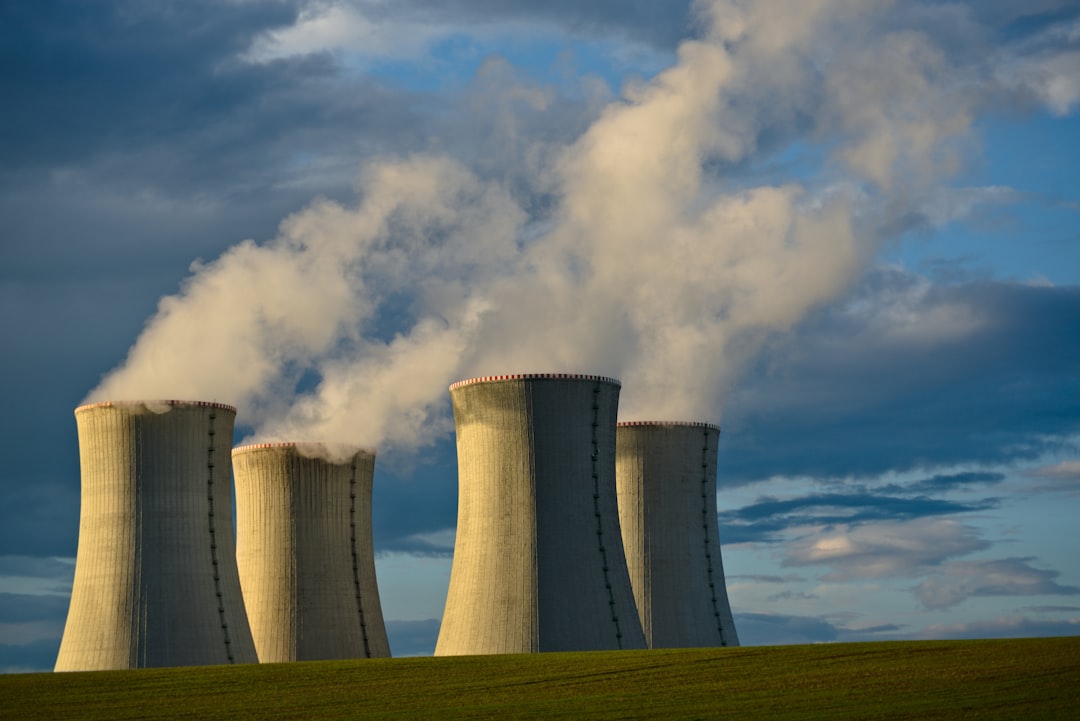
More consequential for the medium term is the explicit return of nuclear power to the strategic framework. The Commission identifies expanded renewables and nuclear as the joint backbone of the bloc’s electricity system, observing that the two sources already provide over seventy per cent of European electricity. The Commission has been candid about the structural weaknesses that have prevented this clean baseload from translating into lower prices: limited storage capacity, ageing transmission infrastructure and wasted clean power that cannot reach demand centres.

The Commission’s 2026 work programme, titled Europe’s Independence Moment, sets out a legislative pipeline that begins with the Electrification Strategy and Energy Security Package in the first quarter. By the second half, the agenda shifts to the post-2030 framework, including legislative proposals on Energy Union Governance, the Renewable Energy Directive, the Energy Efficiency Directive and CO2 transport infrastructure. A separate strategy for the first fusion power plants in Europe has been announced, with the adoption date still to be confirmed. The Energy Omnibus, part of the simplification agenda, will rationalise overlapping product-level energy legislation.

The Renewable Energy Directive’s post-2030 framework is now under public consultation, with the call for evidence open until 16 April and the broader consultation running until 12 June 2026. The current directive, first introduced in 2009 and last revised in 2023, sets a binding renewable target of at least 42.5 per cent of energy use by 2030, with an ambition of 45 per cent. The legislative proposal scheduled for the end of 2026 will define how renewables contribute to the 90 per cent emissions reduction target for 2040 in a cost-efficient manner.

Eurostat data underline the structural transition already under way. Greenhouse gas emissions across the EU fell by 36 per cent between 1990 and 2023, and net emissions are now below 1990 levels in 23 of 27 Member States. Romania, Lithuania and Estonia have recorded the steepest cuts. Wind contributes 18 per cent and solar 9 per cent of electricity generation, with nuclear at 23 per cent and hydropower at 12 per cent.

Reviewing the Emissions Trading System remains the most politically charged file. Analysts at the Jacques Delors Centre have warned that any substantial weakening of ETS-1 in 2026, without strengthening the other pillars, would risk destabilising the entire decarbonisation structure. Election dynamics complicate the picture: voters in France, Italy and Poland head to the polls in 2027, and political appetite for ambitious climate decisions is closely tied to industrial competitiveness concerns. The Commission has proposed dedicating 35 per cent of the nearly two-trillion-euro long-term budget to climate and environment objectives — a figure that climate NGOs consider too modest given the gap between investment needs and current flows.