Athens: Every summer the same anxious arithmetic returns to the countries ringing the Mediterranean. How many aircraft, how many crews, how many days of dry wind before the first major fire outruns the resources on hand. This year Europe enters that season with a slowly expanding shared fleet and a frank acknowledgement that the threat is growing faster than the hardware.
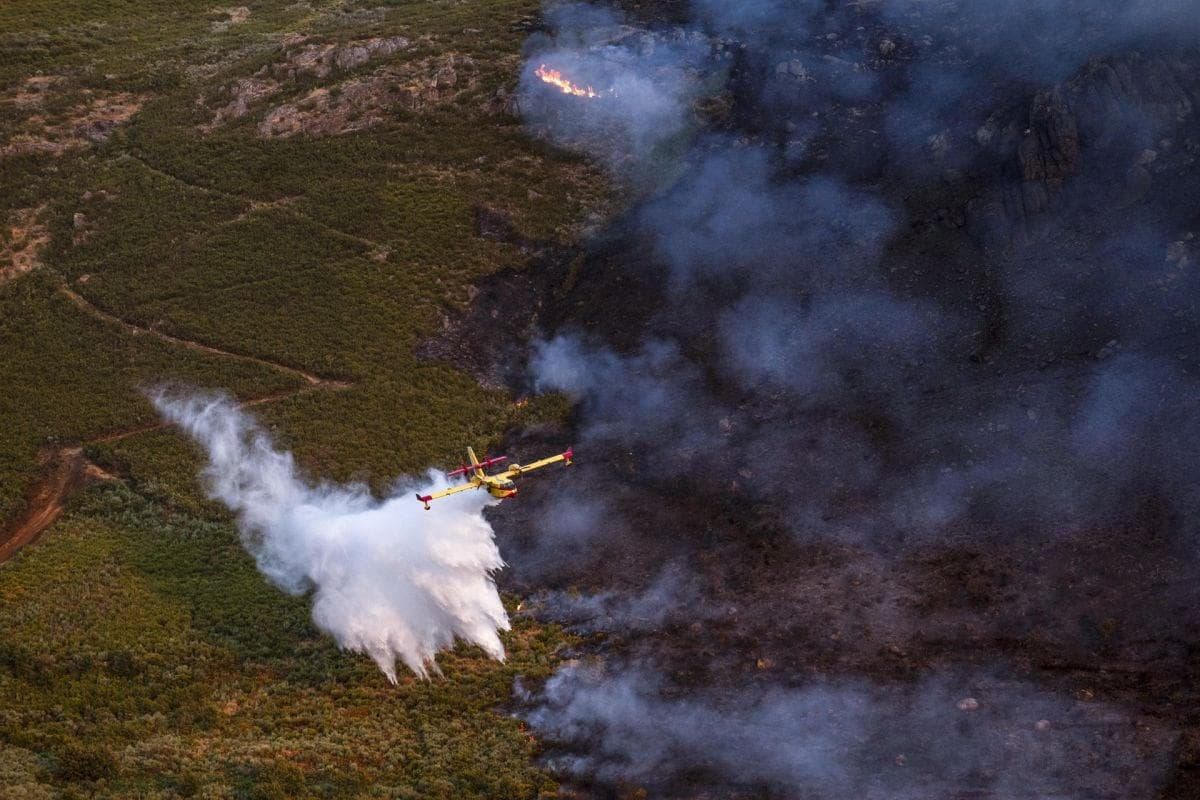
The instrument at the centre of the response is the Union Civil Protection Mechanism and its reserve of jointly held assets, known as rescEU. The Commission has committed to acquiring twelve new firefighting planes, to be based in Portugal, Spain, France, Italy, Croatia and Greece, the arc of countries that absorbs the heaviest fire load. Three new helicopters are destined for Slovakia, Czechia and Romania. The first of those helicopters was delivered to Romania in January and is expected to be ready for this year’s campaign. The planes, however, are a longer wait: the first are not expected to be available until the 2028 season, a gap that leaves the bloc leaning on aircraft offered up by member states in the meantime.
That reliance on national contributions is the mechanism’s defining feature and its recurring vulnerability. When several countries burn at once, the same planes cannot be in two places, and the decision about where to send shared capacity falls to the Commission and the affected states together. The system works best when fires are staggered and worst when a heatwave ignites the whole southern flank simultaneously, which is increasingly the pattern climate scientists describe.
To buy time, the bloc has invested in seeing trouble before it arrives. The European Forest Fire Information System forecasts dangerous conditions up to ten days ahead and tracks active fires and burnt areas in near real time, feeding the judgement calls about where to pre-position aircraft. A parallel flood awareness system does the same work for water, projecting possible flooding across large transnational river basins more than a week out. The logic is preventive: a helicopter moved into position before the wind turns is worth several scrambled after the fact.
In March the Commission went further, launching a dedicated wildfire strategy that treats prevention, preparedness and response as a single chain rather than separate budget lines. The framing reflects hard-won experience. Years of devastating summers in Greece, Portugal and beyond have shown that suppression alone is a losing battle when landscapes are left to dry and rural land management erodes. Clearing undergrowth, restoring firebreaks and rethinking where people build all sit upstream of any water drop.
For the crews who will fly this summer, the strategy documents and procurement timelines are abstractions. What matters is whether the aircraft are fuelled, the forecasts accurate and the cross-border requests answered quickly when a fire jumps a containment line. The expanded fleet is real progress, but it is arriving in instalments, and the fire season does not wait for delivery schedules. The coming months will test whether Europe’s collective preparedness has finally begun to close the distance on a hazard that grows a little less predictable each year.