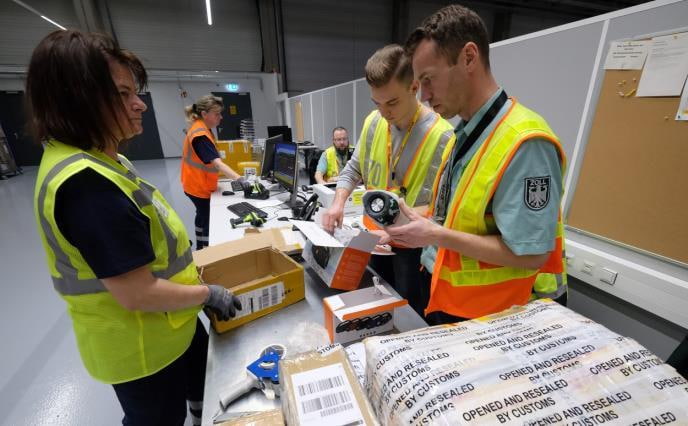
Brussels: In the vast air-freight halls that funnel millions of small packages into the European market each week, a quiet but consequential change took effect on the first of July. The European Union began charging a temporary flat customs duty of three euros on every low-value consignment worth up to 150 euros arriving from outside the bloc, closing an exemption that had let such parcels enter duty-free for years. Officials describe the measure as a stopgap that will run until the first of July 2028, bridging the gap until the full machinery of a modernised customs system is in place.
The flat fee is only the most visible piece of a far larger overhaul. In late March, Parliament and the Council reached political agreement on what the Commission calls the most ambitious reform of the customs union since it was founded in 1968. At its centre sits a new EU Customs Authority and an EU Customs Data Hub, a single digital backbone intended to replace the patchwork of national IT systems that importers navigate today. The Commission estimates the Hub could eventually save member states as much as two billion euros a year in running costs, while giving authorities a consolidated view of who is shipping what, and from where.
The reform responds to a problem that has grown difficult to ignore. Roughly 4.6 billion low-value parcels entered the Union in 2024, the overwhelming majority of them from a handful of online platforms based in China. Under the old threshold, many consignments were undervalued or split into smaller shipments to slip beneath the duty line, depriving national treasuries of revenue and leaving customs officers with little capacity to check whether goods met European safety and product rules. To sharpen enforcement, product identifiers will become mandatory from the first of November, allowing officials to flag unsafe or non-compliant items before they reach a doorstep. Traders can begin declaring those identifiers voluntarily from July.
Retailers and logistics operators have warned that the new obligations carry costs of their own. Postal services and express couriers must adapt their handling systems, and some smaller importers argue the three-euro charge, modest in isolation, will nonetheless nudge up prices for the cheap consumer goods that European households have come to expect. Consumer advocates counter that a market flooded with untraceable, sometimes hazardous products was never truly cheap once the hidden costs of unsafe toys, electronics and cosmetics were counted.
What happens next will test whether the political ambition survives contact with implementation. The Data Hub must be built and populated, national administrations must be brought onto a common platform, and the temporary fee must give way to a permanent regime that treats a parcel from a distant warehouse no differently from a container crossing a port. For the towns and logistics hubs that have grown rich on the trade in small packages, the coming two years will reveal how much the loophole had been worth, and who ultimately pays to close it.