August 9, 2026
LATEST
New EU Gas Market Rules Take Effect With Consumer SafeguardsDeforestation Regulation Holds Its December Deadline Despite CutsDigital Omnibus Delays Europe’s High-Risk AI Deadline to 2027Europe’s Schools Confront a Widening Basic Skills GapRule of Law Report Finds Progress but Trust Still LagsIRIS2 Gains 66 Satellites as Brussels Signs the Rollout DealNature Restoration Plans Come Due as Member States Race a DeadlineECB Rates Hold at 2.25 Percent as Frankfurt Waits on the DataEU Budget Talks Turn to Cohesion as Ireland Takes OverWildfire Response Stretches Europe’s Emergency Fleet ThinCan Europe’s Quantum Plan Match Its Big Ambitions?Armenia Edges West as Moscow’s Grip Slips AwayEurope Inherits the World’s Aid Bill It Cannot Fully PayAir Passenger Rights Get Their First Overhaul in Two DecadesErasmus Opens a 5 Billion Euro Round for Skills and MobilityCeuta Crisis Pushes the EU Toward Faster Migrant ReturnsBulky Parcels Face a Packaging Crackdown From August 12Can Europe Build Its Drone Wall Before 2030 Arrives?Indonesia’s Trade Deal With Europe Nears Its Final SignatureEurope Leans on Beijing to Keep Climate Talks Alive Before AntalyaNew EU Gas Market Rules Take Effect With Consumer SafeguardsDeforestation Regulation Holds Its December Deadline Despite CutsDigital Omnibus Delays Europe’s High-Risk AI Deadline to 2027Europe’s Schools Confront a Widening Basic Skills GapRule of Law Report Finds Progress but Trust Still LagsIRIS2 Gains 66 Satellites as Brussels Signs the Rollout DealNature Restoration Plans Come Due as Member States Race a DeadlineECB Rates Hold at 2.25 Percent as Frankfurt Waits on the DataEU Budget Talks Turn to Cohesion as Ireland Takes OverWildfire Response Stretches Europe’s Emergency Fleet ThinCan Europe’s Quantum Plan Match Its Big Ambitions?Armenia Edges West as Moscow’s Grip Slips AwayEurope Inherits the World’s Aid Bill It Cannot Fully PayAir Passenger Rights Get Their First Overhaul in Two DecadesErasmus Opens a 5 Billion Euro Round for Skills and MobilityCeuta Crisis Pushes the EU Toward Faster Migrant ReturnsBulky Parcels Face a Packaging Crackdown From August 12Can Europe Build Its Drone Wall Before 2030 Arrives?Indonesia’s Trade Deal With Europe Nears Its Final SignatureEurope Leans on Beijing to Keep Climate Talks Alive Before Antalya
August 9, 2026
LATEST
New EU Gas Market Rules Take Effect With Consumer SafeguardsDeforestation Regulation Holds Its December Deadline Despite CutsDigital Omnibus Delays Europe’s High-Risk AI Deadline to 2027Europe’s Schools Confront a Widening Basic Skills GapRule of Law Report Finds Progress but Trust Still LagsIRIS2 Gains 66 Satellites as Brussels Signs the Rollout DealNature Restoration Plans Come Due as Member States Race a DeadlineECB Rates Hold at 2.25 Percent as Frankfurt Waits on the DataEU Budget Talks Turn to Cohesion as Ireland Takes OverWildfire Response Stretches Europe’s Emergency Fleet ThinCan Europe’s Quantum Plan Match Its Big Ambitions?Armenia Edges West as Moscow’s Grip Slips AwayEurope Inherits the World’s Aid Bill It Cannot Fully PayAir Passenger Rights Get Their First Overhaul in Two DecadesErasmus Opens a 5 Billion Euro Round for Skills and MobilityCeuta Crisis Pushes the EU Toward Faster Migrant ReturnsBulky Parcels Face a Packaging Crackdown From August 12Can Europe Build Its Drone Wall Before 2030 Arrives?Indonesia’s Trade Deal With Europe Nears Its Final SignatureEurope Leans on Beijing to Keep Climate Talks Alive Before AntalyaNew EU Gas Market Rules Take Effect With Consumer SafeguardsDeforestation Regulation Holds Its December Deadline Despite CutsDigital Omnibus Delays Europe’s High-Risk AI Deadline to 2027Europe’s Schools Confront a Widening Basic Skills GapRule of Law Report Finds Progress but Trust Still LagsIRIS2 Gains 66 Satellites as Brussels Signs the Rollout DealNature Restoration Plans Come Due as Member States Race a DeadlineECB Rates Hold at 2.25 Percent as Frankfurt Waits on the DataEU Budget Talks Turn to Cohesion as Ireland Takes OverWildfire Response Stretches Europe’s Emergency Fleet ThinCan Europe’s Quantum Plan Match Its Big Ambitions?Armenia Edges West as Moscow’s Grip Slips AwayEurope Inherits the World’s Aid Bill It Cannot Fully PayAir Passenger Rights Get Their First Overhaul in Two DecadesErasmus Opens a 5 Billion Euro Round for Skills and MobilityCeuta Crisis Pushes the EU Toward Faster Migrant ReturnsBulky Parcels Face a Packaging Crackdown From August 12Can Europe Build Its Drone Wall Before 2030 Arrives?Indonesia’s Trade Deal With Europe Nears Its Final SignatureEurope Leans on Beijing to Keep Climate Talks Alive Before Antalya

Civil Society Groups Eye A 305 Million Euro Rights Funding Round

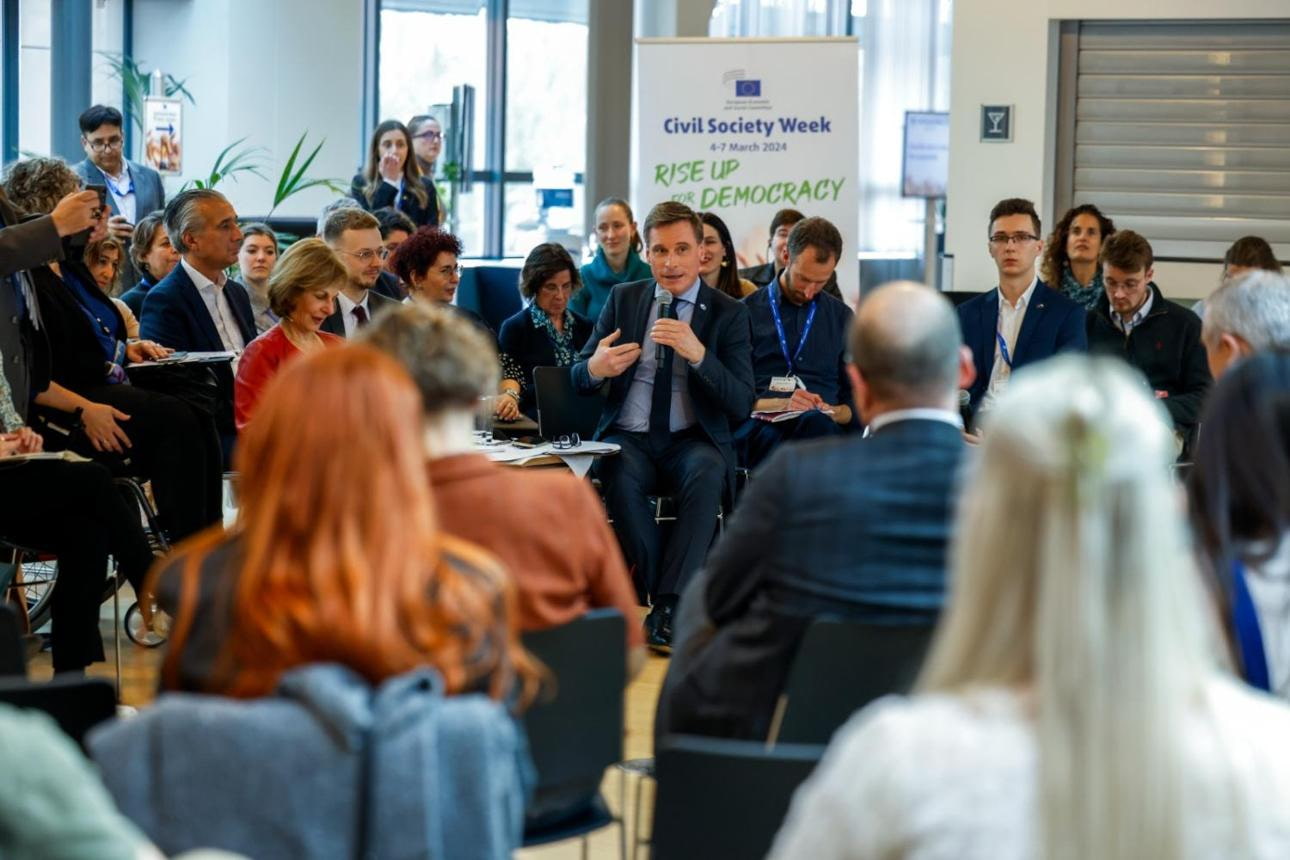
Warsaw: The grants are modest by the standards of European budgets, but for the organisations that depend on them they are close to oxygen. The Citizens, Equality, Rights and Values programme, the bloc’s main funding line for civil society, has opened its 2026 calls for proposals, and the numbers attached are larger than the quiet machinery behind them might suggest. Twelve calls carry a combined budget of around 305 million euro, money destined for the groups that defend rights, promote equality and keep citizens engaged in the democratic life of the Union.

The programme, known by its acronym CERV, was created in 2021 and runs through to 2027, and it has come to occupy a politically sensitive niche. Its beneficiaries are precisely the organisations, women’s shelters, anti-discrimination networks, minority advocates and local democracy projects, that often operate in tension with national governments. In several member states the space for such groups has narrowed, their funding scrutinised and their motives questioned. A European funding stream that bypasses national gatekeepers is, for them, a lifeline; for governments wary of outside money flowing to domestic critics, it is an irritant.

The 2026 round spreads its money across familiar priorities. A call on gender equality, estimated at some 23 million euro, will support work against gender-based violence and for women’s participation in public life. A dedicated call for National Roma Contact Points funds the often-thankless work of coordinating integration policy for Europe’s largest ethnic minority, a group whose treatment remains one of the bloc’s most persistent failures. Other strands fund town-twinning, citizen participation and the remembrance projects that keep difficult histories from fading.

What makes the design distinctive is its reach below the national level. Civil society organisations active locally, regionally, nationally and across borders can all apply. That accessibility is also the programme’s administrative headache: smaller groups frequently lack the grant-writing capacity to navigate the Funding and Tenders Portal, and critics argue the money too often flows to professionalised organisations fluent in the language of European applications rather than to the grassroots bodies it was meant to reach.

The deeper question is whether 305 million euro, spread across twenty-seven states and a continent’s worth of causes, can move the needle on problems as structural as discrimination and democratic disengagement. Supporters are candid that the sums are small relative to the need, and frame the programme less as a solution than as a signal, a statement that the Union will put money behind the values its treaties proclaim. Sceptics see a budget line that lets Brussels claim a commitment to rights while leaving the heavy lifting to underfunded volunteers.

Both readings contain truth. For the organisations now drafting applications against deadlines that stretch into the spring, the philosophical debate is secondary. The calls are open, the money is real, and in a year when the room for independent civic action feels tighter in parts of Europe, a funding round that answers to no single government is worth the paperwork.