August 9, 2026
LATEST
New EU Gas Market Rules Take Effect With Consumer SafeguardsDeforestation Regulation Holds Its December Deadline Despite CutsDigital Omnibus Delays Europe’s High-Risk AI Deadline to 2027Europe’s Schools Confront a Widening Basic Skills GapRule of Law Report Finds Progress but Trust Still LagsIRIS2 Gains 66 Satellites as Brussels Signs the Rollout DealNature Restoration Plans Come Due as Member States Race a DeadlineECB Rates Hold at 2.25 Percent as Frankfurt Waits on the DataEU Budget Talks Turn to Cohesion as Ireland Takes OverWildfire Response Stretches Europe’s Emergency Fleet ThinCan Europe’s Quantum Plan Match Its Big Ambitions?Armenia Edges West as Moscow’s Grip Slips AwayEurope Inherits the World’s Aid Bill It Cannot Fully PayAir Passenger Rights Get Their First Overhaul in Two DecadesErasmus Opens a 5 Billion Euro Round for Skills and MobilityCeuta Crisis Pushes the EU Toward Faster Migrant ReturnsBulky Parcels Face a Packaging Crackdown From August 12Can Europe Build Its Drone Wall Before 2030 Arrives?Indonesia’s Trade Deal With Europe Nears Its Final SignatureEurope Leans on Beijing to Keep Climate Talks Alive Before AntalyaNew EU Gas Market Rules Take Effect With Consumer SafeguardsDeforestation Regulation Holds Its December Deadline Despite CutsDigital Omnibus Delays Europe’s High-Risk AI Deadline to 2027Europe’s Schools Confront a Widening Basic Skills GapRule of Law Report Finds Progress but Trust Still LagsIRIS2 Gains 66 Satellites as Brussels Signs the Rollout DealNature Restoration Plans Come Due as Member States Race a DeadlineECB Rates Hold at 2.25 Percent as Frankfurt Waits on the DataEU Budget Talks Turn to Cohesion as Ireland Takes OverWildfire Response Stretches Europe’s Emergency Fleet ThinCan Europe’s Quantum Plan Match Its Big Ambitions?Armenia Edges West as Moscow’s Grip Slips AwayEurope Inherits the World’s Aid Bill It Cannot Fully PayAir Passenger Rights Get Their First Overhaul in Two DecadesErasmus Opens a 5 Billion Euro Round for Skills and MobilityCeuta Crisis Pushes the EU Toward Faster Migrant ReturnsBulky Parcels Face a Packaging Crackdown From August 12Can Europe Build Its Drone Wall Before 2030 Arrives?Indonesia’s Trade Deal With Europe Nears Its Final SignatureEurope Leans on Beijing to Keep Climate Talks Alive Before Antalya
August 9, 2026
LATEST
New EU Gas Market Rules Take Effect With Consumer SafeguardsDeforestation Regulation Holds Its December Deadline Despite CutsDigital Omnibus Delays Europe’s High-Risk AI Deadline to 2027Europe’s Schools Confront a Widening Basic Skills GapRule of Law Report Finds Progress but Trust Still LagsIRIS2 Gains 66 Satellites as Brussels Signs the Rollout DealNature Restoration Plans Come Due as Member States Race a DeadlineECB Rates Hold at 2.25 Percent as Frankfurt Waits on the DataEU Budget Talks Turn to Cohesion as Ireland Takes OverWildfire Response Stretches Europe’s Emergency Fleet ThinCan Europe’s Quantum Plan Match Its Big Ambitions?Armenia Edges West as Moscow’s Grip Slips AwayEurope Inherits the World’s Aid Bill It Cannot Fully PayAir Passenger Rights Get Their First Overhaul in Two DecadesErasmus Opens a 5 Billion Euro Round for Skills and MobilityCeuta Crisis Pushes the EU Toward Faster Migrant ReturnsBulky Parcels Face a Packaging Crackdown From August 12Can Europe Build Its Drone Wall Before 2030 Arrives?Indonesia’s Trade Deal With Europe Nears Its Final SignatureEurope Leans on Beijing to Keep Climate Talks Alive Before AntalyaNew EU Gas Market Rules Take Effect With Consumer SafeguardsDeforestation Regulation Holds Its December Deadline Despite CutsDigital Omnibus Delays Europe’s High-Risk AI Deadline to 2027Europe’s Schools Confront a Widening Basic Skills GapRule of Law Report Finds Progress but Trust Still LagsIRIS2 Gains 66 Satellites as Brussels Signs the Rollout DealNature Restoration Plans Come Due as Member States Race a DeadlineECB Rates Hold at 2.25 Percent as Frankfurt Waits on the DataEU Budget Talks Turn to Cohesion as Ireland Takes OverWildfire Response Stretches Europe’s Emergency Fleet ThinCan Europe’s Quantum Plan Match Its Big Ambitions?Armenia Edges West as Moscow’s Grip Slips AwayEurope Inherits the World’s Aid Bill It Cannot Fully PayAir Passenger Rights Get Their First Overhaul in Two DecadesErasmus Opens a 5 Billion Euro Round for Skills and MobilityCeuta Crisis Pushes the EU Toward Faster Migrant ReturnsBulky Parcels Face a Packaging Crackdown From August 12Can Europe Build Its Drone Wall Before 2030 Arrives?Indonesia’s Trade Deal With Europe Nears Its Final SignatureEurope Leans on Beijing to Keep Climate Talks Alive Before Antalya

Climate Risk Enters Europe’s Slimmed-Down Bank Stress Test for 2027

Frankfurt: Europe’s bank supervisors are rewriting the rulebook for their next health check, and the changes point in two directions at once, a lighter workload for lenders and a sharper focus on the risks that now keep regulators awake at night. The European Banking Authority has opened an early consultation on a simplified EU-wide stress test for 2027, promising to strip out reams of data requirements while folding climate risk into the core exercise for the first time.

The authority frames the overhaul as a way to keep results comparable and robust without burying banks in paperwork. Supervisors have long complained that the biennial test demands thousands of data points, many of which add little to the final verdict on whether a bank can survive a downturn. The 2027 methodology, still in draft, cuts that burden sharply and leans harder on the scenarios that matter most.

Climate forms the headline addition. Rather than run a separate side exercise, the authority wants lenders to show how a hotter, more volatile planet would hit their loan books alongside the usual shocks to growth, unemployment and asset prices. The EBA lays out the plan in its consultation announcement.

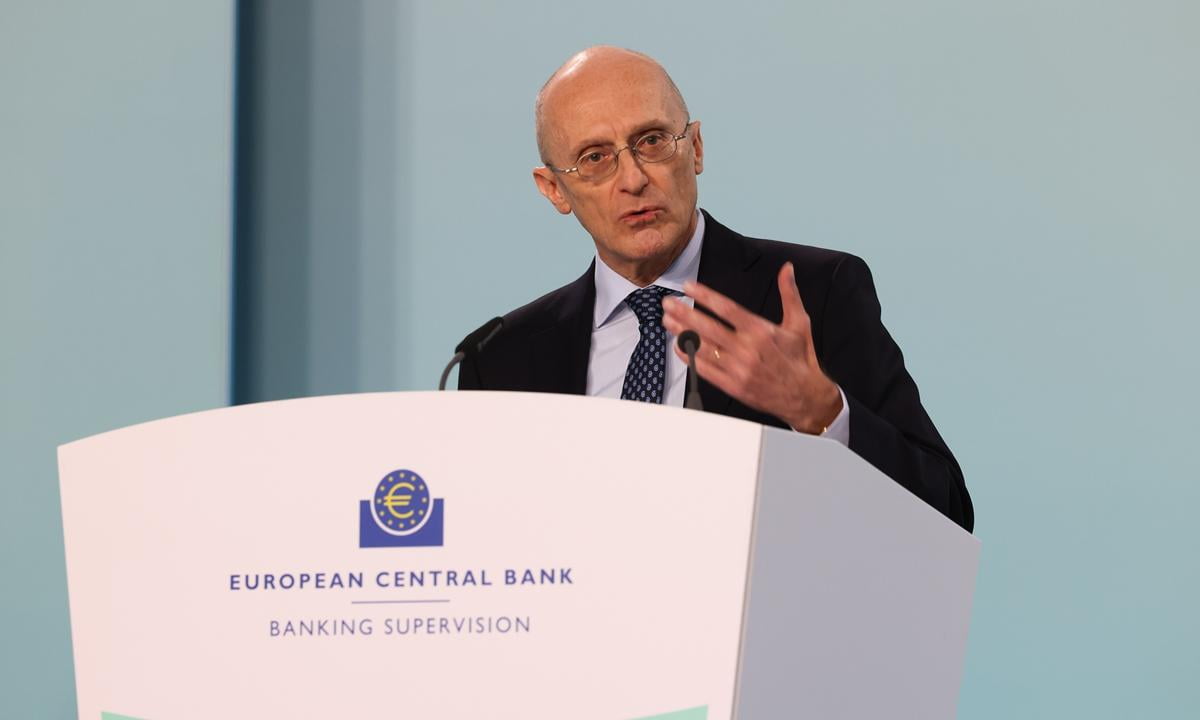
Frankfurt is moving in parallel. At a European Parliament hearing on 15 July, the European Central Bank’s supervisory chair Claudia Buch confirmed that the 2026 exercise would take the form of a reverse stress test built around geopolitical risk. Instead of asking how banks fare under a fixed scenario, a reverse test starts from the point of failure and works backwards, forcing lenders to name the exact mix of shocks that would break them.

That shift matters because Europe’s banks now sit closer to the front line of global tension than at any point since the currency’s creation. Energy prices, supply-chain shocks and the threat of sudden sanctions all feed into a balance sheet in ways the old models struggled to capture.

The Single Resolution Board is tightening a third screw. Its operational guidance tells banks to have working test environments in place by December 2026, so that resolution plans stop being paper exercises and start proving themselves under simulated stress. A resolution scheme only earns trust once someone has run it end to end.

Taken together, the three tracks sketch a supervisory culture that trusts drills over declarations. Regulators want banks that can demonstrate resilience, not merely assert it, and they want the evidence before the next crisis rather than after.

Industry groups have broadly welcomed the lighter data load while warning that climate modelling remains immature. Banks argue that no one yet knows how to price a flood or a stranded oil field with real precision, and that a badly calibrated climate scenario could distort the whole test. The authority has left the consultation open precisely to settle those questions before the numbers go live.

For savers and borrowers, the mechanics stay invisible until they matter. A stress test that better anticipates the shocks of the coming decade marks the difference between a bank that bends and one that breaks when the next storm arrives.