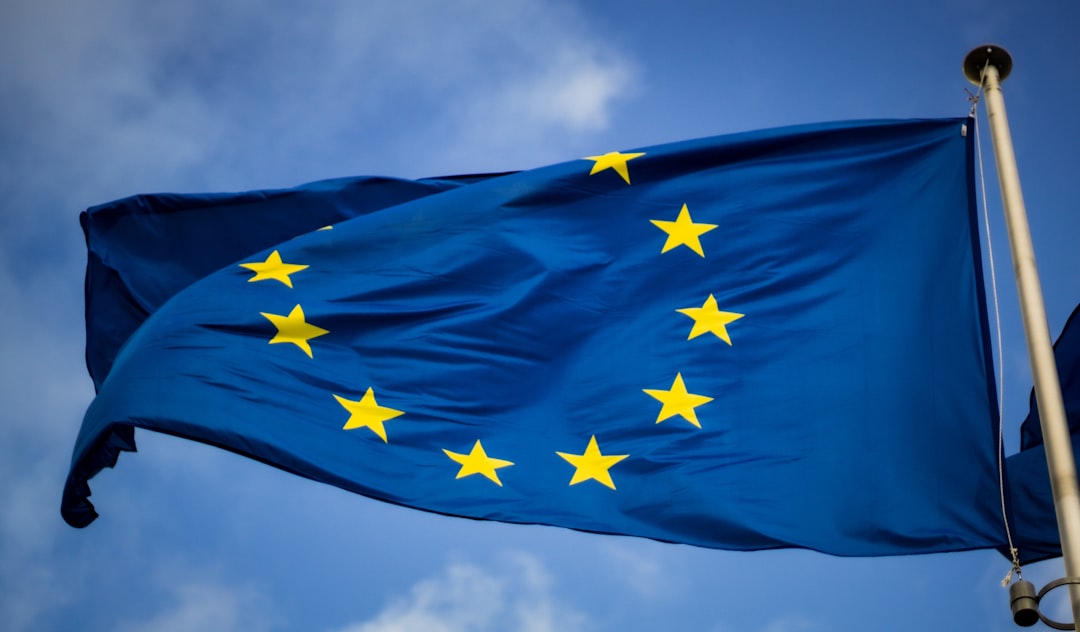
Strasbourg: The European Union’s enlargement agenda is entering a phase of methodological reinvention. With nine candidate countries at varying stages of accession negotiations, and pressure mounting to accommodate Ukraine alongside the longer-waiting Western Balkans, debates within the Commission and the Council are crystallising around three scenarios: traditional sequential accession, fast-track admission for geopolitically urgent cases, and gradual or operational integration that brings candidates into specific EU policies before full membership.
Montenegro remains the procedural frontrunner. It is the only candidate to have met the interim benchmarks for chapters 23 and 24, the rule-of-law cluster that triggers the closing phase for all chapters. Podgorica has stated a political goal of concluding negotiations by the end of 2026 and joining the bloc by 2028, a timeline that several Member States now treat as credible. Albania is the second active negotiator from the Western Balkans, with North Macedonia and Serbia stuck for different reasons — Skopje because of constitutional disputes, Belgrade because of unresolved questions on rule of law and alignment with EU foreign policy.
Ukraine and Moldova received candidate status in June 2022 and opened negotiations in 2024, but Hungary continues to block the formal opening of accession clusters for Ukraine. Technical alignment work nonetheless proceeds, and the Commission has commended Kyiv’s progress in transposing the acquis even under wartime conditions. President Volodymyr Zelensky has publicly identified 2027 as the target accession date, a prospect Chancellor Friedrich Merz dismissed outright in March, while Foreign Minister Johann Wadephul has signalled a preference for a package deal with the Balkan frontrunners rather than a sui generis approach to Ukraine.
The Commission’s most consequential proposal is phased or reverse enlargement. Under this approach, candidates would gain progressively more rights and obligations of membership as they meet defined benchmarks in specific policy areas. Marta Kos, the Commissioner for Enlargement, has argued that forty-year-old methods are inadequate for present conditions and that the Union must move toward gradual integration across the single market and security domains. The proposal would not replace merit-based accession but could allow candidates to participate in EU meetings, programmes and agencies with limited rights well before formal membership.
The Western Balkans Six are unevenly placed. Albania and Montenegro are advancing. Bosnia and Herzegovina attained candidate status in December 2022 and faces fundamental constitutional complications. Kosovo, recognised as a potential candidate but not as a sovereign state by five Member States, has formally submitted its application but remains in limbo. Kosovo’s Deputy Prime Minister Glauk Konjufka has pressed publicly for the membership questionnaire to be issued, citing Russian influence in the region as grounds for strategic urgency.
The financial dimension is becoming the binding constraint. Internal Commission modelling cited by the German Bundestag suggests that admitting 35 Member States while maintaining current policies would require a 21 per cent increase in the EU budget. Ukraine alone would expand the agricultural area covered by the Common Agricultural Policy by approximately one quarter, and reconstruction needs would draw heavily on cohesion funds intended for poorer regions. Long-term exclusion of Ukraine from the CAP — analogous to the EEA’s exclusion of fisheries and agriculture — has been floated as one accommodation.
Iceland’s government has announced a referendum in August 2026 on resuming the accession negotiations it suspended in 2013. If the referendum passes, the bloc could find itself simultaneously processing accession files in three distinct geographic clusters: the Balkans, the Eastern Partnership and the Nordic-Atlantic flank.
The European Stability Initiative and other think tanks have advocated operational integration as a pragmatic middle path: differentiated, benchmarked, reversible participation in EU instruments — joint procurement, single market provisions on data protection, energy market coupling, EUvsDisinfo cooperation — without full voting rights. As Albania and Montenegro accelerate while Bosnia, Kosovo, North Macedonia and Serbia stagnate, the political case for operational integration is gaining ground among Member States that fear the credibility costs of an indefinitely frozen process.