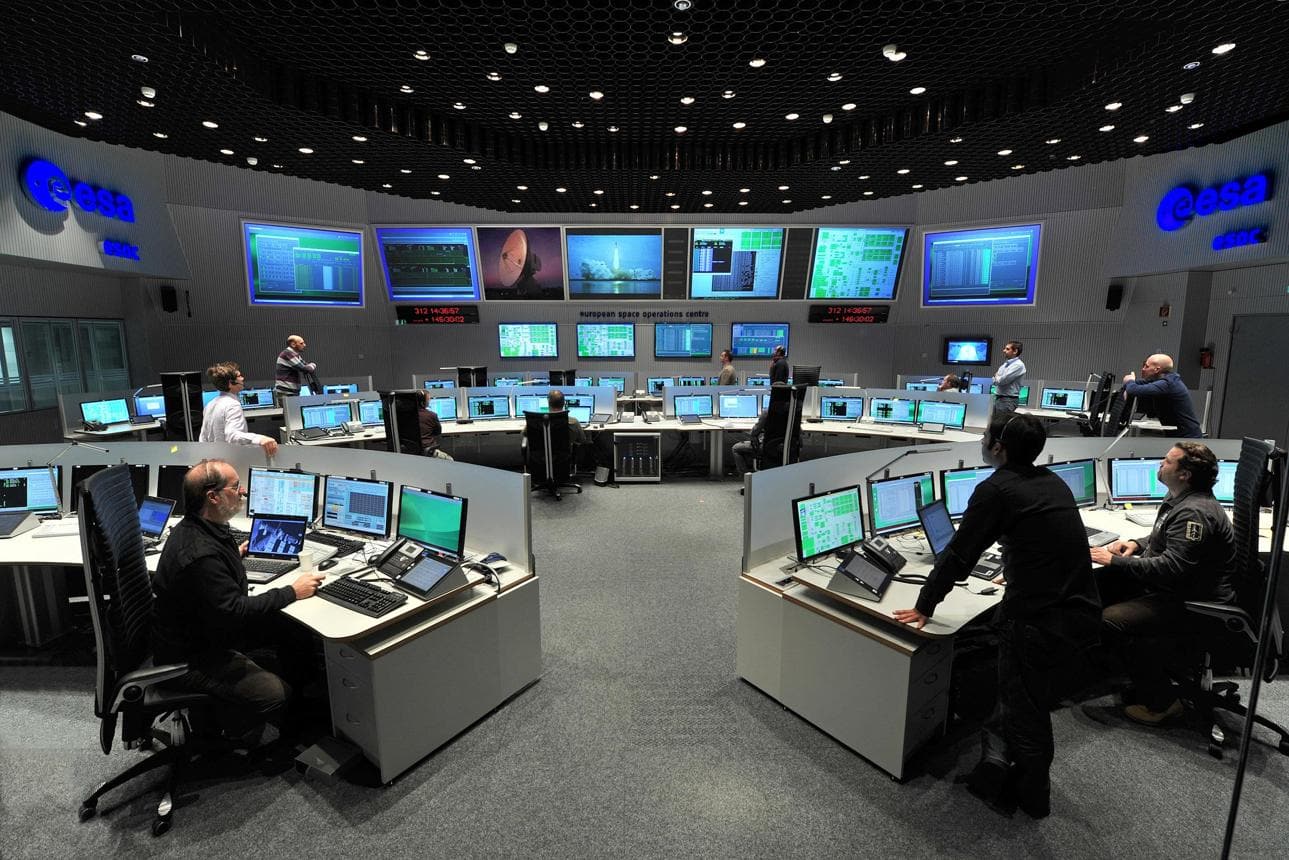
Cologne: With the turning of soil on a German construction site, the European Union has moved one of its most strategic space projects from blueprint to building site. In June, work began on a GOVSATCOM hub in Cologne, one of two ground facilities that will anchor the secure communications programme acting as a precursor to IRIS2, the bloc’s planned sovereign satellite constellation. The groundbreaking is modest in appearance but heavy in symbolism, marking physical progress on an effort meant to guarantee that European governments can communicate without depending on infrastructure controlled abroad.
IRIS2, short for Infrastructure for Resilience, Interconnectivity and Security by Satellite, is conceived as a multi-orbit network of some 264 satellites in low Earth orbit and a further 18 in medium orbit. The Union aims to deploy it by 2027, with initial government services expected around 2030. Its purpose is to provide encrypted connectivity for sensitive public missions, from border surveillance and crisis management to diplomatic and defence communications, while reserving capacity for commercial use that could extend broadband to underserved regions.
The strategic motivation is explicit. As commercial mega-constellations operated by private firms outside Europe come to dominate satellite internet, EU policymakers have grown wary of relying on networks they neither own nor regulate. The war on Europe’s eastern flank sharpened that anxiety, demonstrating how decisive secure connectivity can be and how vulnerable a state becomes when it depends on a foreign provider’s goodwill. IRIS2 is the Union’s answer, an assertion that resilient communications are a matter of sovereignty rather than mere convenience.
The programme is being delivered through a public-private concession, binding the Union, the European Space Agency and an industrial consortium in a long-term partnership. That structure spreads cost and risk but also invites scrutiny, since earlier estimates of the constellation’s price have risen and the timeline is demanding. Building, launching and operating hundreds of satellites within a few years would test any space power, and critics question whether the schedule is realistic. The ground segment now rising in Cologne, together with its planned counterpart, is essential to that effort, providing the secure gateways through which encrypted traffic will flow.
The project also sits within a broader regulatory push. The Union has been advancing an EU Space Act to set common rules on safety, debris mitigation and the resilience of orbital infrastructure, and it has shown a clear preference for European launch capacity to carry its strategic payloads. Together, the constellation, the ground hubs and the emerging rulebook form a coherent attempt to build an autonomous European presence in orbit rather than a collection of national programmes.
Whether IRIS2 meets its dates and budgets remains the open question. Space history is littered with constellations that slipped years behind schedule. Yet the Cologne groundbreaking changes the conversation, turning a contested procurement into visible construction. For a Union that has talked for years about strategic autonomy in space, putting steel in the ground is a tangible step toward making it real.