Madrid: Investigators have broken up one of the largest counterfeit cigarette operations uncovered in Europe this year, seizing more than 20 million cigarettes and over 38 tonnes of raw tobacco in a coordinated sweep that ended in fifty arrests. The European Anti-Fraud Office joined national forces to trace the network from clandestine factory floors to the trucks that would have carried the fakes across the continent.
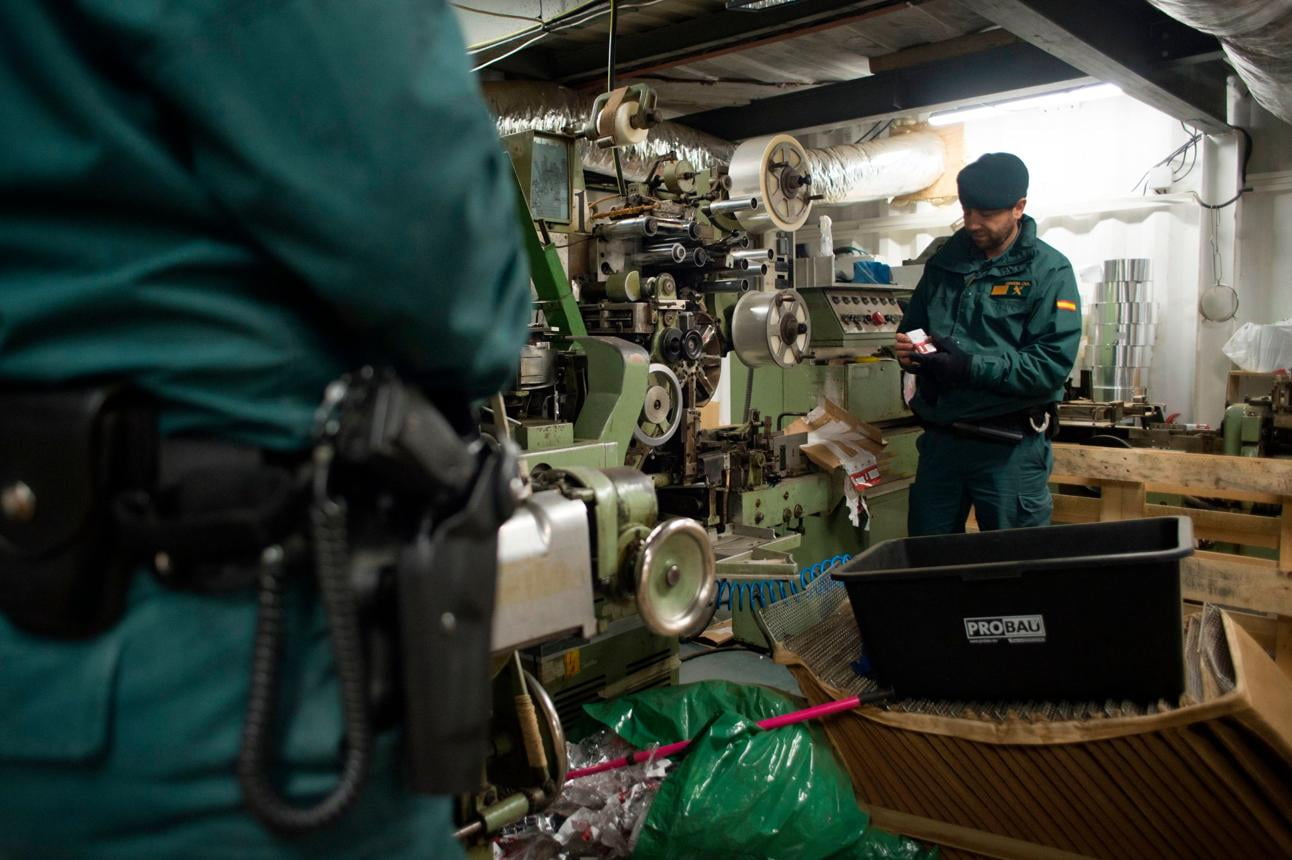
The operation dismantled two organisations based in Spain that manufactured, packaged and distributed counterfeit tobacco imitating well-known commercial brands. Officers shut six clandestine factories, confiscated 18 vehicles, and recovered manufacturing lines, encrypted phones, roughly 170,000 euros in cash and several firearms. Prosecutors put the preliminary value of the haul above 10 million euros.
The scale of the counterfeit cigarette trade explains the muscle behind the response. Spain’s Guardia Civil worked alongside Poland’s Central Bureau of Investigation, Portugal’s National Republican Guard and Lithuania’s customs criminal service, with Europol coordinating intelligence and the anti-fraud office supplying analysis on the flow of illicit goods and lost revenue.
Illicit tobacco drains the EU budget twice over. Every smuggled pack escapes the excise duties and value-added tax that fund national treasuries and the common budget, while the trade undercuts legitimate manufacturers and evades the health controls that govern what smokers actually inhale. The anti-fraud office estimates that tobacco fraud costs member states billions each year in foregone revenue.
Investigators believe the fakes were destined not only for the Spanish market but for Portugal, France and possibly the United Kingdom. That spread shows how a single production hub can feed several national markets at once, and why enforcement now depends on customs and police forces sharing leads across borders rather than chasing shipments one country at a time.
The seizure fits a broader pattern in the office’s work this year. Its investigators have pressed into cross-border smuggling, customs violations and procurement fraud, closing cases that recover misused money and prevent further losses.
Spanish authorities and the anti-fraud office both signalled that the investigation is not finished. Officers are tracing the money behind the network and the suppliers who fed it leaf tobacco and machinery, and they warned that further enforcement action could follow. The firearms recovered during the raids underline how closely the counterfeit cigarette trade now runs alongside violent organised crime.
For the union’s finances, the message is straightforward. Each dismantled factory protects duties that would otherwise vanish, and each coordinated raid raises the cost of a business model that treats Europe’s tax rules as an opportunity rather than a constraint.