Paris: The European Commission has opened a formal state-aid investigation into France’s plans to bankroll a new generation of nuclear reactors, a decision that places the bloc’s competition watchdog at the centre of one of the continent’s largest and most politically charged energy bets. The probe will test whether public support on the scale France envisages can be reconciled with rules designed to stop national subsidies from distorting the single market.
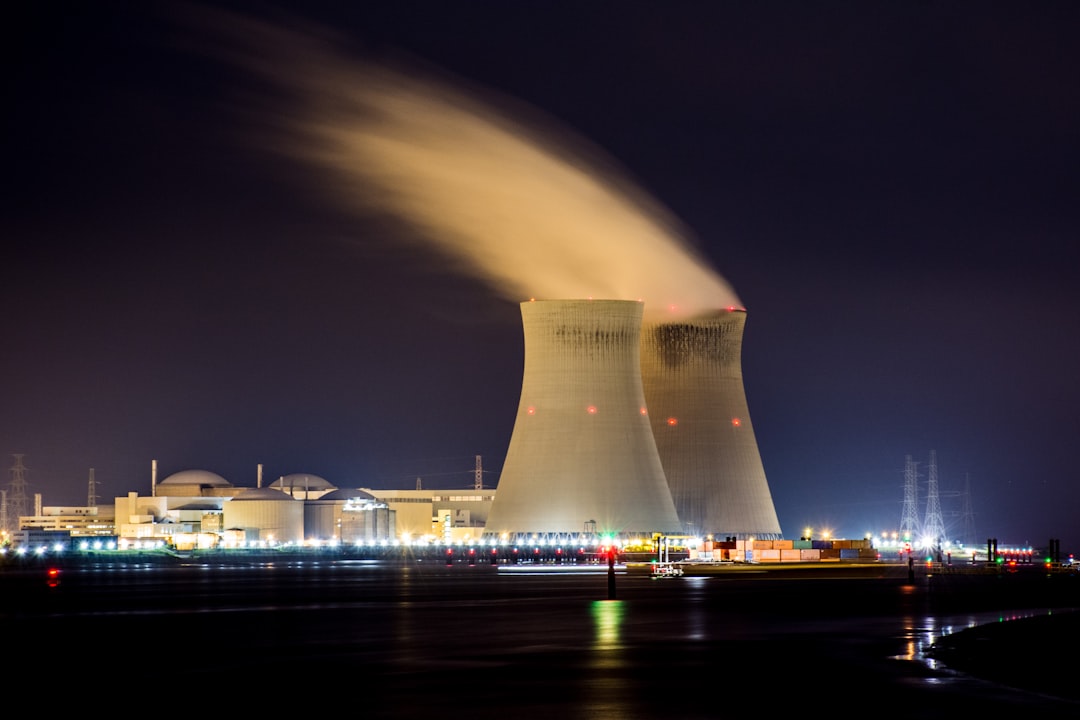
At issue is Paris’s push to build a fleet of new reactors as the spine of its low-carbon electricity system, a programme expected to run into the tens of billions of euros over its lifetime. State-aid law does not forbid such support, but it requires the Commission to satisfy itself that the aid is necessary, proportionate, and structured so that the benefits to decarbonisation and security of supply outweigh the harm to competition. By moving to an in-depth investigation rather than waving the measure through, the Commission is signalling that the design of the French scheme raises questions serious enough to warrant detailed scrutiny.
Those questions are familiar from earlier nuclear cases. Investigators will examine how the support is calibrated, whether it risks overcompensating the operator, and how any guaranteed price or revenue mechanism interacts with the wider electricity market that French exports help to set. A subsidy that insulates a producer from market signals can ripple across borders, depressing prices or crowding out investment in neighbouring countries, which is precisely the kind of spillover the state-aid regime exists to police. The Commission must weigh those effects against the contribution new reactors would make to the bloc’s climate goals.
The case also exposes a deeper tension running through EU energy policy. The bloc has edged toward a more accommodating stance on nuclear, reflected in recent state-aid frameworks that explicitly make room for the technology alongside renewables. Yet member states remain divided: some see new reactors as indispensable to a reliable, low-carbon grid, while others regard large nuclear subsidies as a distortion that drains capital from cheaper alternatives. The French investigation is where that abstract disagreement meets concrete legal tests, and the outcome will shape how far governments can go in underwriting atomic power.
For France, the stakes are considerable. The reactor programme is a cornerstone of its industrial and energy strategy, and a drawn-out probe could complicate financing and timelines for a project already grappling with the cost overruns that have dogged recent European nuclear builds. Paris will argue that the aid is essential to security of supply and to meeting climate targets that the bloc itself has set, framing public support as a precondition for the very transition the Commission demands.
The investigation does not prejudge the verdict. The Commission stresses that opening a formal procedure simply gives interested parties a chance to comment before a final ruling. But the decision underscores that even climate-friendly spending must clear the competition bar, and that the bloc’s appetite for nuclear has limits defined not by ideology but by the arithmetic of proportionality. The result will set a marker for every government weighing a nuclear subsidy of its own.