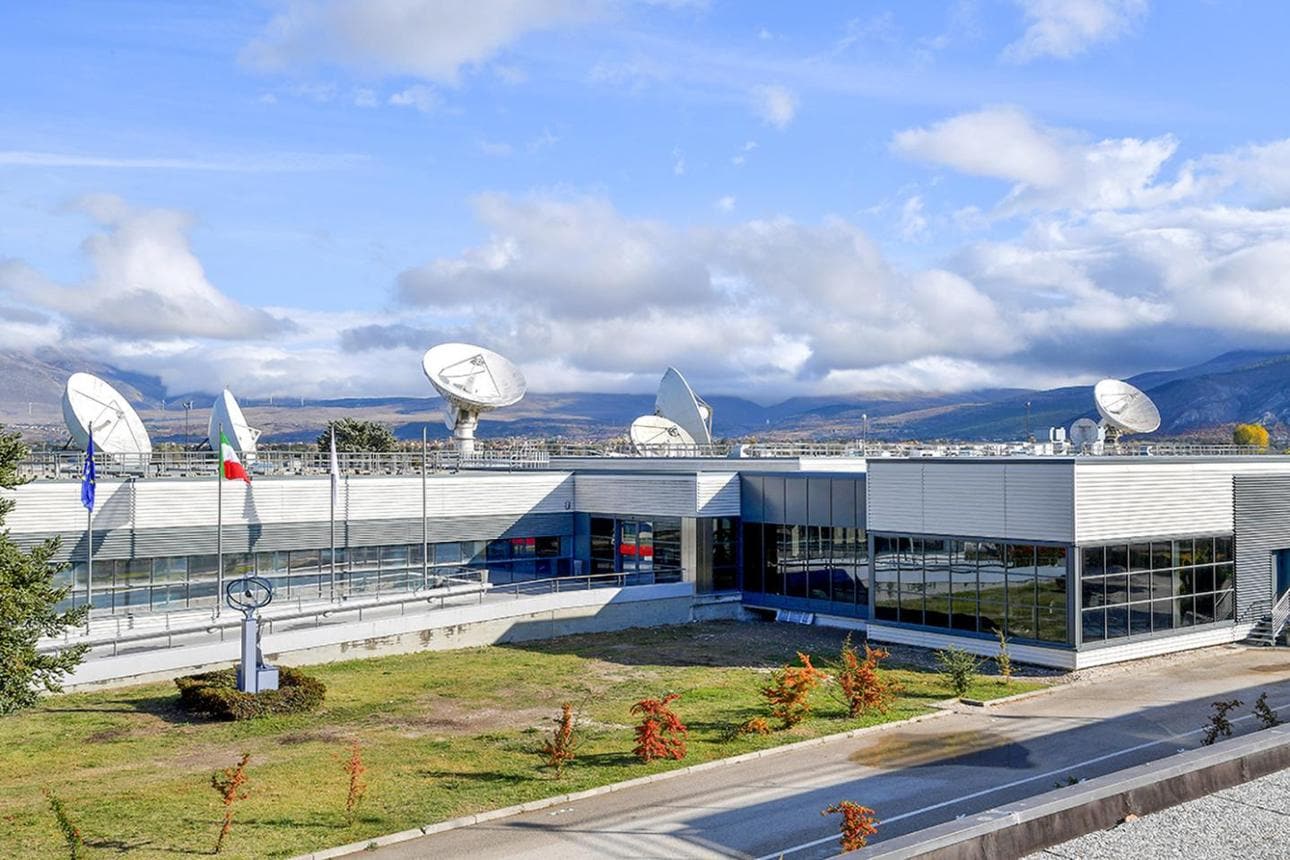
Fucino: Europe’s satellite navigation network just grew a little stronger. Two new Galileo satellites, known as SAT 33 and SAT 34, have entered service in the constellation, adding capacity and resilience to the system that guides everything from phones to freight across the continent.
Engineers at the ground control complex confirmed the pair after weeks of testing. They checked the navigation payloads, the ultra-precise atomic clocks that keep Galileo accurate, the transponders and the security functions, working from the initial signal each satellite broadcast once it settled into orbit.
Fucino, home to one of Galileo’s two control centres, sits at the heart of that work. From the Italian valley, operators steer the constellation and validate each new spacecraft before it joins the operational fleet, a painstaking process that turns freshly launched hardware into trusted infrastructure.
The stakes reach far beyond gadgets. Galileo underpins aviation, shipping, farming, banking timestamps and emergency response, and Europe built it precisely so it would not lean on the American GPS or other foreign systems for a service woven into daily life and critical industry.
Adding satellites matters because constellations wear out. Spacecraft age, clocks drift and orbits decay, so a steady stream of replacements keeps the signal sharp and the coverage complete. SAT 33 and SAT 34 refresh a fleet that millions rely on without ever thinking about it.
The activation also signals momentum for Europe’s wider space ambitions. The Union is pouring money into secure connectivity through the coming IRIS2 network and into defence-related space assets, and a healthy Galileo gives that broader programme a working backbone to build on.
Behind each satellite stands a European industrial chain. Manufacturers, launch providers and software teams across several member states share the work, and every activation validates jobs and know-how that governments increasingly treat as strategic assets rather than mere commercial contracts handed to the lowest bidder. It is slow, costly work, and Europe has chosen to keep it at home.
Officials frame the milestone as evidence that Europe can run complex space infrastructure on its own terms. The EU Agency for the Space Programme, which operates Galileo day to day, logs each such step in its public updates.
For users, nothing changes overnight; positions simply stay accurate and reliable. But the quiet arrival of two Galileo satellites is the kind of routine that keeps a strategic asset alive, and Europe’s growing space plans depend on exactly that sort of reliability.