
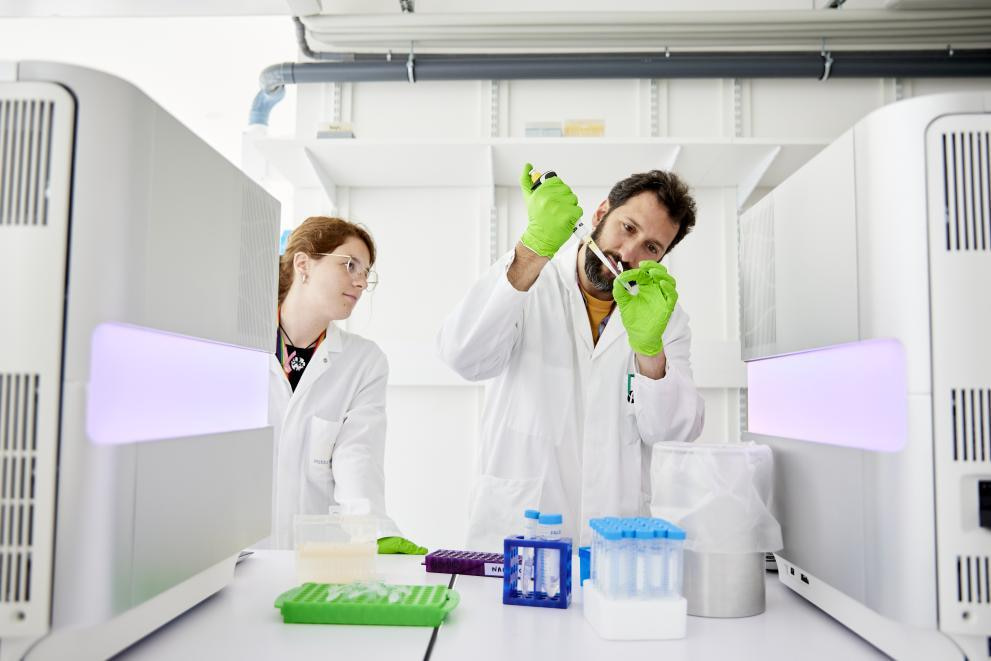
Leuven: In laboratories from the Belgian university town to campuses across the continent, several hundred senior researchers have just received the kind of news that reshapes a career. The European Research Council announced on 23 June that it would award 838 million euros to 319 established scientists, money designed to let them chase ambitious, high-risk questions that more cautious funders tend to avoid.
The grants are the ERC’s flagship instrument for experienced investigators, and their appeal lies in what they do not demand. Recipients are not asked to promise a marketable product, hit a quarterly milestone or fit a predefined thematic box. They are handed substantial, long-term funding and considerable freedom to follow a line of inquiry wherever it leads, on the theory that the most consequential breakthroughs rarely announce themselves in advance. It is a philosophy that has produced an outsized share of Europe’s most cited research, and it stands in deliberate contrast to the more directed, mission-oriented spending that dominates much of the Union’s innovation agenda.
The timing is not incidental. The announcement arrived in the same stretch of June that saw the Council of member states agree its negotiating position on the next research framework programme for the years 2028 to 2034, the successor to the current Horizon Europe. That debate is fundamentally about money and priorities: how much the Union is willing to spend on curiosity-driven science, and how much should be steered toward industrial competitiveness, defence and strategic technologies. Every large ERC award is, in effect, an argument in that negotiation, a reminder of what the basic-research budget actually buys.
The stakes are more than academic. European policymakers worry, with some justification, that the continent generates world-class discoveries only to watch the commercial value migrate to the United States or Asia. The instinctive response has been to pour resources into applied programmes that promise faster returns. Yet defenders of the ERC model argue that the pipeline runs the other way: without a deep reservoir of fundamental knowledge, there is nothing for applied research to convert into products, companies and jobs. Starve the upstream, they contend, and the downstream eventually runs dry.
There are persistent criticisms to weigh. The ERC’s success rates are punishing, and a great deal of excellent work goes unfunded simply because the pot is finite. Grants remain concentrated in a handful of wealthy member states and elite institutions, reinforcing a geography of research excellence that leaves much of central and eastern Europe underrepresented. Widening participation without diluting the emphasis on sheer quality has proved a stubborn puzzle, and the coming budget talks will test whether governments are prepared to fund both breadth and depth or force a choice between them.
For the 319 scientists named this month, those debates are, for now, someone else’s problem. They have five years and a serious budget to pursue questions that may or may not yield anything at all, which is precisely the point of the exercise. Whether Europe continues to make such bets at scale is one of the quieter but more revealing decisions embedded in the budget fight now getting under way, and the outcome will shape the continent’s scientific standing long after the current grants are spent.


