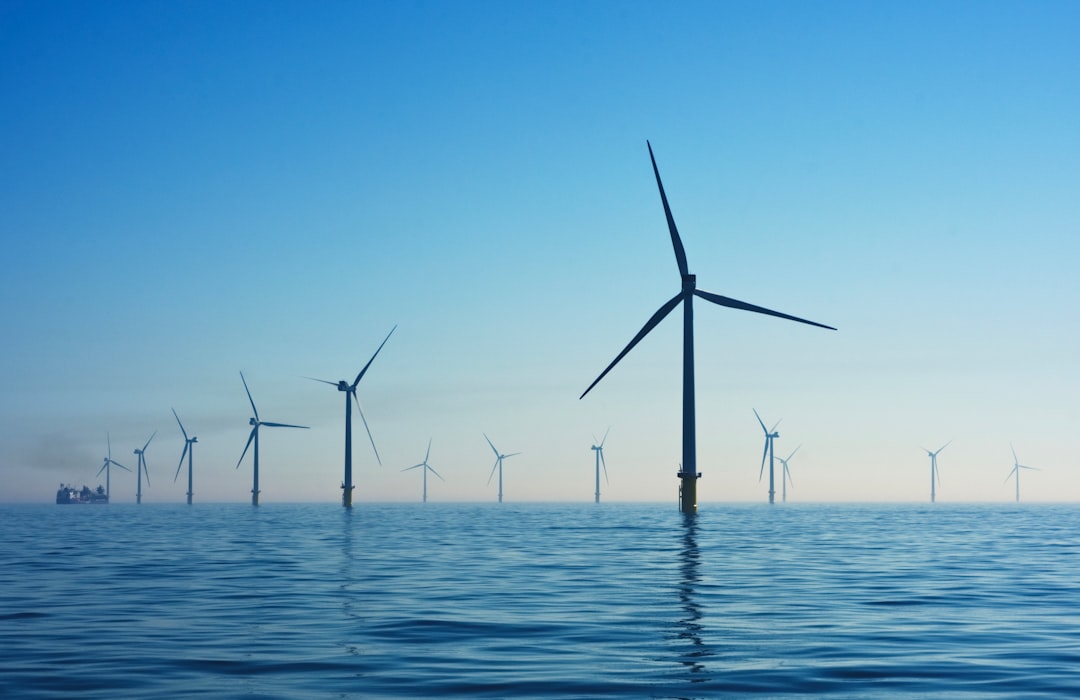
Hamburg: Energy ministers from the nine countries grouped inside the North Seas Energy Cooperation reaffirmed their commitment this month to deliver up to 100 GW of cross-border offshore wind capacity by 2050, building on the January Hamburg Declaration that set the trajectory in motion. The figure sits alongside the higher non-binding goal of 317 GW of offshore renewable generation across the bloc by mid-century agreed at the 2023 ministerial, and represents the regionally specific share that the North Seas basin is expected to carry.
The Hamburg framework is explicit that the 100 GW target is to be delivered through coordinated tendering, hybrid interconnectors and pooled grid planning rather than as a sum of national auctions. Germany, the host of the January meeting, has pushed hardest for a market-design overhaul that treats offshore zones as multinational by default, with revenue-sharing formulas embedded in joint-tender contracts. Denmark, Belgium and the Netherlands are aligned on the direction, although capitals are still negotiating the precise allocation methodology that will apply once individual projects reach financial close.
The offshore hydrogen dimension is where the declaration breaks new ground. Ministers committed to designing two reference hybrid sites that combine wind farms with co-located electrolysers, with offshore hydrogen captured by dedicated pipelines feeding industrial clusters on the German and Dutch coasts. The technical assumption is that direct production at sea avoids onshore grid-connection bottlenecks, which have lengthened lead times in the Lower Saxony and Groningen industrial zones.
The EU-level architecture matters because the Commission is preparing a renewable energy framework for the next decade, scheduled for adoption before the end of 2026. That framework will need to lock in the 42.5 percent renewables share by 2030 written into the existing directive, while also formalising the 42 percent renewable hydrogen target for industrial consumers by the same horizon and the 60 percent target for industry by 2035. As of mid-2025 only 600 MW of operational electrolyser capacity was in place across the EU, with around 3 GW under development. Officials privately concede that the 40 GW electrolyser ambition for 2030 will be missed unless permitting reforms unlock a step change in deployment over the next eighteen months.
Cross-border infrastructure is the parallel track. The latest list of Projects of Common Interest selected 113 offshore and smart-grid electricity projects together with 100 hydrogen and electrolyser projects for accelerated permitting, financing and public-acceptance support. The Commission also approved billions of euros in state-aid measures for offshore wind in Denmark and for a French renewable hydrogen scheme earlier this year, signalling the depth of public co-financing that the file will continue to attract.
The political backdrop is less benign than the technical pipeline suggests. The phase-out of Russian energy imports remains the binding constraint behind the entire offshore push, and ministers in Hamburg used the closed session to discuss the security architecture around critical undersea cables and pipelines. Hybrid asset protection, anchor-handling protocols and naval coordination are now treated inside the cooperation as integral to the energy file rather than as a separate defence matter.
Industry response has been cautiously positive. Developers welcome the predictability that coordinated tenders bring but warn that supply-chain bottlenecks in turbine nacelles, monopile foundations and installation vessels could constrain the pace of build-out. Permitting reform, port capacity and grid expansion remain the operational chokepoints that any 100 GW number must ultimately survive.