August 9, 2026
LATEST
New EU Gas Market Rules Take Effect With Consumer SafeguardsDeforestation Regulation Holds Its December Deadline Despite CutsDigital Omnibus Delays Europe’s High-Risk AI Deadline to 2027Europe’s Schools Confront a Widening Basic Skills GapRule of Law Report Finds Progress but Trust Still LagsIRIS2 Gains 66 Satellites as Brussels Signs the Rollout DealNature Restoration Plans Come Due as Member States Race a DeadlineECB Rates Hold at 2.25 Percent as Frankfurt Waits on the DataEU Budget Talks Turn to Cohesion as Ireland Takes OverWildfire Response Stretches Europe’s Emergency Fleet ThinCan Europe’s Quantum Plan Match Its Big Ambitions?Armenia Edges West as Moscow’s Grip Slips AwayEurope Inherits the World’s Aid Bill It Cannot Fully PayAir Passenger Rights Get Their First Overhaul in Two DecadesErasmus Opens a 5 Billion Euro Round for Skills and MobilityCeuta Crisis Pushes the EU Toward Faster Migrant ReturnsBulky Parcels Face a Packaging Crackdown From August 12Can Europe Build Its Drone Wall Before 2030 Arrives?Indonesia’s Trade Deal With Europe Nears Its Final SignatureEurope Leans on Beijing to Keep Climate Talks Alive Before AntalyaNew EU Gas Market Rules Take Effect With Consumer SafeguardsDeforestation Regulation Holds Its December Deadline Despite CutsDigital Omnibus Delays Europe’s High-Risk AI Deadline to 2027Europe’s Schools Confront a Widening Basic Skills GapRule of Law Report Finds Progress but Trust Still LagsIRIS2 Gains 66 Satellites as Brussels Signs the Rollout DealNature Restoration Plans Come Due as Member States Race a DeadlineECB Rates Hold at 2.25 Percent as Frankfurt Waits on the DataEU Budget Talks Turn to Cohesion as Ireland Takes OverWildfire Response Stretches Europe’s Emergency Fleet ThinCan Europe’s Quantum Plan Match Its Big Ambitions?Armenia Edges West as Moscow’s Grip Slips AwayEurope Inherits the World’s Aid Bill It Cannot Fully PayAir Passenger Rights Get Their First Overhaul in Two DecadesErasmus Opens a 5 Billion Euro Round for Skills and MobilityCeuta Crisis Pushes the EU Toward Faster Migrant ReturnsBulky Parcels Face a Packaging Crackdown From August 12Can Europe Build Its Drone Wall Before 2030 Arrives?Indonesia’s Trade Deal With Europe Nears Its Final SignatureEurope Leans on Beijing to Keep Climate Talks Alive Before Antalya
August 9, 2026
LATEST
New EU Gas Market Rules Take Effect With Consumer SafeguardsDeforestation Regulation Holds Its December Deadline Despite CutsDigital Omnibus Delays Europe’s High-Risk AI Deadline to 2027Europe’s Schools Confront a Widening Basic Skills GapRule of Law Report Finds Progress but Trust Still LagsIRIS2 Gains 66 Satellites as Brussels Signs the Rollout DealNature Restoration Plans Come Due as Member States Race a DeadlineECB Rates Hold at 2.25 Percent as Frankfurt Waits on the DataEU Budget Talks Turn to Cohesion as Ireland Takes OverWildfire Response Stretches Europe’s Emergency Fleet ThinCan Europe’s Quantum Plan Match Its Big Ambitions?Armenia Edges West as Moscow’s Grip Slips AwayEurope Inherits the World’s Aid Bill It Cannot Fully PayAir Passenger Rights Get Their First Overhaul in Two DecadesErasmus Opens a 5 Billion Euro Round for Skills and MobilityCeuta Crisis Pushes the EU Toward Faster Migrant ReturnsBulky Parcels Face a Packaging Crackdown From August 12Can Europe Build Its Drone Wall Before 2030 Arrives?Indonesia’s Trade Deal With Europe Nears Its Final SignatureEurope Leans on Beijing to Keep Climate Talks Alive Before AntalyaNew EU Gas Market Rules Take Effect With Consumer SafeguardsDeforestation Regulation Holds Its December Deadline Despite CutsDigital Omnibus Delays Europe’s High-Risk AI Deadline to 2027Europe’s Schools Confront a Widening Basic Skills GapRule of Law Report Finds Progress but Trust Still LagsIRIS2 Gains 66 Satellites as Brussels Signs the Rollout DealNature Restoration Plans Come Due as Member States Race a DeadlineECB Rates Hold at 2.25 Percent as Frankfurt Waits on the DataEU Budget Talks Turn to Cohesion as Ireland Takes OverWildfire Response Stretches Europe’s Emergency Fleet ThinCan Europe’s Quantum Plan Match Its Big Ambitions?Armenia Edges West as Moscow’s Grip Slips AwayEurope Inherits the World’s Aid Bill It Cannot Fully PayAir Passenger Rights Get Their First Overhaul in Two DecadesErasmus Opens a 5 Billion Euro Round for Skills and MobilityCeuta Crisis Pushes the EU Toward Faster Migrant ReturnsBulky Parcels Face a Packaging Crackdown From August 12Can Europe Build Its Drone Wall Before 2030 Arrives?Indonesia’s Trade Deal With Europe Nears Its Final SignatureEurope Leans on Beijing to Keep Climate Talks Alive Before Antalya

Media Freedom Law Stalls a Year After Capitals Were Told to Act

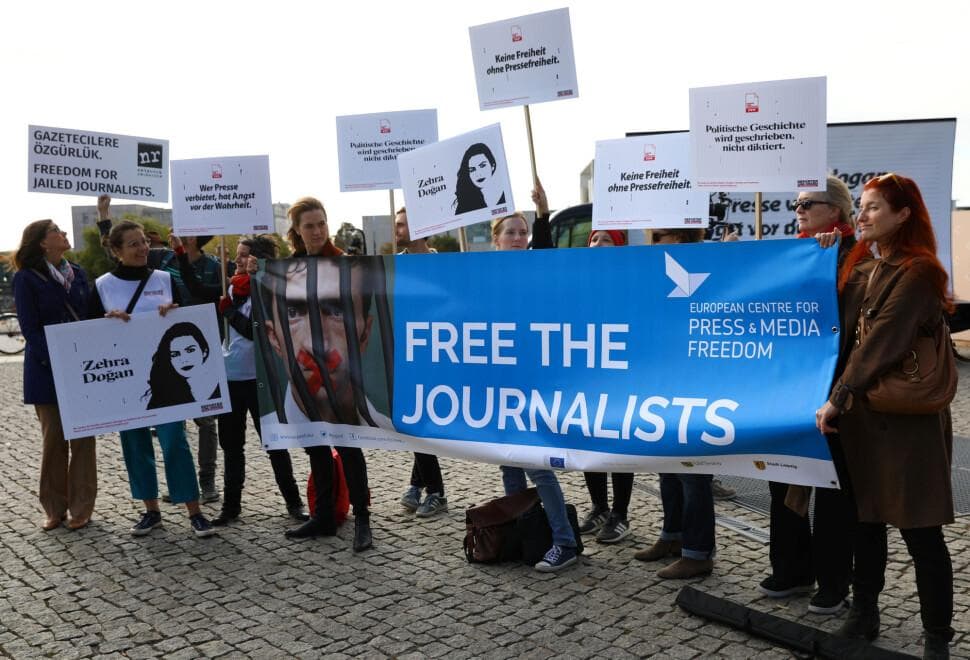
Brussels: A landmark European law meant to shield journalists from political capture is approaching its first birthday with little to show for it. The European Media Freedom Act, which entered into application on 8 August 2025, was billed as the bloc’s most ambitious attempt yet to protect editorial independence, guard against spyware targeting reporters, and bring transparency to media ownership and state advertising. Nearly a year on, advocates warn that implementation has stalled across most member states, and that the rules are being ignored in precisely the countries where they are most needed.

The Commission has not been idle on paper. On 6 February it issued guidelines on how member states should apply the Act, an attempt to translate broad principles into operational practice. A new European Board for Media Services, drawn from national media regulators, is meant to anchor enforcement by issuing opinions, offering guidance and recommending corrective action where national practices threaten media freedom. Yet the gap between the architecture and the reality on the ground is widening. A recent civil-liberties assessment found media freedom in the union worsening rather than improving, citing political inertia in transposing the law’s requirements into national systems.

The difficulty is structural. The Act regulates an area, the relationship between governments and the press, where the very authorities responsible for compliance are often the ones with the most to lose from genuine independence. State advertising remains a powerful lever of influence, public broadcasters in several countries face persistent pressure over funding and appointments, and ownership concentration continues to narrow the range of voices. A law can require transparency and arm’s-length governance, but it cannot by itself dislodge entrenched political habits, and enforcement ultimately depends on national regulators whose own independence is sometimes in doubt.

The decisive battles may be fought in court rather than in capitals. Several cases now pending before the Court of Justice of the European Union, including proceedings touching directly on the Act’s reach, are expected to shape how enforceable its provisions really are. If the Court confirms that journalists, civil-society groups and outlets can invoke the law’s directly applicable clauses before national judges, the Act could acquire teeth that political processes have so far denied it. A narrower reading would leave it closer to a statement of intent than a binding constraint.

For working journalists, the stakes are concrete. The Act promises protection against the surveillance, intimidation and economic pressure that have eroded press freedom in parts of the union, and its credibility rests on whether those promises are honoured when tested. Press-freedom organisations argue that a year of drift has already cost momentum, and that without firmer Commission follow-through, including the prospect of infringement action against laggard states, the law risks becoming a symbol of ambition rather than a tool of accountability.

The coming months will reveal which it is to be. The European Board is finding its footing, the guidelines are in place, and the litigation is advancing. What remains uncertain is whether the political will exists to enforce a law that, by design, constrains the very governments charged with applying it. On that question hangs not just the fate of one regulation but the credibility of the union’s claim to defend the democratic foundations it so often invokes.