August 9, 2026
LATEST
New EU Gas Market Rules Take Effect With Consumer SafeguardsDeforestation Regulation Holds Its December Deadline Despite CutsDigital Omnibus Delays Europe’s High-Risk AI Deadline to 2027Europe’s Schools Confront a Widening Basic Skills GapRule of Law Report Finds Progress but Trust Still LagsIRIS2 Gains 66 Satellites as Brussels Signs the Rollout DealNature Restoration Plans Come Due as Member States Race a DeadlineECB Rates Hold at 2.25 Percent as Frankfurt Waits on the DataEU Budget Talks Turn to Cohesion as Ireland Takes OverWildfire Response Stretches Europe’s Emergency Fleet ThinCan Europe’s Quantum Plan Match Its Big Ambitions?Armenia Edges West as Moscow’s Grip Slips AwayEurope Inherits the World’s Aid Bill It Cannot Fully PayAir Passenger Rights Get Their First Overhaul in Two DecadesErasmus Opens a 5 Billion Euro Round for Skills and MobilityCeuta Crisis Pushes the EU Toward Faster Migrant ReturnsBulky Parcels Face a Packaging Crackdown From August 12Can Europe Build Its Drone Wall Before 2030 Arrives?Indonesia’s Trade Deal With Europe Nears Its Final SignatureEurope Leans on Beijing to Keep Climate Talks Alive Before AntalyaNew EU Gas Market Rules Take Effect With Consumer SafeguardsDeforestation Regulation Holds Its December Deadline Despite CutsDigital Omnibus Delays Europe’s High-Risk AI Deadline to 2027Europe’s Schools Confront a Widening Basic Skills GapRule of Law Report Finds Progress but Trust Still LagsIRIS2 Gains 66 Satellites as Brussels Signs the Rollout DealNature Restoration Plans Come Due as Member States Race a DeadlineECB Rates Hold at 2.25 Percent as Frankfurt Waits on the DataEU Budget Talks Turn to Cohesion as Ireland Takes OverWildfire Response Stretches Europe’s Emergency Fleet ThinCan Europe’s Quantum Plan Match Its Big Ambitions?Armenia Edges West as Moscow’s Grip Slips AwayEurope Inherits the World’s Aid Bill It Cannot Fully PayAir Passenger Rights Get Their First Overhaul in Two DecadesErasmus Opens a 5 Billion Euro Round for Skills and MobilityCeuta Crisis Pushes the EU Toward Faster Migrant ReturnsBulky Parcels Face a Packaging Crackdown From August 12Can Europe Build Its Drone Wall Before 2030 Arrives?Indonesia’s Trade Deal With Europe Nears Its Final SignatureEurope Leans on Beijing to Keep Climate Talks Alive Before Antalya
August 9, 2026
LATEST
New EU Gas Market Rules Take Effect With Consumer SafeguardsDeforestation Regulation Holds Its December Deadline Despite CutsDigital Omnibus Delays Europe’s High-Risk AI Deadline to 2027Europe’s Schools Confront a Widening Basic Skills GapRule of Law Report Finds Progress but Trust Still LagsIRIS2 Gains 66 Satellites as Brussels Signs the Rollout DealNature Restoration Plans Come Due as Member States Race a DeadlineECB Rates Hold at 2.25 Percent as Frankfurt Waits on the DataEU Budget Talks Turn to Cohesion as Ireland Takes OverWildfire Response Stretches Europe’s Emergency Fleet ThinCan Europe’s Quantum Plan Match Its Big Ambitions?Armenia Edges West as Moscow’s Grip Slips AwayEurope Inherits the World’s Aid Bill It Cannot Fully PayAir Passenger Rights Get Their First Overhaul in Two DecadesErasmus Opens a 5 Billion Euro Round for Skills and MobilityCeuta Crisis Pushes the EU Toward Faster Migrant ReturnsBulky Parcels Face a Packaging Crackdown From August 12Can Europe Build Its Drone Wall Before 2030 Arrives?Indonesia’s Trade Deal With Europe Nears Its Final SignatureEurope Leans on Beijing to Keep Climate Talks Alive Before AntalyaNew EU Gas Market Rules Take Effect With Consumer SafeguardsDeforestation Regulation Holds Its December Deadline Despite CutsDigital Omnibus Delays Europe’s High-Risk AI Deadline to 2027Europe’s Schools Confront a Widening Basic Skills GapRule of Law Report Finds Progress but Trust Still LagsIRIS2 Gains 66 Satellites as Brussels Signs the Rollout DealNature Restoration Plans Come Due as Member States Race a DeadlineECB Rates Hold at 2.25 Percent as Frankfurt Waits on the DataEU Budget Talks Turn to Cohesion as Ireland Takes OverWildfire Response Stretches Europe’s Emergency Fleet ThinCan Europe’s Quantum Plan Match Its Big Ambitions?Armenia Edges West as Moscow’s Grip Slips AwayEurope Inherits the World’s Aid Bill It Cannot Fully PayAir Passenger Rights Get Their First Overhaul in Two DecadesErasmus Opens a 5 Billion Euro Round for Skills and MobilityCeuta Crisis Pushes the EU Toward Faster Migrant ReturnsBulky Parcels Face a Packaging Crackdown From August 12Can Europe Build Its Drone Wall Before 2030 Arrives?Indonesia’s Trade Deal With Europe Nears Its Final SignatureEurope Leans on Beijing to Keep Climate Talks Alive Before Antalya

Money-Laundering Supervisor Opens Its Rulebook to Public View

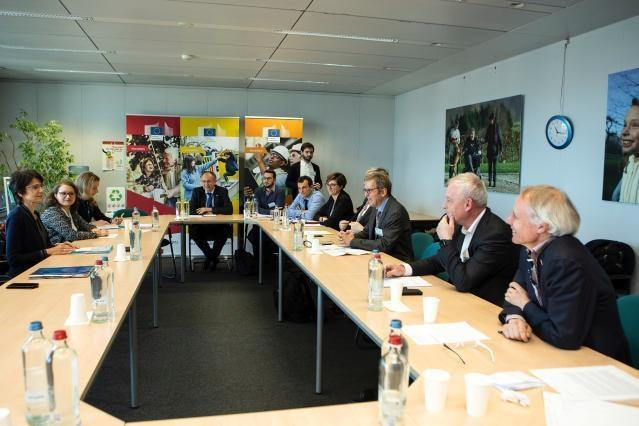
Valletta: On an island that spent much of the last decade fending off accusations of being a soft touch for dirty money, the arrival of a single European supervisor with real teeth is watched with particular attention. That supervisor, the Authority for Anti-Money Laundering and Countering the Financing of Terrorism, took another concrete step this week when it held a public hearing on 2 July over its draft guidelines for the ongoing monitoring of business relationships.

The hearing is unglamorous but consequential. Ongoing monitoring is the daily grind of financial crime prevention, the obligation on banks, payment firms and other ‘obliged entities’ to keep watching a customer’s transactions long after the account is opened, and to notice when the pattern stops making sense. AMLA’s guidelines will shape how that duty is discharged across the Union, replacing a patchwork of national interpretations that let standards drift from one member state to the next.

Frankfurt-based AMLA is being assembled in stages. It opened its doors last year, held its first conference at the city’s Alte Oper in June, and is now filling in the substance of the risk-based approach that the EU’s new anti-money-laundering package demands. The authority has said it intends to finalise its risk-assessment methodology this year before beginning, in 2027, the selection of the cross-border financial institutions it will supervise directly. The monitoring guidelines are part of the connective tissue between those milestones: the rules that firms will have to follow whether or not they fall under AMLA’s own direct watch.

Why open the process to a public hearing at all? The answer lies in the failures that created AMLA. A run of scandals, from Danske Bank’s Estonian branch to a string of cases that touched Malta, Cyprus and the Baltics, exposed how easily launderers exploited the gaps between national supervisors who neither shared information nor applied the same expectations. By consulting industry and civil society before it finalises guidance, the authority is trying to build rules that firms can actually implement, while signalling that the era of twenty-seven divergent rulebooks is ending.

Critics of the design worry about the opposite risk, that a centralised supervisor stacks compliance costs onto smaller institutions without meaningfully catching the sophisticated networks that move illicit funds through shell companies and correspondent banking. Others question whether AMLA will have the staff and data-sharing arrangements to match its mandate when direct supervision begins. Defenders counter that even harmonised expectations, consistently enforced, would be an improvement on a system whose weakest link set the effective standard for the whole bloc.

What comes next is a compressed timetable. AMLA is expected to weigh the feedback from this month’s hearing, refine the guidelines and slot them alongside the other technical standards flowing from the single rulebook, ahead of the regime’s phased application later in the decade. For compliance officers in Valletta and beyond, the message is that the questions being debated in Frankfurt this summer will land, in fairly short order, as concrete demands on their monitoring systems.