August 9, 2026
LATEST
New EU Gas Market Rules Take Effect With Consumer SafeguardsDeforestation Regulation Holds Its December Deadline Despite CutsDigital Omnibus Delays Europe’s High-Risk AI Deadline to 2027Europe’s Schools Confront a Widening Basic Skills GapRule of Law Report Finds Progress but Trust Still LagsIRIS2 Gains 66 Satellites as Brussels Signs the Rollout DealNature Restoration Plans Come Due as Member States Race a DeadlineECB Rates Hold at 2.25 Percent as Frankfurt Waits on the DataEU Budget Talks Turn to Cohesion as Ireland Takes OverWildfire Response Stretches Europe’s Emergency Fleet ThinCan Europe’s Quantum Plan Match Its Big Ambitions?Armenia Edges West as Moscow’s Grip Slips AwayEurope Inherits the World’s Aid Bill It Cannot Fully PayAir Passenger Rights Get Their First Overhaul in Two DecadesErasmus Opens a 5 Billion Euro Round for Skills and MobilityCeuta Crisis Pushes the EU Toward Faster Migrant ReturnsBulky Parcels Face a Packaging Crackdown From August 12Can Europe Build Its Drone Wall Before 2030 Arrives?Indonesia’s Trade Deal With Europe Nears Its Final SignatureEurope Leans on Beijing to Keep Climate Talks Alive Before AntalyaNew EU Gas Market Rules Take Effect With Consumer SafeguardsDeforestation Regulation Holds Its December Deadline Despite CutsDigital Omnibus Delays Europe’s High-Risk AI Deadline to 2027Europe’s Schools Confront a Widening Basic Skills GapRule of Law Report Finds Progress but Trust Still LagsIRIS2 Gains 66 Satellites as Brussels Signs the Rollout DealNature Restoration Plans Come Due as Member States Race a DeadlineECB Rates Hold at 2.25 Percent as Frankfurt Waits on the DataEU Budget Talks Turn to Cohesion as Ireland Takes OverWildfire Response Stretches Europe’s Emergency Fleet ThinCan Europe’s Quantum Plan Match Its Big Ambitions?Armenia Edges West as Moscow’s Grip Slips AwayEurope Inherits the World’s Aid Bill It Cannot Fully PayAir Passenger Rights Get Their First Overhaul in Two DecadesErasmus Opens a 5 Billion Euro Round for Skills and MobilityCeuta Crisis Pushes the EU Toward Faster Migrant ReturnsBulky Parcels Face a Packaging Crackdown From August 12Can Europe Build Its Drone Wall Before 2030 Arrives?Indonesia’s Trade Deal With Europe Nears Its Final SignatureEurope Leans on Beijing to Keep Climate Talks Alive Before Antalya
August 9, 2026
LATEST
New EU Gas Market Rules Take Effect With Consumer SafeguardsDeforestation Regulation Holds Its December Deadline Despite CutsDigital Omnibus Delays Europe’s High-Risk AI Deadline to 2027Europe’s Schools Confront a Widening Basic Skills GapRule of Law Report Finds Progress but Trust Still LagsIRIS2 Gains 66 Satellites as Brussels Signs the Rollout DealNature Restoration Plans Come Due as Member States Race a DeadlineECB Rates Hold at 2.25 Percent as Frankfurt Waits on the DataEU Budget Talks Turn to Cohesion as Ireland Takes OverWildfire Response Stretches Europe’s Emergency Fleet ThinCan Europe’s Quantum Plan Match Its Big Ambitions?Armenia Edges West as Moscow’s Grip Slips AwayEurope Inherits the World’s Aid Bill It Cannot Fully PayAir Passenger Rights Get Their First Overhaul in Two DecadesErasmus Opens a 5 Billion Euro Round for Skills and MobilityCeuta Crisis Pushes the EU Toward Faster Migrant ReturnsBulky Parcels Face a Packaging Crackdown From August 12Can Europe Build Its Drone Wall Before 2030 Arrives?Indonesia’s Trade Deal With Europe Nears Its Final SignatureEurope Leans on Beijing to Keep Climate Talks Alive Before AntalyaNew EU Gas Market Rules Take Effect With Consumer SafeguardsDeforestation Regulation Holds Its December Deadline Despite CutsDigital Omnibus Delays Europe’s High-Risk AI Deadline to 2027Europe’s Schools Confront a Widening Basic Skills GapRule of Law Report Finds Progress but Trust Still LagsIRIS2 Gains 66 Satellites as Brussels Signs the Rollout DealNature Restoration Plans Come Due as Member States Race a DeadlineECB Rates Hold at 2.25 Percent as Frankfurt Waits on the DataEU Budget Talks Turn to Cohesion as Ireland Takes OverWildfire Response Stretches Europe’s Emergency Fleet ThinCan Europe’s Quantum Plan Match Its Big Ambitions?Armenia Edges West as Moscow’s Grip Slips AwayEurope Inherits the World’s Aid Bill It Cannot Fully PayAir Passenger Rights Get Their First Overhaul in Two DecadesErasmus Opens a 5 Billion Euro Round for Skills and MobilityCeuta Crisis Pushes the EU Toward Faster Migrant ReturnsBulky Parcels Face a Packaging Crackdown From August 12Can Europe Build Its Drone Wall Before 2030 Arrives?Indonesia’s Trade Deal With Europe Nears Its Final SignatureEurope Leans on Beijing to Keep Climate Talks Alive Before Antalya

Nuclear Power Edges Toward Recognition in Europe’s Clean Rules

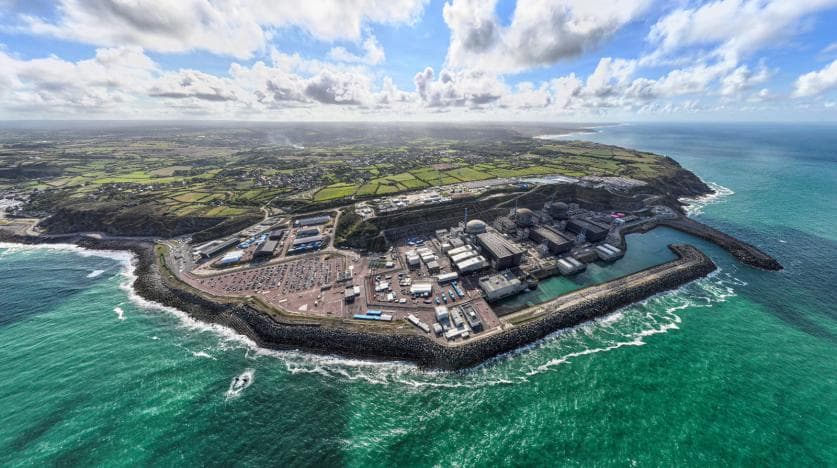
Flamanville: At the edge of the Normandy coast, where France’s newest reactor finally feeds the grid after years of delay, an old European argument is quietly being reopened. Should electricity generated by splitting atoms count, formally and on equal terms, alongside wind and solar in the bloc’s climate accounting? The Commission is preparing to ask exactly that.

By the end of June 2026 the executive is due to launch a public consultation on a draft methodology setting out criteria for recognising low-carbon electricity from nuclear power plants. The wording is technical, but the stakes are political. For most of the past decade the Union’s renewable targets have been built around a narrow definition of clean energy that privileges wind, solar, hydro and biomass. Nuclear, which emits almost no carbon dioxide in operation, has occupied an awkward middle ground: tolerated in national energy mixes but rarely counted toward the headline goals that drive subsidies and investment.

That ambiguity has divided member states for years. A pro-nuclear camp led by France, and joined by several central and eastern European governments, argues that any honest decarbonisation strategy must treat atomic power as a pillar rather than an afterthought. An opposing group, with Austria and traditionally Germany among the most vocal, insists that nuclear’s costs, waste and safety risks disqualify it from the same treatment as renewables. The consultation will not settle that quarrel, but it signals that the Commission is willing to give nuclear a clearer place in the architecture being built for the post-2030 era.

The timing is deliberate. A separate consultation on the post-2030 renewable energy framework closed on 12 June, gathering views to shape the legislative proposal the Commission intends to adopt by year’s end. The current Renewable Energy Directive sets a binding target of at least 42.5 percent renewables in the energy mix by 2030, with an aspiration of 45 percent, and includes specific obligations for renewable hydrogen in industry and transport. As officials begin sketching what comes after that date, the question of how to treat low-carbon but non-renewable sources can no longer be deferred.

The backdrop is the affordability crisis that has reshaped energy politics across the continent. In April the Commission unveiled AccelerateEU, a package aimed at curbing energy costs and reducing dependence on imported oil and gas, while pushing faster permitting for grids, storage and renewable projects. For governments staring at industrial customers threatening to relocate, the appeal of a firm, weather-independent power source is obvious, whatever the ideological discomfort.

Critics warn that recognising nuclear within clean-energy methodologies risks diverting attention and capital from renewables that can be deployed faster and more cheaply. New reactors remain expensive and slow, as the long saga of the plant on this coastline attests. Supporters counter that grids dominated by intermittent generation need reliable baseload, and that excluding nuclear on principle has weakened Europe’s decarbonisation rather than strengthened it.

What the consultation produces will not be law for some time. A methodology must be drafted, debated and folded into the wider legislative package now taking shape. But the direction of travel is becoming visible. After years in which the Union’s climate framework treated nuclear as a national choice to be quietly accommodated, the Commission appears ready to write it into the rules more openly. For the engineers who finally brought this reactor online, that recognition has been a long time coming.