August 9, 2026
LATEST
New EU Gas Market Rules Take Effect With Consumer SafeguardsDeforestation Regulation Holds Its December Deadline Despite CutsDigital Omnibus Delays Europe’s High-Risk AI Deadline to 2027Europe’s Schools Confront a Widening Basic Skills GapRule of Law Report Finds Progress but Trust Still LagsIRIS2 Gains 66 Satellites as Brussels Signs the Rollout DealNature Restoration Plans Come Due as Member States Race a DeadlineECB Rates Hold at 2.25 Percent as Frankfurt Waits on the DataEU Budget Talks Turn to Cohesion as Ireland Takes OverWildfire Response Stretches Europe’s Emergency Fleet ThinCan Europe’s Quantum Plan Match Its Big Ambitions?Armenia Edges West as Moscow’s Grip Slips AwayEurope Inherits the World’s Aid Bill It Cannot Fully PayAir Passenger Rights Get Their First Overhaul in Two DecadesErasmus Opens a 5 Billion Euro Round for Skills and MobilityCeuta Crisis Pushes the EU Toward Faster Migrant ReturnsBulky Parcels Face a Packaging Crackdown From August 12Can Europe Build Its Drone Wall Before 2030 Arrives?Indonesia’s Trade Deal With Europe Nears Its Final SignatureEurope Leans on Beijing to Keep Climate Talks Alive Before AntalyaNew EU Gas Market Rules Take Effect With Consumer SafeguardsDeforestation Regulation Holds Its December Deadline Despite CutsDigital Omnibus Delays Europe’s High-Risk AI Deadline to 2027Europe’s Schools Confront a Widening Basic Skills GapRule of Law Report Finds Progress but Trust Still LagsIRIS2 Gains 66 Satellites as Brussels Signs the Rollout DealNature Restoration Plans Come Due as Member States Race a DeadlineECB Rates Hold at 2.25 Percent as Frankfurt Waits on the DataEU Budget Talks Turn to Cohesion as Ireland Takes OverWildfire Response Stretches Europe’s Emergency Fleet ThinCan Europe’s Quantum Plan Match Its Big Ambitions?Armenia Edges West as Moscow’s Grip Slips AwayEurope Inherits the World’s Aid Bill It Cannot Fully PayAir Passenger Rights Get Their First Overhaul in Two DecadesErasmus Opens a 5 Billion Euro Round for Skills and MobilityCeuta Crisis Pushes the EU Toward Faster Migrant ReturnsBulky Parcels Face a Packaging Crackdown From August 12Can Europe Build Its Drone Wall Before 2030 Arrives?Indonesia’s Trade Deal With Europe Nears Its Final SignatureEurope Leans on Beijing to Keep Climate Talks Alive Before Antalya
August 9, 2026
LATEST
New EU Gas Market Rules Take Effect With Consumer SafeguardsDeforestation Regulation Holds Its December Deadline Despite CutsDigital Omnibus Delays Europe’s High-Risk AI Deadline to 2027Europe’s Schools Confront a Widening Basic Skills GapRule of Law Report Finds Progress but Trust Still LagsIRIS2 Gains 66 Satellites as Brussels Signs the Rollout DealNature Restoration Plans Come Due as Member States Race a DeadlineECB Rates Hold at 2.25 Percent as Frankfurt Waits on the DataEU Budget Talks Turn to Cohesion as Ireland Takes OverWildfire Response Stretches Europe’s Emergency Fleet ThinCan Europe’s Quantum Plan Match Its Big Ambitions?Armenia Edges West as Moscow’s Grip Slips AwayEurope Inherits the World’s Aid Bill It Cannot Fully PayAir Passenger Rights Get Their First Overhaul in Two DecadesErasmus Opens a 5 Billion Euro Round for Skills and MobilityCeuta Crisis Pushes the EU Toward Faster Migrant ReturnsBulky Parcels Face a Packaging Crackdown From August 12Can Europe Build Its Drone Wall Before 2030 Arrives?Indonesia’s Trade Deal With Europe Nears Its Final SignatureEurope Leans on Beijing to Keep Climate Talks Alive Before AntalyaNew EU Gas Market Rules Take Effect With Consumer SafeguardsDeforestation Regulation Holds Its December Deadline Despite CutsDigital Omnibus Delays Europe’s High-Risk AI Deadline to 2027Europe’s Schools Confront a Widening Basic Skills GapRule of Law Report Finds Progress but Trust Still LagsIRIS2 Gains 66 Satellites as Brussels Signs the Rollout DealNature Restoration Plans Come Due as Member States Race a DeadlineECB Rates Hold at 2.25 Percent as Frankfurt Waits on the DataEU Budget Talks Turn to Cohesion as Ireland Takes OverWildfire Response Stretches Europe’s Emergency Fleet ThinCan Europe’s Quantum Plan Match Its Big Ambitions?Armenia Edges West as Moscow’s Grip Slips AwayEurope Inherits the World’s Aid Bill It Cannot Fully PayAir Passenger Rights Get Their First Overhaul in Two DecadesErasmus Opens a 5 Billion Euro Round for Skills and MobilityCeuta Crisis Pushes the EU Toward Faster Migrant ReturnsBulky Parcels Face a Packaging Crackdown From August 12Can Europe Build Its Drone Wall Before 2030 Arrives?Indonesia’s Trade Deal With Europe Nears Its Final SignatureEurope Leans on Beijing to Keep Climate Talks Alive Before Antalya

Pact Opens 12 June with Border Screen Rules in Member States

Lampedusa: The countdown to 12 June, when the new Pact on Migration and Asylum enters into application across the Union, has compressed final preparations at external border posts and reception centres. The Commission’s progress report published on 8 May confirmed that the key pillars of the new system are in place and that Member States have, with varying speed, brought their national implementation plans to the operational stage. The report stops short of declaring readiness uniform across the bloc, but it underlines that the legal framework will activate on time and that obligations under the Pact will run from the entry-into-application date.

From 12 June, all irregular arrivals at external borders are to be screened under a common procedure that determines whether the person enters the asylum process, the accelerated border procedure, or the return track. The border procedure itself, central to the Pact’s architecture, applies at the external borders and is designed to resolve manifestly unfounded claims within a defined window without the person entering Union territory. The Commission’s view, expressed in technical briefings throughout the spring, is that the border procedure capacity built up in Italy, Greece, Spain, Cyprus, and Bulgaria will absorb the expected initial caseload.

Frontex’s role has been recalibrated. A cooperation agreement signed on 22 January with the European Union Agency for Asylum aligns the operational support that the two agencies provide to national authorities at screening points, registration centres, and where return decisions follow asylum refusals. The agencies’ joint deployments are expected to scale up from June onward, with rotating teams of asylum case officers, border guards, return liaison officers, and interpreters available to national authorities through a single coordinated channel.

Funding has flowed in parallel. The Commission has released an additional EUR 3 billion to support the build-up of procedures and to strengthen the prevention of unauthorised secondary movements within the Schengen area. Country teams from the Commission have worked alongside national authorities throughout the implementation phase, providing technical advice on case-management IT, reception capacity, and the legal interface between national procedures and the Pact’s harmonised steps.

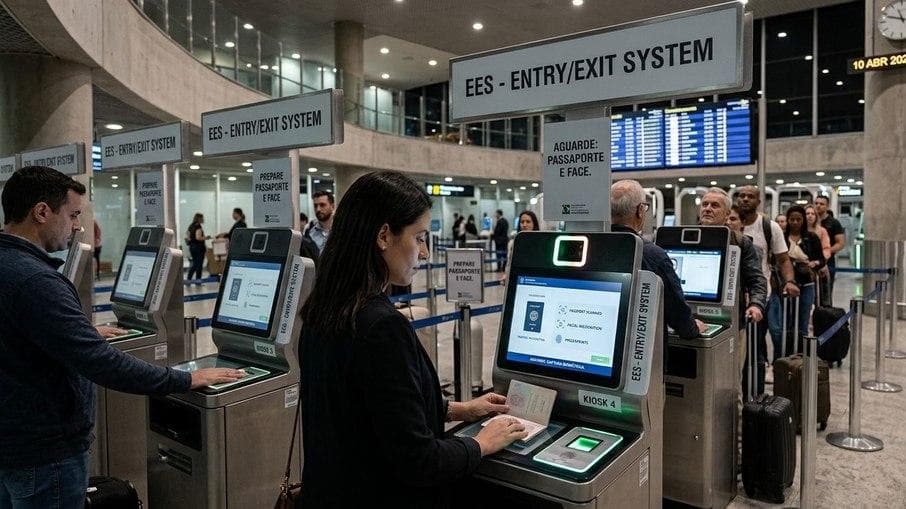
The baseline numbers entering the June activation have moved in the bloc’s favour. The 2026 State of Schengen report, released earlier in the spring, recorded a 26 percent fall in irregular border crossings during 2025 and noted that the Entry/Exit System became operational across the Schengen area without the disruption that operators had feared. That backdrop has eased the political pressure on capitals that had been most sceptical of the Pact during its negotiation phase, although the underlying tensions on solidarity contributions and on the return policy track remain.

The Pact’s solidarity mechanism, the politically contentious instrument requiring Member States either to accept relocations from frontline states or to contribute financially, will move into its first operational cycle once the Pact applies. The annual cycle, based on a Commission proposal followed by a Council implementing decision, is calibrated to migratory pressure indicators that the Commission has been refining since the start of the year. The first determinations are expected before the autumn.

For the frontline states, the activation date is less a moment of relief than the start of a sustained obligation to maintain throughput at the screening points. The legal architecture, after years of negotiation, is now arriving at the operational shoreline that has been so long anticipated by national authorities, civil society organisations, and the migrants whose passage will be processed under its terms.