August 9, 2026
LATEST
New EU Gas Market Rules Take Effect With Consumer SafeguardsDeforestation Regulation Holds Its December Deadline Despite CutsDigital Omnibus Delays Europe’s High-Risk AI Deadline to 2027Europe’s Schools Confront a Widening Basic Skills GapRule of Law Report Finds Progress but Trust Still LagsIRIS2 Gains 66 Satellites as Brussels Signs the Rollout DealNature Restoration Plans Come Due as Member States Race a DeadlineECB Rates Hold at 2.25 Percent as Frankfurt Waits on the DataEU Budget Talks Turn to Cohesion as Ireland Takes OverWildfire Response Stretches Europe’s Emergency Fleet ThinCan Europe’s Quantum Plan Match Its Big Ambitions?Armenia Edges West as Moscow’s Grip Slips AwayEurope Inherits the World’s Aid Bill It Cannot Fully PayAir Passenger Rights Get Their First Overhaul in Two DecadesErasmus Opens a 5 Billion Euro Round for Skills and MobilityCeuta Crisis Pushes the EU Toward Faster Migrant ReturnsBulky Parcels Face a Packaging Crackdown From August 12Can Europe Build Its Drone Wall Before 2030 Arrives?Indonesia’s Trade Deal With Europe Nears Its Final SignatureEurope Leans on Beijing to Keep Climate Talks Alive Before AntalyaNew EU Gas Market Rules Take Effect With Consumer SafeguardsDeforestation Regulation Holds Its December Deadline Despite CutsDigital Omnibus Delays Europe’s High-Risk AI Deadline to 2027Europe’s Schools Confront a Widening Basic Skills GapRule of Law Report Finds Progress but Trust Still LagsIRIS2 Gains 66 Satellites as Brussels Signs the Rollout DealNature Restoration Plans Come Due as Member States Race a DeadlineECB Rates Hold at 2.25 Percent as Frankfurt Waits on the DataEU Budget Talks Turn to Cohesion as Ireland Takes OverWildfire Response Stretches Europe’s Emergency Fleet ThinCan Europe’s Quantum Plan Match Its Big Ambitions?Armenia Edges West as Moscow’s Grip Slips AwayEurope Inherits the World’s Aid Bill It Cannot Fully PayAir Passenger Rights Get Their First Overhaul in Two DecadesErasmus Opens a 5 Billion Euro Round for Skills and MobilityCeuta Crisis Pushes the EU Toward Faster Migrant ReturnsBulky Parcels Face a Packaging Crackdown From August 12Can Europe Build Its Drone Wall Before 2030 Arrives?Indonesia’s Trade Deal With Europe Nears Its Final SignatureEurope Leans on Beijing to Keep Climate Talks Alive Before Antalya
August 9, 2026
LATEST
New EU Gas Market Rules Take Effect With Consumer SafeguardsDeforestation Regulation Holds Its December Deadline Despite CutsDigital Omnibus Delays Europe’s High-Risk AI Deadline to 2027Europe’s Schools Confront a Widening Basic Skills GapRule of Law Report Finds Progress but Trust Still LagsIRIS2 Gains 66 Satellites as Brussels Signs the Rollout DealNature Restoration Plans Come Due as Member States Race a DeadlineECB Rates Hold at 2.25 Percent as Frankfurt Waits on the DataEU Budget Talks Turn to Cohesion as Ireland Takes OverWildfire Response Stretches Europe’s Emergency Fleet ThinCan Europe’s Quantum Plan Match Its Big Ambitions?Armenia Edges West as Moscow’s Grip Slips AwayEurope Inherits the World’s Aid Bill It Cannot Fully PayAir Passenger Rights Get Their First Overhaul in Two DecadesErasmus Opens a 5 Billion Euro Round for Skills and MobilityCeuta Crisis Pushes the EU Toward Faster Migrant ReturnsBulky Parcels Face a Packaging Crackdown From August 12Can Europe Build Its Drone Wall Before 2030 Arrives?Indonesia’s Trade Deal With Europe Nears Its Final SignatureEurope Leans on Beijing to Keep Climate Talks Alive Before AntalyaNew EU Gas Market Rules Take Effect With Consumer SafeguardsDeforestation Regulation Holds Its December Deadline Despite CutsDigital Omnibus Delays Europe’s High-Risk AI Deadline to 2027Europe’s Schools Confront a Widening Basic Skills GapRule of Law Report Finds Progress but Trust Still LagsIRIS2 Gains 66 Satellites as Brussels Signs the Rollout DealNature Restoration Plans Come Due as Member States Race a DeadlineECB Rates Hold at 2.25 Percent as Frankfurt Waits on the DataEU Budget Talks Turn to Cohesion as Ireland Takes OverWildfire Response Stretches Europe’s Emergency Fleet ThinCan Europe’s Quantum Plan Match Its Big Ambitions?Armenia Edges West as Moscow’s Grip Slips AwayEurope Inherits the World’s Aid Bill It Cannot Fully PayAir Passenger Rights Get Their First Overhaul in Two DecadesErasmus Opens a 5 Billion Euro Round for Skills and MobilityCeuta Crisis Pushes the EU Toward Faster Migrant ReturnsBulky Parcels Face a Packaging Crackdown From August 12Can Europe Build Its Drone Wall Before 2030 Arrives?Indonesia’s Trade Deal With Europe Nears Its Final SignatureEurope Leans on Beijing to Keep Climate Talks Alive Before Antalya

Plastic reckoning: Milan firms brace for August packaging rules

Milan: Lombardy’s industrial federation hosted a packed compliance briefing this week as Italian manufacturers come to grips with the Packaging and Packaging Waste Regulation, which will apply generally from 12 August. The PPWR, formally Regulation 2025/40, entered into force on 11 February 2025 and replaces a directive regime that had governed packaging waste since 1994. For firms in the Milan-Bergamo-Brescia industrial triangle, the August date is now the most-watched compliance deadline in the EU calendar.

The regulation’s reach is unusually broad. Unlike its predecessor directive, it applies uniformly across member states without the patchwork of national transpositions that had created internal-market friction for cross-border packaging supply chains. The Commission published implementation guidelines on 30 March, addressing the most contested ambiguities around recycled-content calculation, mass-balance accounting and the boundary between packaging and non-packaging components in composite products.

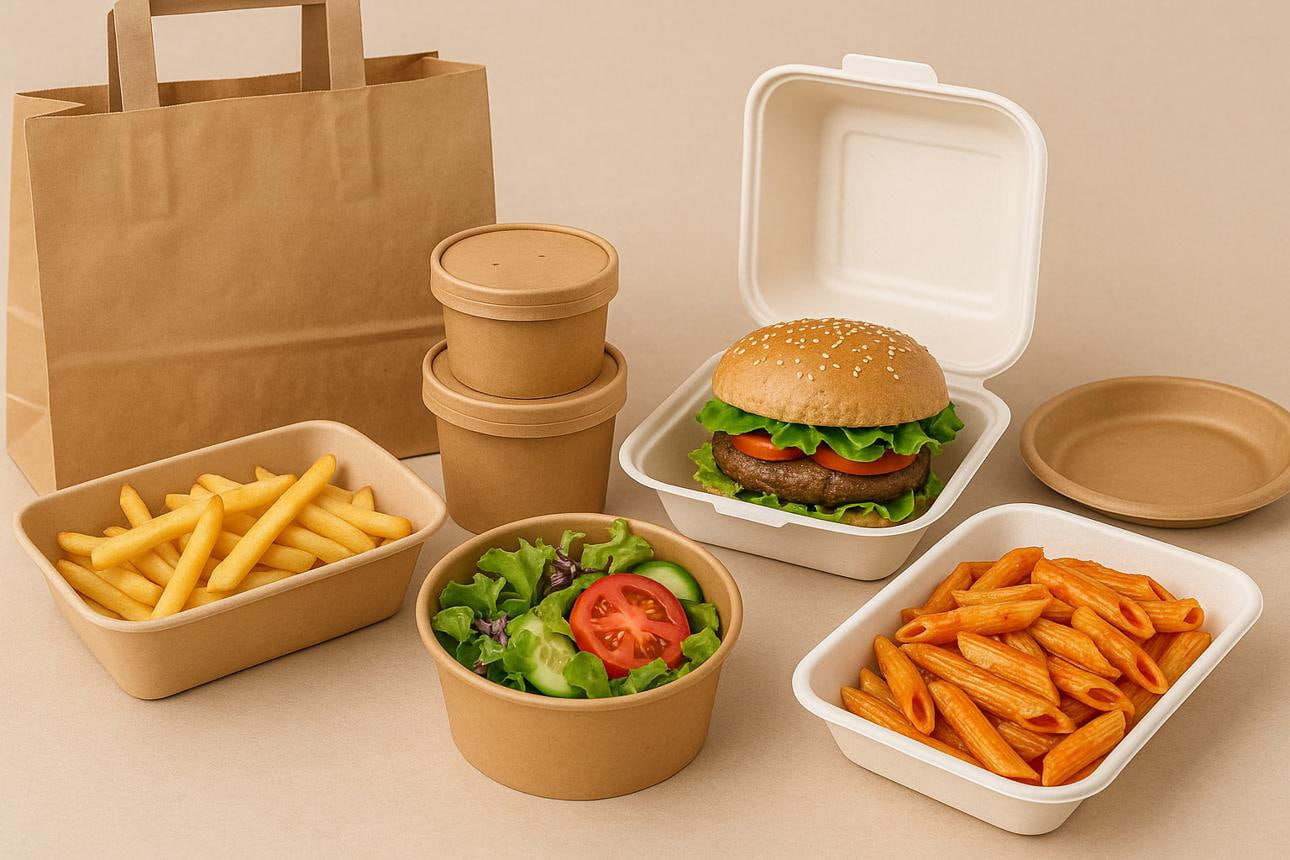
The substantive requirements scale in over multiple horizons. Plastic packaging must contain mandatory minimum recycled content from 2030, with the percentage rising further by 2040. All packaging placed on the EU market must be designed for recycling by 2030, a requirement that effectively forces a redesign cycle on producers using complex multilayer structures or hard-to-recycle materials. Reuse and refill targets apply most aggressively to the beverage and transport-packaging sectors, where deposit-return infrastructure is the obvious downstream consequence.

Milan firms are particularly exposed because Lombardy concentrates much of Italy’s food, beverage, pharmaceutical and luxury-goods packaging supply chain. The luxury sector poses an unusual problem. Several of its packaging traditions, from intricate cosmetics paper-folding to multilayer fragrance presentations, sit awkwardly with the regulation’s design-for-recycling mandate. Industry representatives in the Lombard briefing pressed for clarity on whether artisanal small-batch packaging will receive proportionality concessions; the Commission’s published guidance leaves that question partly open.

The recycled-content rules are the most economically consequential. Italy already has one of the more developed plastics recycling infrastructures in the Union, but converters report that the supply of food-grade recycled PET, the workhorse polymer for beverage packaging, is structurally short for the volumes the regulation will require by 2030. Several Milan firms have invested in dedicated recycled-content streams in partnership with regional recyclers, but the economics depend on stable virgin-resin pricing relative to recycled feedstocks, a relationship that has been volatile through 2025 and into the spring.

Reuse targets have triggered the loudest political pushback. The original Commission proposal foresaw aggressive reuse percentages for sectors including beverages and takeaway food; the adopted text moderates those numbers but retains binding milestones from 2030 onward. Member states have flexibility to introduce more stringent national rules, and Italy’s environment ministry has signalled interest in stricter beverage reuse obligations that would put Lombard bottlers under earlier pressure than EU-baseline competitors.

The regulation also extends to packaging waste targets, with separate collection, sorting and recycling rates that member states must hit on rising trajectories. For Lombardy, where municipal waste systems are among Italy’s better-performing, the targets are achievable but expensive. The federation’s compliance briefing in Milan ended with an unusually frank exchange about whether the regulation’s economic logic genuinely favours European producers or merely creates a more sophisticated compliance regime that international competitors will navigate at lower cost. The answer will not be known until well into the next decade.