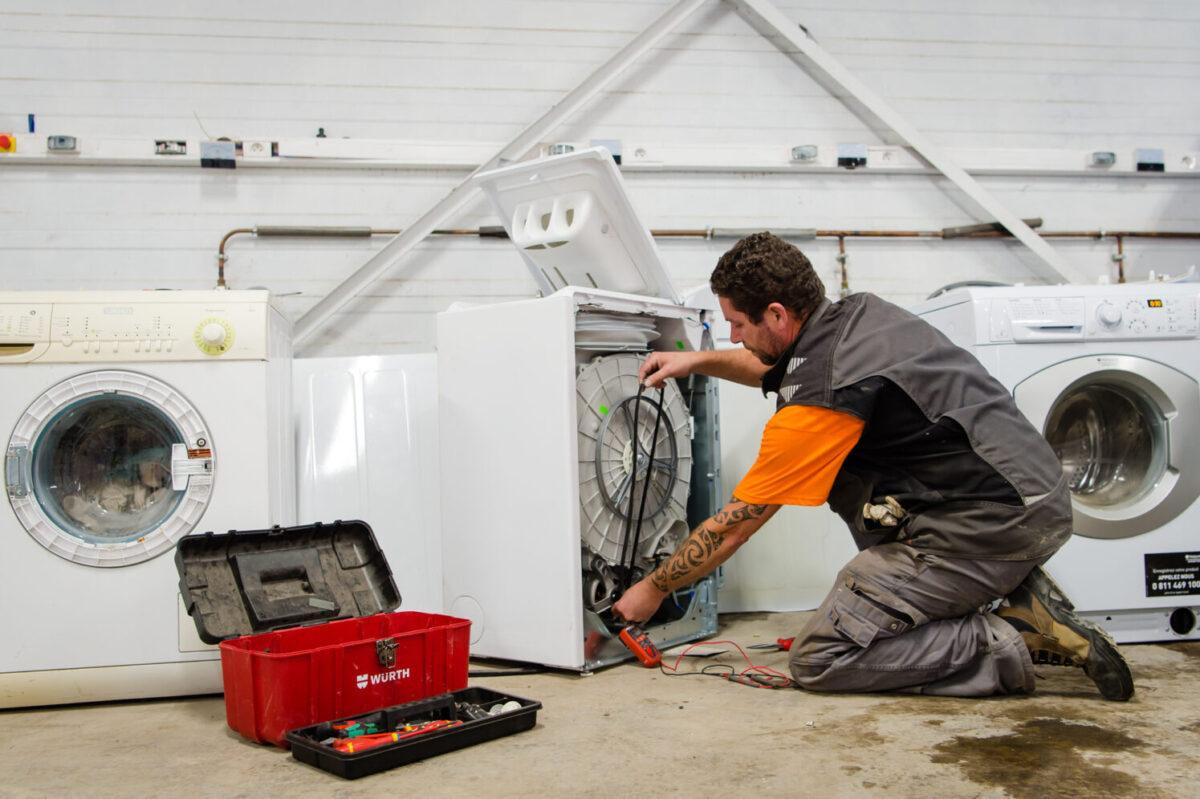
Eindhoven: The countdown to 31 July 2026, the date by which member states must apply the national rules transposing the directive on common rules promoting the repair of goods, has converted the spring months into a sequence of compliance audits across electronics retailers and white-goods chains. National consumer agencies in the Netherlands, Germany and France have begun publishing the names of brands that have failed to upload the required repair information to their dedicated public platforms.
The directive, adopted in June 2024, sits alongside the Ecodesign for Sustainable Products Regulation and the existing repairability scoring regime that has been compulsory for smartphones and tablets since June 2025. The latter feed an A to E label that consumers see at the point of sale, and the directive extends the regulatory architecture beyond product-design rules by giving consumers a hard right to demand repair from manufacturers during the warranty period and beyond. The next product categories scheduled to receive their own score are clothes dryers and a handful of household appliances, with the Commission expected to confirm the technical specifications during the second half of the year.
Industry response has been uneven. The largest manufacturers headquartered in the Eindhoven region have been preparing for the regime since 2024, and their packaging lines have already been retooled to print the new score. Smaller importers, particularly those distributing products manufactured outside the Union, are coming to terms with the requirement to provide spare parts at a non-prohibitive price for as long as ten years after a product is placed on the market. Independent repairers are warmly supportive of the obligations on technical documentation and repair manuals, having spent the past decade lobbying for access to manufacturer service portals.
Research published this month by the Institute for Innovation and Technology Foundation argued that the directive disproportionately affects companies headquartered outside the Union, particularly American electronics groups. The trade association representing several large platforms has urged the Commission to publish detailed guidance on what counts as a non-prohibitive spare-part price, warning that uneven national approaches will create internal market friction. The Belgian and Spanish authorities have already adopted differing positions on whether refurbished spare parts can be supplied as standard, signalling that legal disputes are likely once the transposition deadline passes.
The consumer protection cooperation network has put the transposition wave on its agenda for the autumn cycle, with sweep actions scheduled to target online marketplaces in October. The Commission is preparing a dashboard that will publish, in close to real time, the percentage of products in each category for which the score has been correctly disclosed by retailers. Internal projections circulated to member state delegations suggest that the largest gaps in disclosure will arise in the white-goods category, partly because legacy stock continues to circulate well after a product is no longer being manufactured.
For the European Consumer Organisation, the most important test will be whether the new framework actually shifts purchasing patterns. Surveys taken in late 2025 suggested that the repair score is being read by about half of buyers in the smartphone segment, with a noticeable uplift in market share for top-rated models. If the same pattern repeats in the categories now joining the regime, the directive will deliver on its dual ambition of reducing waste and reshaping the economics of product design across the single market.