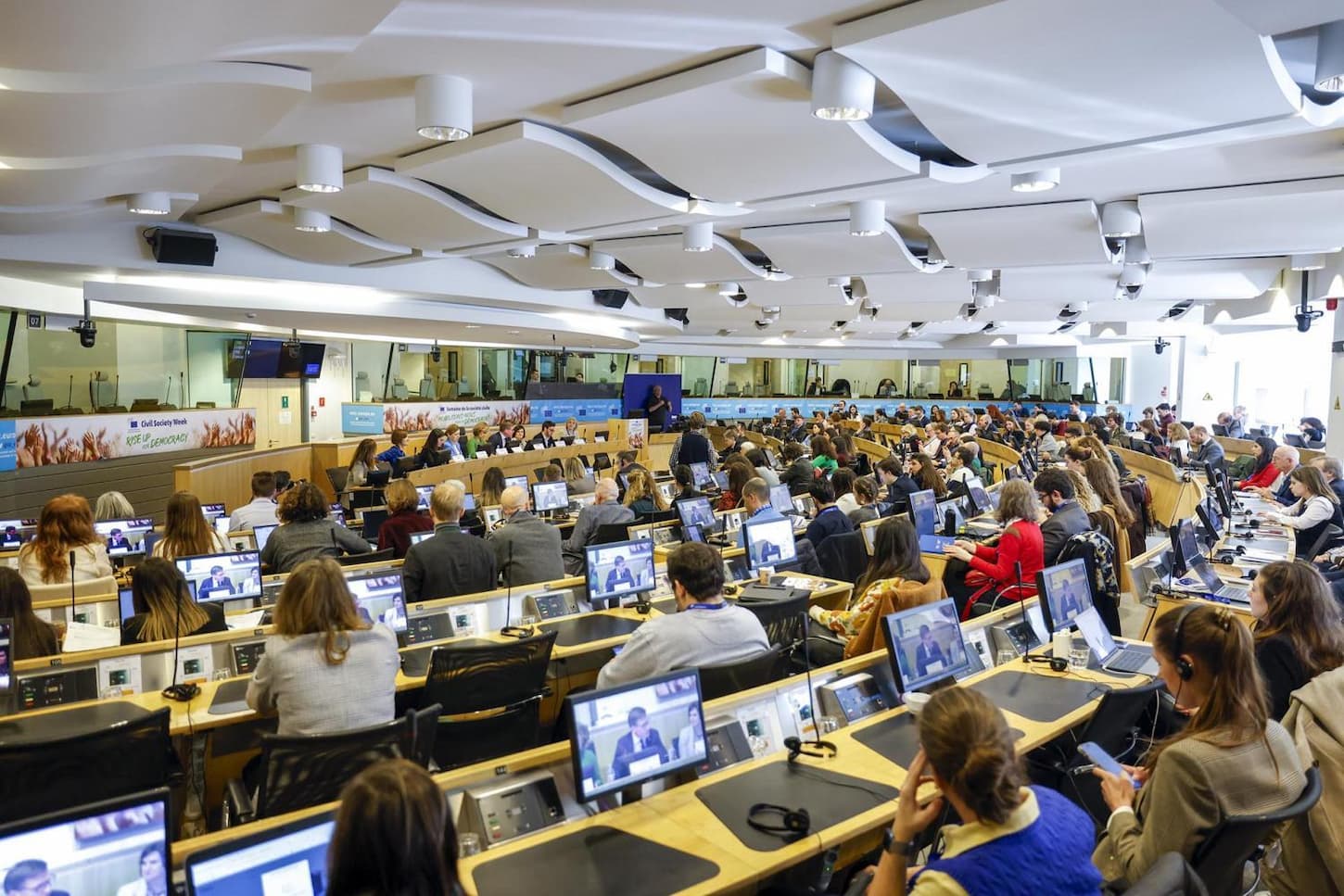
Brussels: The organisations that run domestic-violence shelters, monitor election integrity and keep the memory of Europe’s darkest decades alive rarely make headlines, and they almost never have spare cash. For thousands of them, a single Union programme has become a financial lifeline, and its doors have just reopened. The Commission has published the first 2026 calls for proposals under the Citizens, Equality, Rights and Values programme, known as CERV, putting a budget of around 305 million euros within reach of civil-society groups across the bloc.
CERV was created in 2021 and runs to 2027 with a simple, if ambitious, purpose: to defend the values written into the Union’s treaties when they are tested on the ground. The 2026 round spreads its money across familiar strands. There is funding for citizen engagement and town-twinning that knits communities together, for gender-equality work, for the Daphne strand that fights violence against women and children, for the protection of fundamental rights, and for remembrance projects that confront the history of totalitarianism in Europe.
The money matters because the recipients are typically small. Union grants of this kind often form the backbone of a non-governmental organisation’s annual budget, paying the salaries and the rent that private donations cannot reliably cover. For groups working in countries where national governments are lukewarm or openly hostile to their cause, money routed through a Union channel rather than the national treasury can be the difference between operating and closing. That independence is precisely what makes the programme valued by its beneficiaries and viewed warily by some governments.
That tension is the unspoken subject of CERV. The programme exists partly because the Union spent the last decade grappling with rule-of-law backsliding in several member states, and learned that defending democratic values requires more than legal proceedings against governments. It requires a living civil society able to scrutinise power, support victims and remember why the institutions were built. Funding that ecosystem directly is the Union’s attempt to keep those watchdogs alive even where the political climate has turned against them.
Critics raise fair questions. Centrally administered grant programmes are notorious for paperwork that favours large, professionalised organisations over the grassroots groups closest to the people they serve, and the Commission has promised simpler procedures without always delivering them. There is also a deeper objection, voiced mainly by governments on the receiving end of values scrutiny, that the Union is effectively financing its own political constituency. Defenders answer that the programme funds rights and remembrance, not partisanship, and that the values it protects are ones every member state has signed up to.
Applicants now face the familiar scramble of deadlines, co-financing requirements and competitive evaluation, with more calls expected to follow through the year. For the shelters, monitors and memory projects that depend on it, the reopening of CERV is less an abstract policy event than a practical question of survival into another year. The programme’s real test is not how much it distributes, but whether the money reaches the small organisations doing the work that the Union says it most wants to protect.