Tallinn: One year to the day after the regulation establishing the Security Action for Europe instrument entered into force, the loan scheme has moved from political promise to disbursed reality, with national defence investment plans from eighteen member states now cleared by the Commission and endorsed in Council. The anniversary offers a useful vantage point on an instrument that was assembled at unusual speed and whose execution is only now being tested.
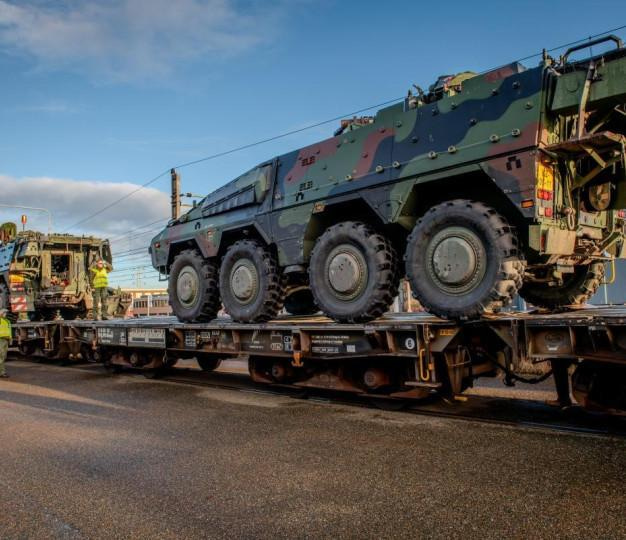
SAFE was conceived as a way to channel up to 150 billion euros in loans to capitals willing to make rapid, joint increases in defence spending. The logic was twofold. By borrowing collectively and lending onward, the Union could offer financing on terms few individual treasuries could match. And by tying the money to common procurement, it could nudge fragmented national buying toward shared platforms, longer production runs and a more resilient European industrial base.
The approvals have come in waves. A first cluster of eight plans, submitted by Estonia, Greece, Italy, Latvia, Lithuania, Poland, Slovakia and Finland, was assessed favourably in late January and is collectively worth some 74 billion euros. A second group, covering Belgium, Bulgaria, Denmark, Spain, Croatia, Cyprus, Portugal and Romania, added a further 38 billion. Between February and April the Council green-lit funding for eighteen states in total, leaving the plans of Czechia, France and Hungary still in the pipeline.
What the plans reveal is as telling as their headline value. Of the national submissions, the majority include projects involving Ukraine, reflecting both solidarity and a calculation that Ukrainian industry and battlefield experience have become assets to European capability rather than charity cases. Certain sensitive categories of equipment carry stricter eligibility conditions, and non-EU states may join common procurements only after concluding a security and defence partnership with the Union, a clause that has turned partnership negotiations into a gatekeeping mechanism in their own right.
The instrument has not been free of friction. Because SAFE was built on a legal base that allowed it to move quickly, its governance has drawn scrutiny from those who would have preferred a fuller role for the Parliament. Questions about how the loans interact with national debt rules, how procurement is steered toward genuinely European suppliers without shutting out capable partners, and whether the money accelerates real capacity or simply finances purchases already planned, remain live.
For the eastern members that have pushed hardest for the bloc to take its own defence seriously, the first year counts as vindication. The speed of disbursement and the scale of the early plans suggest an appetite that earlier defence initiatives never managed to unlock. For the skeptics, the test is still ahead: whether the orders translate into delivered systems, filled magazines and a supply chain that can sustain output if the security environment worsens. A birthday is a moment to take stock, not to declare victory, and the harder year of execution is the one now beginning.