Brussels: A wave of national subsidies is washing back across the European Union, and Brussels is signing off on it at a pace that has competition lawyers reaching for their files. Under a temporary framework drawn up to shield the economy from the fallout of the Middle East crisis, member states have been granted permission to hand companies billions in relief, reviving an old worry about whether the single market can stay level when richer governments can simply outspend poorer ones.
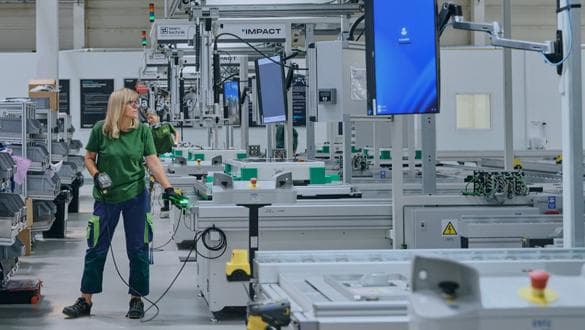
The approvals have come thick and fast. In recent weeks the Commission has cleared a one-billion-euro Slovak scheme to expand clean-technology manufacturing, an Austrian programme worth a hundred million for the same purpose, and a twenty-three-billion-euro Italian measure supporting renewable electricity. Alongside the cleantech money sit a string of smaller, more defensive packages: Irish aid for farmers facing higher fuel bills, Spanish and Croatian help for fishing fleets, and similar cushions in other capitals where energy and input costs have bitten hardest.
The legal basis for all this is a special state-aid framework that lets governments cover part of the price increases for fuel and fertiliser, and channel investment toward strategic industries, with the window running until the end of the year. It is the latest in a lineage of emergency regimes that began during the pandemic and has been repeatedly extended through one shock after another. Each time, the Commission frames the loosening as proportionate and temporary. Each time, critics warn that temporary has a way of becoming permanent.
The unease is rooted in arithmetic rather than ideology. State aid is approved in Brussels but paid in national capitals, and national treasuries are wildly unequal. A large economy with deep fiscal reserves can match almost any incentive a rival offers; a smaller or more indebted member state cannot. When subsidies become a routine instrument of industrial policy, the single market risks tilting toward whoever can write the biggest cheque, eroding the very level playing field that competition rules exist to protect.
Supporters of the approach counter that the alternative is worse. Without a coordinated European framework, they argue, governments would intervene anyway, but in a disorderly scramble that fragments the market further and invites a subsidy war with the United States and China. Channelling the aid through a common set of rules at least imposes ceilings, conditions and transparency, and steers some of the money toward shared goals such as decarbonisation and supply-chain resilience.
The Commission is trying to hold both ideas at once, and it is also rewriting the underlying rulebook. A consultation on a new general block-exemption regulation, which sets out the categories of aid that can be granted without prior approval, has been running this year, and draft sector guidelines for areas such as aviation point toward stricter conditions in some places even as crisis money flows more freely in others.
For now the spigot is open. The harder question, which the end-of-year expiry will force, is whether Europe can wean itself off emergency subsidies once the emergency that justified them has passed.