August 9, 2026
LATEST
New EU Gas Market Rules Take Effect With Consumer SafeguardsDeforestation Regulation Holds Its December Deadline Despite CutsDigital Omnibus Delays Europe’s High-Risk AI Deadline to 2027Europe’s Schools Confront a Widening Basic Skills GapRule of Law Report Finds Progress but Trust Still LagsIRIS2 Gains 66 Satellites as Brussels Signs the Rollout DealNature Restoration Plans Come Due as Member States Race a DeadlineECB Rates Hold at 2.25 Percent as Frankfurt Waits on the DataEU Budget Talks Turn to Cohesion as Ireland Takes OverWildfire Response Stretches Europe’s Emergency Fleet ThinCan Europe’s Quantum Plan Match Its Big Ambitions?Armenia Edges West as Moscow’s Grip Slips AwayEurope Inherits the World’s Aid Bill It Cannot Fully PayAir Passenger Rights Get Their First Overhaul in Two DecadesErasmus Opens a 5 Billion Euro Round for Skills and MobilityCeuta Crisis Pushes the EU Toward Faster Migrant ReturnsBulky Parcels Face a Packaging Crackdown From August 12Can Europe Build Its Drone Wall Before 2030 Arrives?Indonesia’s Trade Deal With Europe Nears Its Final SignatureEurope Leans on Beijing to Keep Climate Talks Alive Before AntalyaNew EU Gas Market Rules Take Effect With Consumer SafeguardsDeforestation Regulation Holds Its December Deadline Despite CutsDigital Omnibus Delays Europe’s High-Risk AI Deadline to 2027Europe’s Schools Confront a Widening Basic Skills GapRule of Law Report Finds Progress but Trust Still LagsIRIS2 Gains 66 Satellites as Brussels Signs the Rollout DealNature Restoration Plans Come Due as Member States Race a DeadlineECB Rates Hold at 2.25 Percent as Frankfurt Waits on the DataEU Budget Talks Turn to Cohesion as Ireland Takes OverWildfire Response Stretches Europe’s Emergency Fleet ThinCan Europe’s Quantum Plan Match Its Big Ambitions?Armenia Edges West as Moscow’s Grip Slips AwayEurope Inherits the World’s Aid Bill It Cannot Fully PayAir Passenger Rights Get Their First Overhaul in Two DecadesErasmus Opens a 5 Billion Euro Round for Skills and MobilityCeuta Crisis Pushes the EU Toward Faster Migrant ReturnsBulky Parcels Face a Packaging Crackdown From August 12Can Europe Build Its Drone Wall Before 2030 Arrives?Indonesia’s Trade Deal With Europe Nears Its Final SignatureEurope Leans on Beijing to Keep Climate Talks Alive Before Antalya
August 9, 2026
LATEST
New EU Gas Market Rules Take Effect With Consumer SafeguardsDeforestation Regulation Holds Its December Deadline Despite CutsDigital Omnibus Delays Europe’s High-Risk AI Deadline to 2027Europe’s Schools Confront a Widening Basic Skills GapRule of Law Report Finds Progress but Trust Still LagsIRIS2 Gains 66 Satellites as Brussels Signs the Rollout DealNature Restoration Plans Come Due as Member States Race a DeadlineECB Rates Hold at 2.25 Percent as Frankfurt Waits on the DataEU Budget Talks Turn to Cohesion as Ireland Takes OverWildfire Response Stretches Europe’s Emergency Fleet ThinCan Europe’s Quantum Plan Match Its Big Ambitions?Armenia Edges West as Moscow’s Grip Slips AwayEurope Inherits the World’s Aid Bill It Cannot Fully PayAir Passenger Rights Get Their First Overhaul in Two DecadesErasmus Opens a 5 Billion Euro Round for Skills and MobilityCeuta Crisis Pushes the EU Toward Faster Migrant ReturnsBulky Parcels Face a Packaging Crackdown From August 12Can Europe Build Its Drone Wall Before 2030 Arrives?Indonesia’s Trade Deal With Europe Nears Its Final SignatureEurope Leans on Beijing to Keep Climate Talks Alive Before AntalyaNew EU Gas Market Rules Take Effect With Consumer SafeguardsDeforestation Regulation Holds Its December Deadline Despite CutsDigital Omnibus Delays Europe’s High-Risk AI Deadline to 2027Europe’s Schools Confront a Widening Basic Skills GapRule of Law Report Finds Progress but Trust Still LagsIRIS2 Gains 66 Satellites as Brussels Signs the Rollout DealNature Restoration Plans Come Due as Member States Race a DeadlineECB Rates Hold at 2.25 Percent as Frankfurt Waits on the DataEU Budget Talks Turn to Cohesion as Ireland Takes OverWildfire Response Stretches Europe’s Emergency Fleet ThinCan Europe’s Quantum Plan Match Its Big Ambitions?Armenia Edges West as Moscow’s Grip Slips AwayEurope Inherits the World’s Aid Bill It Cannot Fully PayAir Passenger Rights Get Their First Overhaul in Two DecadesErasmus Opens a 5 Billion Euro Round for Skills and MobilityCeuta Crisis Pushes the EU Toward Faster Migrant ReturnsBulky Parcels Face a Packaging Crackdown From August 12Can Europe Build Its Drone Wall Before 2030 Arrives?Indonesia’s Trade Deal With Europe Nears Its Final SignatureEurope Leans on Beijing to Keep Climate Talks Alive Before Antalya

Teenagers Win the Wheel Earlier as Europe Rewrites Licence Rules

Brussels: The driving licence tucked into wallets across the European Union is about to change, in who can hold one, what it permits and even whether it exists on paper at all. After two and a half years of negotiation, the bloc’s modernised rules on licences are now on the books, and member states have begun the long task of translating them into national law before the deadline arrives in late 2028.

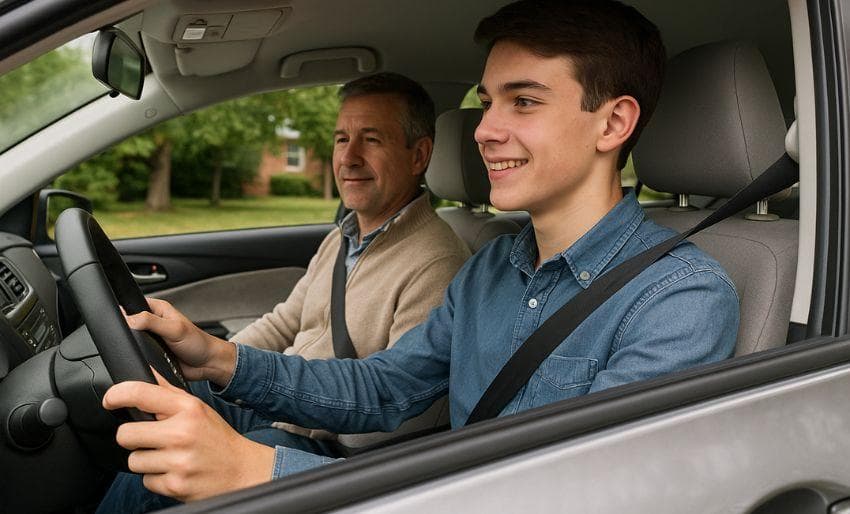
The most eye-catching change lowers the age at which young people can get behind the wheel, but it does so with strings attached. Seventeen-year-olds will be able to obtain a category B licence to drive a car, yet they must do so accompanied by an experienced driver until they turn eighteen. Every newly qualified driver, whatever their age, will face a probationary period of at least two years, during which tougher penalties and stricter rules on drink-driving are meant to keep the riskiest months after passing a test under closer watch.

The reform also rewrites the timetable for professional drivers, a change aimed squarely at a chronic shortage of haulage and bus crews. Under the new rules, eighteen-year-olds will be able to drive trucks and twenty-one-year-olds buses, provided they hold a certificate of professional competence. Hauliers have lobbied for years for exactly this, arguing that the old age thresholds pushed school leavers into other careers during the very window when they were choosing one, leaving cabs empty and freight costs high.

Behind the headline measures sits a quieter revolution in format. A digital driving licence, carried on a mobile phone, is set to become the standard across the bloc from 2030, with the familiar plastic card remaining available for those who want it. In principle a driver stopped at a roadside check could display their entitlement on a screen, and renewals and replacements could be handled without the postal delays that frustrate anyone who has lost a card abroad.

Stitched through the package is a harder edge on enforcement. The rules tighten the way driving disqualifications travel across borders, closing a loophole that has long irritated road-safety campaigners. Until now, a driver banned in one member state could often climb back behind the wheel the moment they crossed into another, because penalties did not reliably follow the person. The new regime is meant to make a serious disqualification stick across the whole Union rather than evaporate at the frontier.

The stated purpose of all this is grim arithmetic. Close to twenty thousand people still die on the bloc’s roads every year, and progress toward the Union’s long-term goal of eliminating road deaths has stalled. By targeting young and newly qualified drivers, who are statistically over-represented in serious crashes, and by making bans harder to dodge, the Commission hopes to bend that curve back downward.

For now the rules exist mainly on paper, awaiting transposition in each capital. The real test will come when seventeen-year-olds start appearing in the passenger-side mirror, and when the first phone-based licence is held up at a border.