
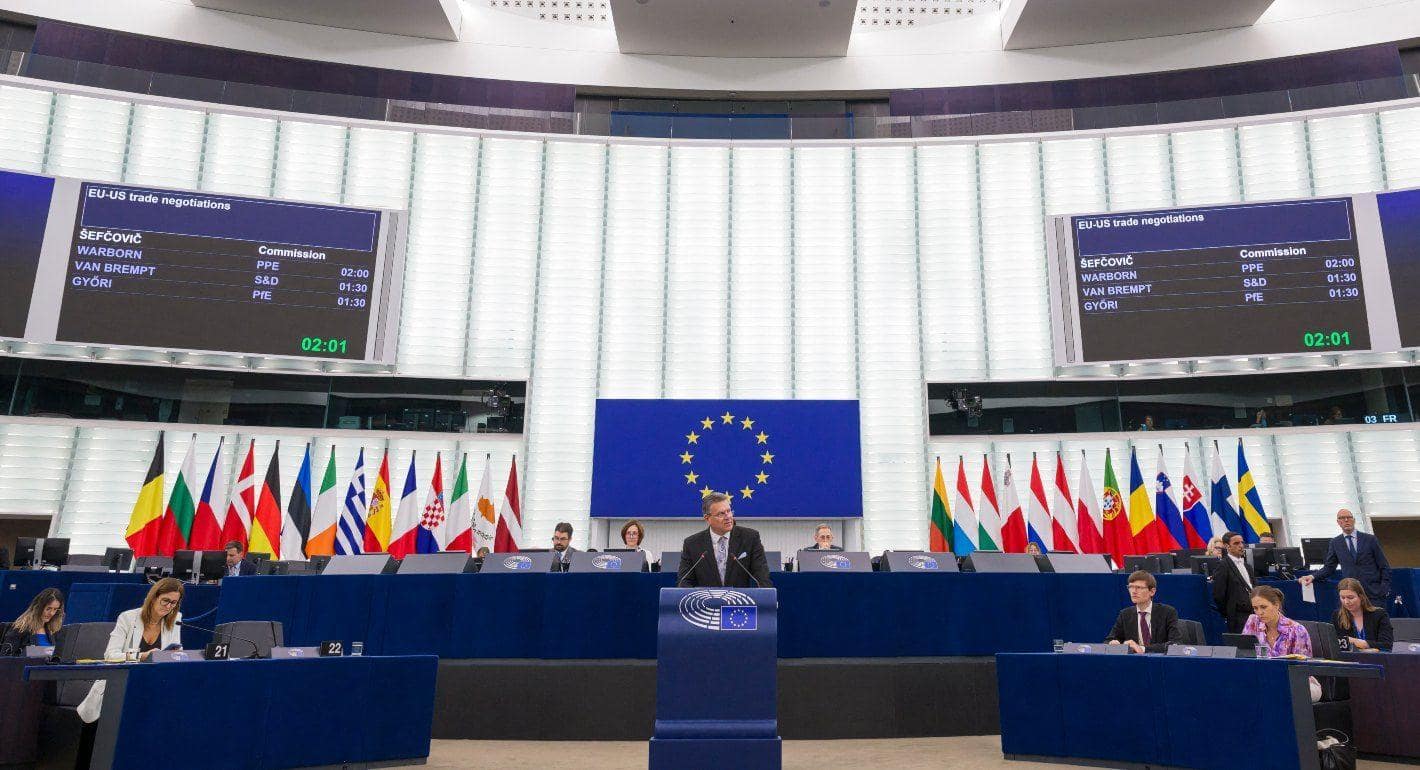
Brussels: On 1 July 2026 the European Union quietly rewrote the terms of its largest commercial relationship. Regulation 2026/1455 took effect that day, stripping customs duties from most American industrial goods and opening twenty tariff-rate quotas for United States farm and seafood exports. The move ends months of brinkmanship and hands transatlantic trade a fragile but functioning rulebook.
The arithmetic explains why Brussels moved. The United States buys roughly a fifth of the bloc’s goods exports, and a tit-for-tat tariff spiral threatened chemicals, machinery and vehicle makers across Europe. Rather than escalate, negotiators turned a political joint statement into binding law. Parliament backed the text on 16 June, and the Council gave its final approval days later.
What the regulation actually changes
The main regulation removes import duties on the bulk of US industrial products, from chemicals, pharmaceuticals and plastics to textiles, metals, machinery, vehicles and aircraft. It trims duties on selected fresh produce behind minimum-price floors, and it creates duty-free or reduced quotas for pork, bison, dairy, cheese, nuts and soybean oil. The Council framed the package as the price of stability rather than a commercial triumph.
Washington offered the concession European carmakers wanted most. The United States agreed to cap its tariff on passenger cars and parts at 15 percent, down from a punishing 27.5 percent. Yet the cap carries a condition. It activates only once the EU starts delivering its own cuts on dairy, nuts and certain seafood. Until Brussels moves, European exporters keep paying the higher rate.
Who gains and who pays
The bargain tilts by design. European industry secures cheaper access to American inputs and calmer trading conditions, while European farmers face fresh competition from heavily supported US produce. Dairy cooperatives and nut growers in southern Europe carry the sharpest exposure, and their governments will scrutinise every quota volume before the ink dries.
Carmakers occupy the oddest position of all. They lobbied hardest for the 15 percent ceiling, yet they still pay 27.5 percent until the Commission activates the agricultural concessions. That sequencing gives Brussels leverage over its own producers and turns a trade file into a domestic negotiation about who absorbs the cost of transatlantic peace.
The deal also tests the Union’s claim to strategic autonomy. By trading tariff lines rather than confronting the threat behind them, the Commission chose predictability over principle. Critics warn that rewarding tariff pressure simply invites more of it. Defenders answer that a rules-based truce beats an open trade war that would strike European jobs first.
The scale is real. The industrial carve-out and the twenty quotas together govern tens of billions of euros in annual trade, and the minimum-price floors on fresh produce show how carefully Brussels tried to shield sensitive growers while still opening the door. Each quota volume becomes a lever that either capital can contest at the next review, which is why farm lobbies already treat the numbers as unfinished business.
For now the regulation buys time. It converts a volatile dispute into scheduled obligations, lets exporters plan again, and gives both capitals a face-saving exit. Whether the truce lasts depends on politics in Washington as much as compliance in Brussels, and on whether Europe’s farmers quietly accept the bill for their industry’s relief.


