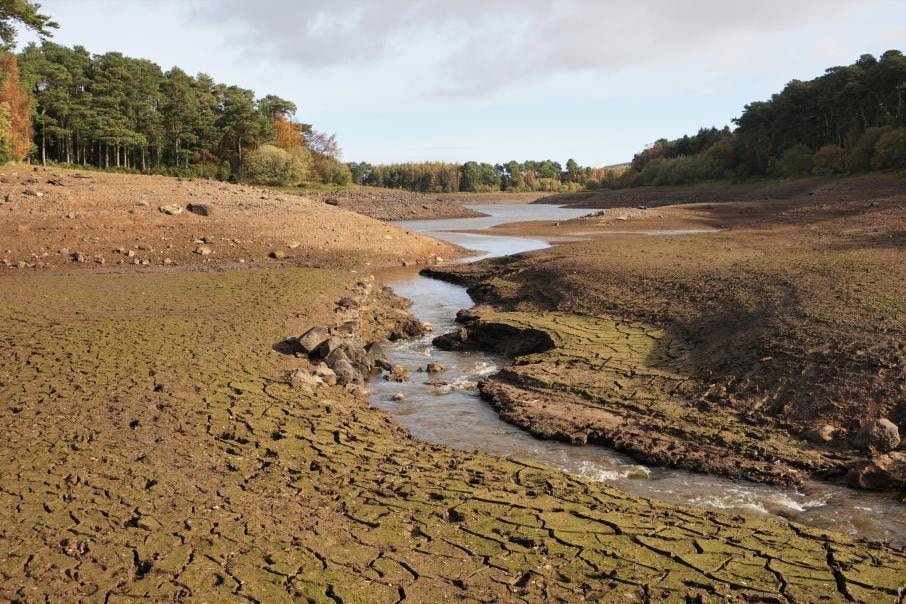
Brussels: Water rarely commands the political attention lavished on energy or defence, yet it is fast becoming one of the European Union’s most exposed strategic weaknesses. Droughts that empty reservoirs, floods that overwhelm cities, and pollution that renders supplies unusable now cost the bloc billions each year and threaten everything from farming to semiconductor plants that depend on vast volumes of clean water. The European Water Resilience Strategy, adopted by the Commission in June 2025, is Brussels’ attempt to treat water not as a local utility question but as a matter of continental security. A year on, the strategy is moving from declaration to delivery, and the gap between ambition and machinery is beginning to show.
The framework rests on three objectives: restoring the natural water cycle, building what officials call a water-smart economy, and guaranteeing universal access to clean water and sanitation. Around these sit concrete commitments. The Commission has pledged guidance to cut water consumption and improve efficiency across the EU by 10 percent by 2030, a target that sounds modest until one considers how little most member states currently measure their own usage. A water resilience forum, convening stakeholders every two years, is expected to hold its first meeting in the third quarter of 2026, and a dedicated research and innovation strategy is due by year end alongside a new knowledge community for water and marine sectors.
The legislative spine is already hardening. On 11 May 2026 a directive revising the lists of regulated pollutants in surface and groundwater entered into force, dragging three older laws, the Water Framework Directive, the Environmental Quality Standards Directive and the Groundwater Directive, into alignment. This is the unglamorous substance of resilience: updating which chemicals, including the persistent compounds often called forever chemicals, must be monitored and removed. It is also where the strategy’s teeth will ultimately be tested, because directives bind member states only to the extent that national governments transpose and enforce them.
That is the strategy’s central vulnerability. Water resilience is overwhelmingly a matter of implementation on the ground, leaky municipal networks, over-abstraction by agriculture, and planning decisions taken by regional authorities far from Brussels. The Commission can set targets, fund research and revise directives, but it cannot lay a pipe or ration irrigation. A 10 percent efficiency goal with no binding national allocation risks becoming an aspiration that busy capitals quietly ignore, much as earlier water rules were unevenly applied across the bloc. Critics note that the strategy leans heavily on voluntary forums and guidance rather than the hard obligations that reshaped, say, air quality.
Defenders argue that framing matters, and that recasting water as an economic and security asset rather than an environmental nicety is precisely what unlocks investment. A water-smart economy, reusing wastewater, cutting industrial consumption and pricing scarcity honestly, could become a competitive advantage for European technology and engineering firms, much as circular-economy rules did for recycling. There is also a hard geopolitical logic: a bloc that cannot secure its own water is more exposed to climate shocks and less able to host the water-hungry industries, from chips to data centres, it wants to attract.
The measure of the strategy will not be the elegance of its three objectives but whether the forum, the efficiency target and the revised directives translate into measurable change in how much water Europe wastes and how cleanly it manages what remains. The tools are being assembled in 2026; the political will to make them bite is not yet proven. For now, the European Union has done the easier part, naming water as a strategic priority. The harder part, turning a continent of fragmented national systems into something that can genuinely be called water-resilient, has barely begun.