August 9, 2026
LATEST
New EU Gas Market Rules Take Effect With Consumer SafeguardsDeforestation Regulation Holds Its December Deadline Despite CutsDigital Omnibus Delays Europe’s High-Risk AI Deadline to 2027Europe’s Schools Confront a Widening Basic Skills GapRule of Law Report Finds Progress but Trust Still LagsIRIS2 Gains 66 Satellites as Brussels Signs the Rollout DealNature Restoration Plans Come Due as Member States Race a DeadlineECB Rates Hold at 2.25 Percent as Frankfurt Waits on the DataEU Budget Talks Turn to Cohesion as Ireland Takes OverWildfire Response Stretches Europe’s Emergency Fleet ThinCan Europe’s Quantum Plan Match Its Big Ambitions?Armenia Edges West as Moscow’s Grip Slips AwayEurope Inherits the World’s Aid Bill It Cannot Fully PayAir Passenger Rights Get Their First Overhaul in Two DecadesErasmus Opens a 5 Billion Euro Round for Skills and MobilityCeuta Crisis Pushes the EU Toward Faster Migrant ReturnsBulky Parcels Face a Packaging Crackdown From August 12Can Europe Build Its Drone Wall Before 2030 Arrives?Indonesia’s Trade Deal With Europe Nears Its Final SignatureEurope Leans on Beijing to Keep Climate Talks Alive Before AntalyaNew EU Gas Market Rules Take Effect With Consumer SafeguardsDeforestation Regulation Holds Its December Deadline Despite CutsDigital Omnibus Delays Europe’s High-Risk AI Deadline to 2027Europe’s Schools Confront a Widening Basic Skills GapRule of Law Report Finds Progress but Trust Still LagsIRIS2 Gains 66 Satellites as Brussels Signs the Rollout DealNature Restoration Plans Come Due as Member States Race a DeadlineECB Rates Hold at 2.25 Percent as Frankfurt Waits on the DataEU Budget Talks Turn to Cohesion as Ireland Takes OverWildfire Response Stretches Europe’s Emergency Fleet ThinCan Europe’s Quantum Plan Match Its Big Ambitions?Armenia Edges West as Moscow’s Grip Slips AwayEurope Inherits the World’s Aid Bill It Cannot Fully PayAir Passenger Rights Get Their First Overhaul in Two DecadesErasmus Opens a 5 Billion Euro Round for Skills and MobilityCeuta Crisis Pushes the EU Toward Faster Migrant ReturnsBulky Parcels Face a Packaging Crackdown From August 12Can Europe Build Its Drone Wall Before 2030 Arrives?Indonesia’s Trade Deal With Europe Nears Its Final SignatureEurope Leans on Beijing to Keep Climate Talks Alive Before Antalya
August 9, 2026
LATEST
New EU Gas Market Rules Take Effect With Consumer SafeguardsDeforestation Regulation Holds Its December Deadline Despite CutsDigital Omnibus Delays Europe’s High-Risk AI Deadline to 2027Europe’s Schools Confront a Widening Basic Skills GapRule of Law Report Finds Progress but Trust Still LagsIRIS2 Gains 66 Satellites as Brussels Signs the Rollout DealNature Restoration Plans Come Due as Member States Race a DeadlineECB Rates Hold at 2.25 Percent as Frankfurt Waits on the DataEU Budget Talks Turn to Cohesion as Ireland Takes OverWildfire Response Stretches Europe’s Emergency Fleet ThinCan Europe’s Quantum Plan Match Its Big Ambitions?Armenia Edges West as Moscow’s Grip Slips AwayEurope Inherits the World’s Aid Bill It Cannot Fully PayAir Passenger Rights Get Their First Overhaul in Two DecadesErasmus Opens a 5 Billion Euro Round for Skills and MobilityCeuta Crisis Pushes the EU Toward Faster Migrant ReturnsBulky Parcels Face a Packaging Crackdown From August 12Can Europe Build Its Drone Wall Before 2030 Arrives?Indonesia’s Trade Deal With Europe Nears Its Final SignatureEurope Leans on Beijing to Keep Climate Talks Alive Before AntalyaNew EU Gas Market Rules Take Effect With Consumer SafeguardsDeforestation Regulation Holds Its December Deadline Despite CutsDigital Omnibus Delays Europe’s High-Risk AI Deadline to 2027Europe’s Schools Confront a Widening Basic Skills GapRule of Law Report Finds Progress but Trust Still LagsIRIS2 Gains 66 Satellites as Brussels Signs the Rollout DealNature Restoration Plans Come Due as Member States Race a DeadlineECB Rates Hold at 2.25 Percent as Frankfurt Waits on the DataEU Budget Talks Turn to Cohesion as Ireland Takes OverWildfire Response Stretches Europe’s Emergency Fleet ThinCan Europe’s Quantum Plan Match Its Big Ambitions?Armenia Edges West as Moscow’s Grip Slips AwayEurope Inherits the World’s Aid Bill It Cannot Fully PayAir Passenger Rights Get Their First Overhaul in Two DecadesErasmus Opens a 5 Billion Euro Round for Skills and MobilityCeuta Crisis Pushes the EU Toward Faster Migrant ReturnsBulky Parcels Face a Packaging Crackdown From August 12Can Europe Build Its Drone Wall Before 2030 Arrives?Indonesia’s Trade Deal With Europe Nears Its Final SignatureEurope Leans on Beijing to Keep Climate Talks Alive Before Antalya

Europe’s Drought Losses Outpace Its Water Defences

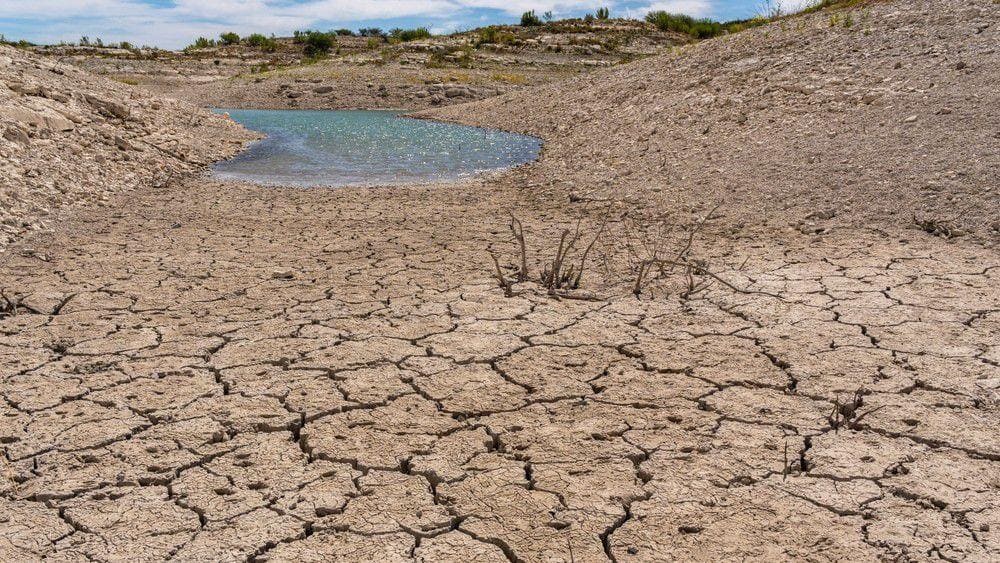
Brussels: A year after the European Commission unveiled its first Water Resilience Strategy, the figures behind it look more urgent than the political attention they command. Drought already affects roughly 4 percent of the Union’s territory in an average year, and the dry spell of 2022 alone inflicted an estimated €50 billion in economic damage, with Italy, Spain and France absorbing the heaviest losses. Those numbers describe a continent that still files water scarcity under “southern problem” even as the stress creeps steadily northward into Germany, the Low Countries and Central Europe.

The strategy, presented in June 2025, gathers more than fifty actions meant to restore the water cycle “from source to sea.” Its premise is less about new spending than about enforcing rules that already exist. Europe has accumulated a thick stack of water directives over three decades, yet implementation remains patchy: leaking distribution networks waste a sizeable share of treated supply in several member states, and abstraction limits are unevenly policed. The Commission’s wager is that better data and coordination, rather than a fresh wave of legislation, can squeeze more resilience from the legal architecture already on the books.

Much of 2026 is devoted to that plumbing. The Commission is launching a Water Resilience Stakeholder Platform, an informal expert group bringing together regional authorities, utilities and civil society to push priority actions forward. It plans to publish technical guidance on drought management plans and to develop common indicators for water scarcity, so that a “drought” in one capital means roughly the same thing in another. By the end of the year it intends to adopt a dedicated Water Resilience research and innovation strategy aimed at the fragmentation that has long scattered Europe’s water science across competing programmes.

The weakness sits where it usually does in EU environmental policy: the gap between ambition in Brussels and delivery in the field. The strategy leans heavily on voluntary coordination and member-state follow-through rather than binding water-efficiency targets with teeth. The Committee of the Regions has urged the Union to strengthen defences against both floods and droughts, a reminder that the same warming climate produces opposite extremes, sometimes in the same basin within months. Agriculture, which consumes the largest share of Europe’s freshwater, is barely reshaped by the document, and the politically sensitive question of pricing water to reflect scarcity is handled gingerly.

There is a credible counter-case. A framework that mobilises existing law, harmonises measurement and convenes the right actors can move faster than another multi-year legislative fight, and it avoids handing opponents a fresh target to dilute. Indicators and drought plans are unglamorous, but they are the scaffolding on which enforceable limits are eventually built. The Commission’s choice to mark World Desertification and Drought Day in June with calls for global land restoration suggests it sees water resilience as part of a wider security agenda rather than a niche environmental file.

Whether that framing survives contact with national budgets is the open question. Water infrastructure is expensive, its benefits are diffuse, and its failures are invisible until a reservoir runs dry or a river drops below the level barges need. The €50 billion lost in a single bad year is the kind of figure that should concentrate finance ministries, yet droughts rarely arrive with the political force of a flood that fills television screens. Europe’s task over the coming year is to convert a strategy rich in actions into measurable reductions in waste and exposure before the next severe summer tests it. The defences are being drawn up faster than before. The losses, for now, are still moving faster.