Podgorica: Candidate countries have spent two decades being told that accession is merit-based, and roughly the same two decades watching merit collide with unanimity. The Franco-German non-paper circulated before this summer’s summits offers a way around the collision that is more honest than previous attempts, and still leaves the collision in place.
The document, prepared ahead of the EU-Western Balkans summit in Montenegro on 5 June and the EU-Moldova summit on 22 June, proposes what Paris and Berlin call structured gradual integration. Candidates would receive concrete benefits before membership rather than only at the end of it: participation in parts of the single market, access to programmes and funds, seats as observers in institutions. The merit-based framework survives. What changes is the payout schedule.
The logic is sound and the evidence supports it. An accession process whose rewards arrive only at the finish line asks governments to absorb the political cost of reform in one parliament and hand the benefit to a successor two parliaments later. That is a poor incentive structure, and reform fatigue across the region is its predictable output. Front-loading benefits converts a distant promise into a series of near-term transactions, and near-term transactions are what politicians can actually campaign on.
The veto the paper does not touch
The weakness is equally clear. Opening and closing negotiating clusters, and the final accession treaty, still require every member state to agree. Any capital with a bilateral grievance retains a lever over the entire process, and recent years have demonstrated that such levers get pulled. Gradual integration hands candidates more of the Union without touching the mechanism that decides when they join it.
Analysts at Bruegel have made the sharper version of this argument. The treaties already permit qualified majority voting at several intermediate stages of the process, without amendment and without a convention. Member states have simply chosen not to use it. Declining to propose that shift is a political choice, not a legal constraint, and it suggests Paris and Berlin judged that a paper attacking vetoes would have died on arrival.
That judgement may be correct. It also creates a risk the non-paper does not address. A candidate that receives single market access, programme funding and observer status without a vote occupies a comfortable and permanent waiting room. Governments in that position may find the remaining reforms, which are typically the hardest ones touching courts, media and state capture, less urgent than before. Sequencing benefits ahead of accession only works if the benefits stay conditional and genuinely reversible, and reversing a benefit a population has come to rely on is politically expensive for both sides.
Three tests before December
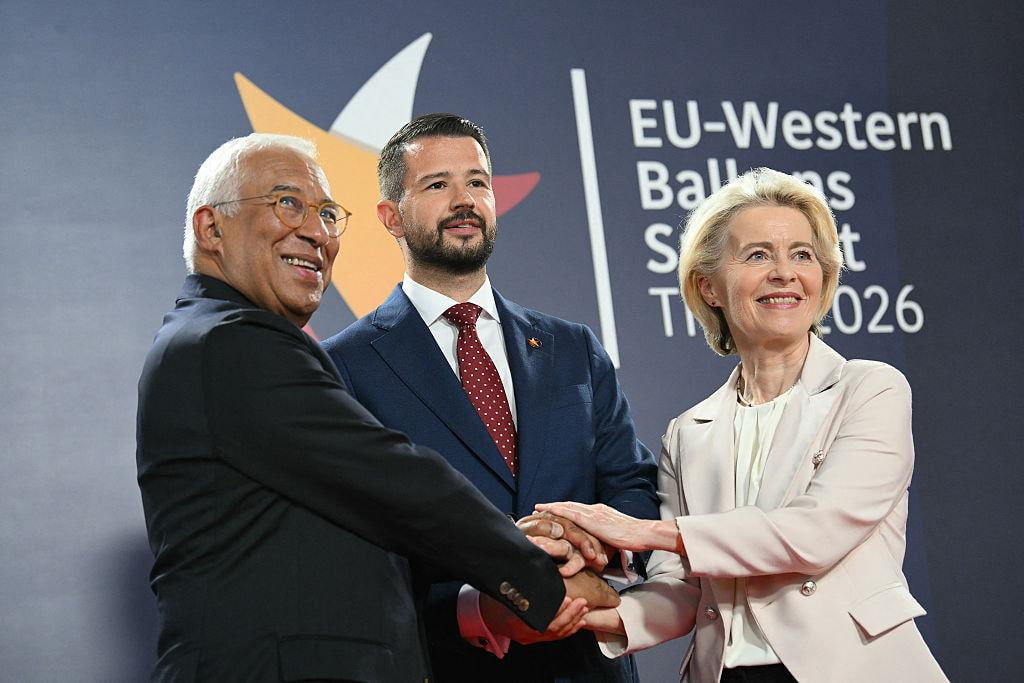
Montenegro remains the country most likely to test the theory, having advanced further through the chapters than anyone else in the region. The June summit framed enlargement as a strategic investment in security, which is the argument that has revived the file after years of drift.
Three things will show whether the revival is substantive. First, whether the enlargement package due later this year attaches gradual integration to specific, measurable benchmarks rather than to general progress language. Second, whether the December summit in Brussels produces a decision on qualified majority voting at intermediate stages, or another restatement of commitment. Third, whether the next budget framework contains money for pre-accession integration at a scale that matches the rhetoric, because single market access without cohesion-style support widens gaps rather than closing them.
Gradual integration is a real improvement on a process that had stopped rewarding effort. It is not a substitute for the institutional reform the Union keeps postponing, and candidates can read the difference between the two as well as anyone in Brussels can.