August 9, 2026
LATEST
New EU Gas Market Rules Take Effect With Consumer SafeguardsDeforestation Regulation Holds Its December Deadline Despite CutsDigital Omnibus Delays Europe’s High-Risk AI Deadline to 2027Europe’s Schools Confront a Widening Basic Skills GapRule of Law Report Finds Progress but Trust Still LagsIRIS2 Gains 66 Satellites as Brussels Signs the Rollout DealNature Restoration Plans Come Due as Member States Race a DeadlineECB Rates Hold at 2.25 Percent as Frankfurt Waits on the DataEU Budget Talks Turn to Cohesion as Ireland Takes OverWildfire Response Stretches Europe’s Emergency Fleet ThinCan Europe’s Quantum Plan Match Its Big Ambitions?Armenia Edges West as Moscow’s Grip Slips AwayEurope Inherits the World’s Aid Bill It Cannot Fully PayAir Passenger Rights Get Their First Overhaul in Two DecadesErasmus Opens a 5 Billion Euro Round for Skills and MobilityCeuta Crisis Pushes the EU Toward Faster Migrant ReturnsBulky Parcels Face a Packaging Crackdown From August 12Can Europe Build Its Drone Wall Before 2030 Arrives?Indonesia’s Trade Deal With Europe Nears Its Final SignatureEurope Leans on Beijing to Keep Climate Talks Alive Before AntalyaNew EU Gas Market Rules Take Effect With Consumer SafeguardsDeforestation Regulation Holds Its December Deadline Despite CutsDigital Omnibus Delays Europe’s High-Risk AI Deadline to 2027Europe’s Schools Confront a Widening Basic Skills GapRule of Law Report Finds Progress but Trust Still LagsIRIS2 Gains 66 Satellites as Brussels Signs the Rollout DealNature Restoration Plans Come Due as Member States Race a DeadlineECB Rates Hold at 2.25 Percent as Frankfurt Waits on the DataEU Budget Talks Turn to Cohesion as Ireland Takes OverWildfire Response Stretches Europe’s Emergency Fleet ThinCan Europe’s Quantum Plan Match Its Big Ambitions?Armenia Edges West as Moscow’s Grip Slips AwayEurope Inherits the World’s Aid Bill It Cannot Fully PayAir Passenger Rights Get Their First Overhaul in Two DecadesErasmus Opens a 5 Billion Euro Round for Skills and MobilityCeuta Crisis Pushes the EU Toward Faster Migrant ReturnsBulky Parcels Face a Packaging Crackdown From August 12Can Europe Build Its Drone Wall Before 2030 Arrives?Indonesia’s Trade Deal With Europe Nears Its Final SignatureEurope Leans on Beijing to Keep Climate Talks Alive Before Antalya
August 9, 2026
LATEST
New EU Gas Market Rules Take Effect With Consumer SafeguardsDeforestation Regulation Holds Its December Deadline Despite CutsDigital Omnibus Delays Europe’s High-Risk AI Deadline to 2027Europe’s Schools Confront a Widening Basic Skills GapRule of Law Report Finds Progress but Trust Still LagsIRIS2 Gains 66 Satellites as Brussels Signs the Rollout DealNature Restoration Plans Come Due as Member States Race a DeadlineECB Rates Hold at 2.25 Percent as Frankfurt Waits on the DataEU Budget Talks Turn to Cohesion as Ireland Takes OverWildfire Response Stretches Europe’s Emergency Fleet ThinCan Europe’s Quantum Plan Match Its Big Ambitions?Armenia Edges West as Moscow’s Grip Slips AwayEurope Inherits the World’s Aid Bill It Cannot Fully PayAir Passenger Rights Get Their First Overhaul in Two DecadesErasmus Opens a 5 Billion Euro Round for Skills and MobilityCeuta Crisis Pushes the EU Toward Faster Migrant ReturnsBulky Parcels Face a Packaging Crackdown From August 12Can Europe Build Its Drone Wall Before 2030 Arrives?Indonesia’s Trade Deal With Europe Nears Its Final SignatureEurope Leans on Beijing to Keep Climate Talks Alive Before AntalyaNew EU Gas Market Rules Take Effect With Consumer SafeguardsDeforestation Regulation Holds Its December Deadline Despite CutsDigital Omnibus Delays Europe’s High-Risk AI Deadline to 2027Europe’s Schools Confront a Widening Basic Skills GapRule of Law Report Finds Progress but Trust Still LagsIRIS2 Gains 66 Satellites as Brussels Signs the Rollout DealNature Restoration Plans Come Due as Member States Race a DeadlineECB Rates Hold at 2.25 Percent as Frankfurt Waits on the DataEU Budget Talks Turn to Cohesion as Ireland Takes OverWildfire Response Stretches Europe’s Emergency Fleet ThinCan Europe’s Quantum Plan Match Its Big Ambitions?Armenia Edges West as Moscow’s Grip Slips AwayEurope Inherits the World’s Aid Bill It Cannot Fully PayAir Passenger Rights Get Their First Overhaul in Two DecadesErasmus Opens a 5 Billion Euro Round for Skills and MobilityCeuta Crisis Pushes the EU Toward Faster Migrant ReturnsBulky Parcels Face a Packaging Crackdown From August 12Can Europe Build Its Drone Wall Before 2030 Arrives?Indonesia’s Trade Deal With Europe Nears Its Final SignatureEurope Leans on Beijing to Keep Climate Talks Alive Before Antalya

One In Three Europeans Already Lives With Water Stress

Brussels: Water has quietly become one of the European Union’s hardest structural problems, and the bloc is only now treating it as one. With the European Water Resilience Strategy moving from paper into delivery this month, the Commission is conceding what hydrologists have argued for a decade: that scarcity, pollution and flooding are no longer episodic shocks but permanent features of the European landscape.

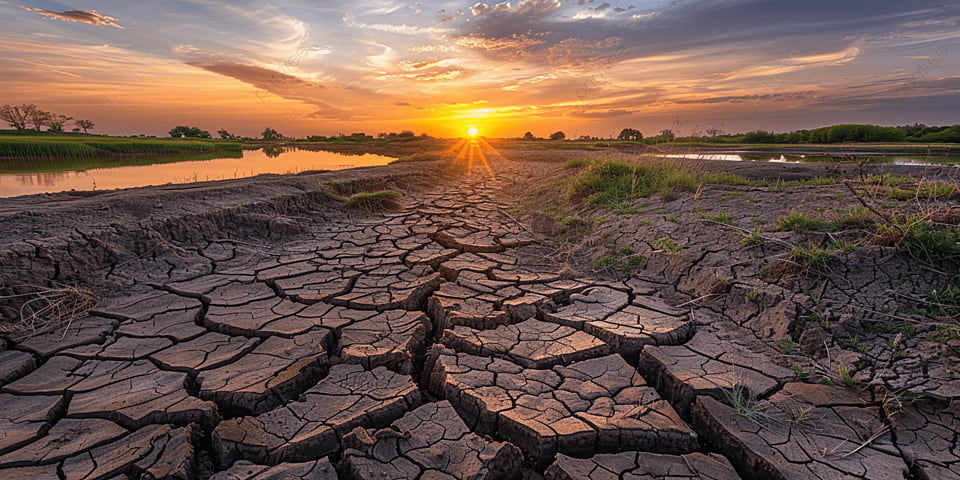
The headline number is sobering. By the Commission’s own accounting, roughly a third of EU territory is exposed to water stress for at least part of the year, a share that climbs sharply across southern member states during the summer months. The European Environment Agency has tracked a steady deterioration, with abstraction for agriculture, energy cooling and public supply outpacing the rate at which aquifers and rivers recover. Drought now competes with flooding as the continent’s costliest climate hazard, and the same regions frequently swing between the two within a single year.

The strategy’s central ambition is to build what officials call a water-smart economy. The most concrete pledge is a target to improve the Union’s water efficiency by at least ten percent by 2030, a figure that sounds modest until one considers how little Europe currently measures. Most member states lack granular data on who uses water, where it leaks and how much is lost before reaching a tap or a field. Distribution networks in several countries lose a fifth or more of treated water to leakage, an invisible drain that no efficiency target can address without first being quantified.

That measurement gap explains why the Commission has paired the strategy with institutional plumbing rather than headline legislation. In March it convened a Water Resilience Stakeholder Platform to bring utilities, farmers, industry and regional authorities into a standing dialogue, with the first full meeting expected later this year. A dedicated research and innovation strategy for water is due before the end of 2026, an attempt to stitch together the fragmented patchwork of national and Horizon-funded projects that currently duplicate effort and rarely scale.

The analytical weakness of the approach is also its political design. Rather than imposing new binding limits, the strategy leans heavily on enforcing legislation that already exists, from the Water Framework Directive to rules on urban wastewater and nitrates. Compliance with those instruments has been patchy for years, and several member states remain under infringement proceedings for failing to meet ecological status targets first set in 2000. Critics, including environmental groups, argue that a strategy without fresh legal teeth risks restating old goals in new language.

Yet there is a credible case that implementation, not legislation, is the binding constraint. The economic stakes are substantial. Sectors that depend directly on reliable water, including agriculture, manufacturing, energy and tourism, account for a large slice of European output, and a single severe drought can shave measurable points off regional growth. Reframing water as an input to competitiveness, rather than purely an environmental good, is the strategy’s most consequential intellectual move. It places hydrology alongside energy and critical raw materials in the bloc’s economic-security vocabulary.

The risks of underdelivery are equally clear. Targets expressed as Union-wide averages can mask acute local failures, and a ten percent efficiency gain means little to a basin that has already crossed its ecological threshold. Financing remains unresolved, with most investment expected to fall on municipalities and utilities whose tariffs rarely reflect the true cost of supply. Whether national capitals will raise water prices to fund renewal, an unpopular step almost everywhere, is the question the strategy carefully avoids answering.

For now, the achievement is one of framing. Europe has formally accepted that its water cycle is no longer self-correcting and has built the forums to coordinate a response. The harder work, turning measurement into investment and investment into resilience, begins only once the launch ceremonies end.