August 9, 2026
LATEST
New EU Gas Market Rules Take Effect With Consumer SafeguardsDeforestation Regulation Holds Its December Deadline Despite CutsDigital Omnibus Delays Europe’s High-Risk AI Deadline to 2027Europe’s Schools Confront a Widening Basic Skills GapRule of Law Report Finds Progress but Trust Still LagsIRIS2 Gains 66 Satellites as Brussels Signs the Rollout DealNature Restoration Plans Come Due as Member States Race a DeadlineECB Rates Hold at 2.25 Percent as Frankfurt Waits on the DataEU Budget Talks Turn to Cohesion as Ireland Takes OverWildfire Response Stretches Europe’s Emergency Fleet ThinCan Europe’s Quantum Plan Match Its Big Ambitions?Armenia Edges West as Moscow’s Grip Slips AwayEurope Inherits the World’s Aid Bill It Cannot Fully PayAir Passenger Rights Get Their First Overhaul in Two DecadesErasmus Opens a 5 Billion Euro Round for Skills and MobilityCeuta Crisis Pushes the EU Toward Faster Migrant ReturnsBulky Parcels Face a Packaging Crackdown From August 12Can Europe Build Its Drone Wall Before 2030 Arrives?Indonesia’s Trade Deal With Europe Nears Its Final SignatureEurope Leans on Beijing to Keep Climate Talks Alive Before AntalyaNew EU Gas Market Rules Take Effect With Consumer SafeguardsDeforestation Regulation Holds Its December Deadline Despite CutsDigital Omnibus Delays Europe’s High-Risk AI Deadline to 2027Europe’s Schools Confront a Widening Basic Skills GapRule of Law Report Finds Progress but Trust Still LagsIRIS2 Gains 66 Satellites as Brussels Signs the Rollout DealNature Restoration Plans Come Due as Member States Race a DeadlineECB Rates Hold at 2.25 Percent as Frankfurt Waits on the DataEU Budget Talks Turn to Cohesion as Ireland Takes OverWildfire Response Stretches Europe’s Emergency Fleet ThinCan Europe’s Quantum Plan Match Its Big Ambitions?Armenia Edges West as Moscow’s Grip Slips AwayEurope Inherits the World’s Aid Bill It Cannot Fully PayAir Passenger Rights Get Their First Overhaul in Two DecadesErasmus Opens a 5 Billion Euro Round for Skills and MobilityCeuta Crisis Pushes the EU Toward Faster Migrant ReturnsBulky Parcels Face a Packaging Crackdown From August 12Can Europe Build Its Drone Wall Before 2030 Arrives?Indonesia’s Trade Deal With Europe Nears Its Final SignatureEurope Leans on Beijing to Keep Climate Talks Alive Before Antalya
August 9, 2026
LATEST
New EU Gas Market Rules Take Effect With Consumer SafeguardsDeforestation Regulation Holds Its December Deadline Despite CutsDigital Omnibus Delays Europe’s High-Risk AI Deadline to 2027Europe’s Schools Confront a Widening Basic Skills GapRule of Law Report Finds Progress but Trust Still LagsIRIS2 Gains 66 Satellites as Brussels Signs the Rollout DealNature Restoration Plans Come Due as Member States Race a DeadlineECB Rates Hold at 2.25 Percent as Frankfurt Waits on the DataEU Budget Talks Turn to Cohesion as Ireland Takes OverWildfire Response Stretches Europe’s Emergency Fleet ThinCan Europe’s Quantum Plan Match Its Big Ambitions?Armenia Edges West as Moscow’s Grip Slips AwayEurope Inherits the World’s Aid Bill It Cannot Fully PayAir Passenger Rights Get Their First Overhaul in Two DecadesErasmus Opens a 5 Billion Euro Round for Skills and MobilityCeuta Crisis Pushes the EU Toward Faster Migrant ReturnsBulky Parcels Face a Packaging Crackdown From August 12Can Europe Build Its Drone Wall Before 2030 Arrives?Indonesia’s Trade Deal With Europe Nears Its Final SignatureEurope Leans on Beijing to Keep Climate Talks Alive Before AntalyaNew EU Gas Market Rules Take Effect With Consumer SafeguardsDeforestation Regulation Holds Its December Deadline Despite CutsDigital Omnibus Delays Europe’s High-Risk AI Deadline to 2027Europe’s Schools Confront a Widening Basic Skills GapRule of Law Report Finds Progress but Trust Still LagsIRIS2 Gains 66 Satellites as Brussels Signs the Rollout DealNature Restoration Plans Come Due as Member States Race a DeadlineECB Rates Hold at 2.25 Percent as Frankfurt Waits on the DataEU Budget Talks Turn to Cohesion as Ireland Takes OverWildfire Response Stretches Europe’s Emergency Fleet ThinCan Europe’s Quantum Plan Match Its Big Ambitions?Armenia Edges West as Moscow’s Grip Slips AwayEurope Inherits the World’s Aid Bill It Cannot Fully PayAir Passenger Rights Get Their First Overhaul in Two DecadesErasmus Opens a 5 Billion Euro Round for Skills and MobilityCeuta Crisis Pushes the EU Toward Faster Migrant ReturnsBulky Parcels Face a Packaging Crackdown From August 12Can Europe Build Its Drone Wall Before 2030 Arrives?Indonesia’s Trade Deal With Europe Nears Its Final SignatureEurope Leans on Beijing to Keep Climate Talks Alive Before Antalya

Platform Work Rules Face a Patchwork Transposition Deadline

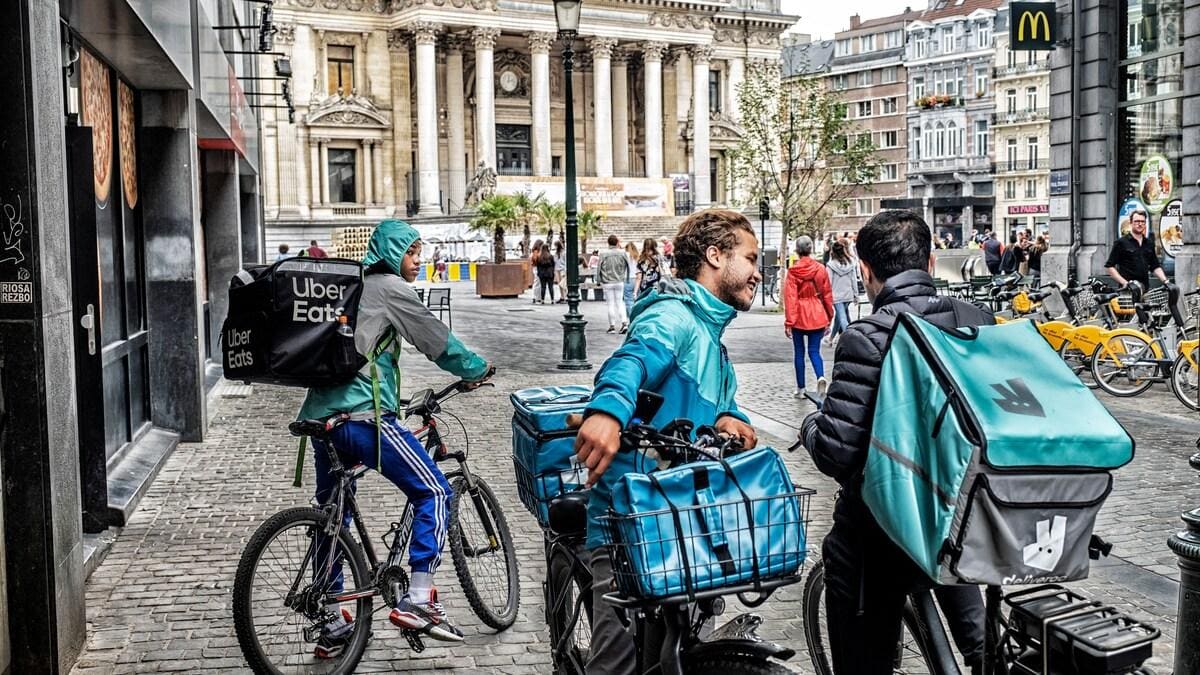
Brussels: The European Union’s Platform Work Directive is entering the phase where its ambitions collide with national politics. Member States have until 2 December 2026 to translate the directive into domestic law, and with roughly five months left, the shape of the emerging framework is anything but uniform. The directive itself is deliberately spare in places, leaving governments to decide how aggressively to reclassify couriers, drivers and micro-taskers who currently sit outside conventional employment. That flexibility, praised during negotiations as a way to accommodate very different labour markets, now looks likely to produce a continent of divergent rulebooks.

At the directive’s core is a rebuttable presumption of employment. Where facts point to control and direction by a platform, the working relationship is presumed to be a job rather than a freelance arrangement, and the burden falls on the platform to prove otherwise. In principle this reverses years of litigation in which individual workers had to establish their status one case at a time. In practice, the strength of the presumption will depend on how each government defines the triggering facts and how easily companies can discharge the burden. A presumption that is simple to rebut offers thin protection; one that is nearly impossible to rebut could sweep in genuine self-employed contractors.

Early movers illustrate the spread. France and Spain, both of which had already legislated on platform labour before the directive existed, are positioned to transpose with relatively strict rules and dedicated dispute-resolution bodies. Germany, Italy and the Netherlands are also expected to land on the firmer end of the spectrum. Other capitals, wary of raising costs for a sector that many consumers now treat as essential infrastructure, are likely to implement more narrowly. The result is a predictable but awkward outcome for the single market: a courier reclassified as an employee in Madrid may remain a contractor in a neighbouring country running the same app.

The algorithmic-management provisions add a second layer of complexity. The directive obliges platforms that use automated systems to monitor or make decisions about workers to disclose how those systems operate, to keep humans in the loop for consequential decisions such as suspensions, and to refrain from processing certain categories of personal data. These duties run alongside, and in some respects beyond, the obligations already imposed by the bloc’s artificial-intelligence rules. For firms that manage dispatch, pricing and discipline through opaque algorithms, the compliance question is not only whether a worker is an employee but how much of the decision engine must be exposed to scrutiny.

Economically, the stakes are substantial. Platform work has become a visible feature of European cities, absorbing new migrants, students and people seeking supplementary income. Reclassification promises minimum-wage floors, paid leave, and social-security contributions for people who have often had none. It also raises the marginal cost of every delivery and ride, and platforms warn that stricter regimes could shrink the number of available slots or push operators toward markets with lighter rules. Whether protection expands the quality of these jobs or simply reduces their quantity is an empirical question that the staggered transposition will, in effect, test across parallel national experiments.

For businesses operating across borders, the immediate consequence is a patchwork to be navigated rather than a single standard to be met. Companies will need to map their exposure country by country, anticipate reclassification in the strict jurisdictions, and prepare for an enforcement ramp that is unlikely to be synchronised. The Commission retains the power to pursue governments that transpose late or inadequately, but infringement proceedings move slowly and will not resolve the substantive divergence between capitals.

The deeper lesson of the platform-work file is that a directive is only the beginning of a policy, not its conclusion. Brussels has set a floor and a direction; the twenty-seven transposition decisions taken over the coming months will determine whether the bloc ends up with a coherent labour standard for the digital economy or twenty-seven variations on a theme.