August 9, 2026
LATEST
New EU Gas Market Rules Take Effect With Consumer SafeguardsDeforestation Regulation Holds Its December Deadline Despite CutsDigital Omnibus Delays Europe’s High-Risk AI Deadline to 2027Europe’s Schools Confront a Widening Basic Skills GapRule of Law Report Finds Progress but Trust Still LagsIRIS2 Gains 66 Satellites as Brussels Signs the Rollout DealNature Restoration Plans Come Due as Member States Race a DeadlineECB Rates Hold at 2.25 Percent as Frankfurt Waits on the DataEU Budget Talks Turn to Cohesion as Ireland Takes OverWildfire Response Stretches Europe’s Emergency Fleet ThinCan Europe’s Quantum Plan Match Its Big Ambitions?Armenia Edges West as Moscow’s Grip Slips AwayEurope Inherits the World’s Aid Bill It Cannot Fully PayAir Passenger Rights Get Their First Overhaul in Two DecadesErasmus Opens a 5 Billion Euro Round for Skills and MobilityCeuta Crisis Pushes the EU Toward Faster Migrant ReturnsBulky Parcels Face a Packaging Crackdown From August 12Can Europe Build Its Drone Wall Before 2030 Arrives?Indonesia’s Trade Deal With Europe Nears Its Final SignatureEurope Leans on Beijing to Keep Climate Talks Alive Before AntalyaNew EU Gas Market Rules Take Effect With Consumer SafeguardsDeforestation Regulation Holds Its December Deadline Despite CutsDigital Omnibus Delays Europe’s High-Risk AI Deadline to 2027Europe’s Schools Confront a Widening Basic Skills GapRule of Law Report Finds Progress but Trust Still LagsIRIS2 Gains 66 Satellites as Brussels Signs the Rollout DealNature Restoration Plans Come Due as Member States Race a DeadlineECB Rates Hold at 2.25 Percent as Frankfurt Waits on the DataEU Budget Talks Turn to Cohesion as Ireland Takes OverWildfire Response Stretches Europe’s Emergency Fleet ThinCan Europe’s Quantum Plan Match Its Big Ambitions?Armenia Edges West as Moscow’s Grip Slips AwayEurope Inherits the World’s Aid Bill It Cannot Fully PayAir Passenger Rights Get Their First Overhaul in Two DecadesErasmus Opens a 5 Billion Euro Round for Skills and MobilityCeuta Crisis Pushes the EU Toward Faster Migrant ReturnsBulky Parcels Face a Packaging Crackdown From August 12Can Europe Build Its Drone Wall Before 2030 Arrives?Indonesia’s Trade Deal With Europe Nears Its Final SignatureEurope Leans on Beijing to Keep Climate Talks Alive Before Antalya
August 9, 2026
LATEST
New EU Gas Market Rules Take Effect With Consumer SafeguardsDeforestation Regulation Holds Its December Deadline Despite CutsDigital Omnibus Delays Europe’s High-Risk AI Deadline to 2027Europe’s Schools Confront a Widening Basic Skills GapRule of Law Report Finds Progress but Trust Still LagsIRIS2 Gains 66 Satellites as Brussels Signs the Rollout DealNature Restoration Plans Come Due as Member States Race a DeadlineECB Rates Hold at 2.25 Percent as Frankfurt Waits on the DataEU Budget Talks Turn to Cohesion as Ireland Takes OverWildfire Response Stretches Europe’s Emergency Fleet ThinCan Europe’s Quantum Plan Match Its Big Ambitions?Armenia Edges West as Moscow’s Grip Slips AwayEurope Inherits the World’s Aid Bill It Cannot Fully PayAir Passenger Rights Get Their First Overhaul in Two DecadesErasmus Opens a 5 Billion Euro Round for Skills and MobilityCeuta Crisis Pushes the EU Toward Faster Migrant ReturnsBulky Parcels Face a Packaging Crackdown From August 12Can Europe Build Its Drone Wall Before 2030 Arrives?Indonesia’s Trade Deal With Europe Nears Its Final SignatureEurope Leans on Beijing to Keep Climate Talks Alive Before AntalyaNew EU Gas Market Rules Take Effect With Consumer SafeguardsDeforestation Regulation Holds Its December Deadline Despite CutsDigital Omnibus Delays Europe’s High-Risk AI Deadline to 2027Europe’s Schools Confront a Widening Basic Skills GapRule of Law Report Finds Progress but Trust Still LagsIRIS2 Gains 66 Satellites as Brussels Signs the Rollout DealNature Restoration Plans Come Due as Member States Race a DeadlineECB Rates Hold at 2.25 Percent as Frankfurt Waits on the DataEU Budget Talks Turn to Cohesion as Ireland Takes OverWildfire Response Stretches Europe’s Emergency Fleet ThinCan Europe’s Quantum Plan Match Its Big Ambitions?Armenia Edges West as Moscow’s Grip Slips AwayEurope Inherits the World’s Aid Bill It Cannot Fully PayAir Passenger Rights Get Their First Overhaul in Two DecadesErasmus Opens a 5 Billion Euro Round for Skills and MobilityCeuta Crisis Pushes the EU Toward Faster Migrant ReturnsBulky Parcels Face a Packaging Crackdown From August 12Can Europe Build Its Drone Wall Before 2030 Arrives?Indonesia’s Trade Deal With Europe Nears Its Final SignatureEurope Leans on Beijing to Keep Climate Talks Alive Before Antalya

Brussels Bets Enforcement Can Outlast Trump’s Tariff Threats

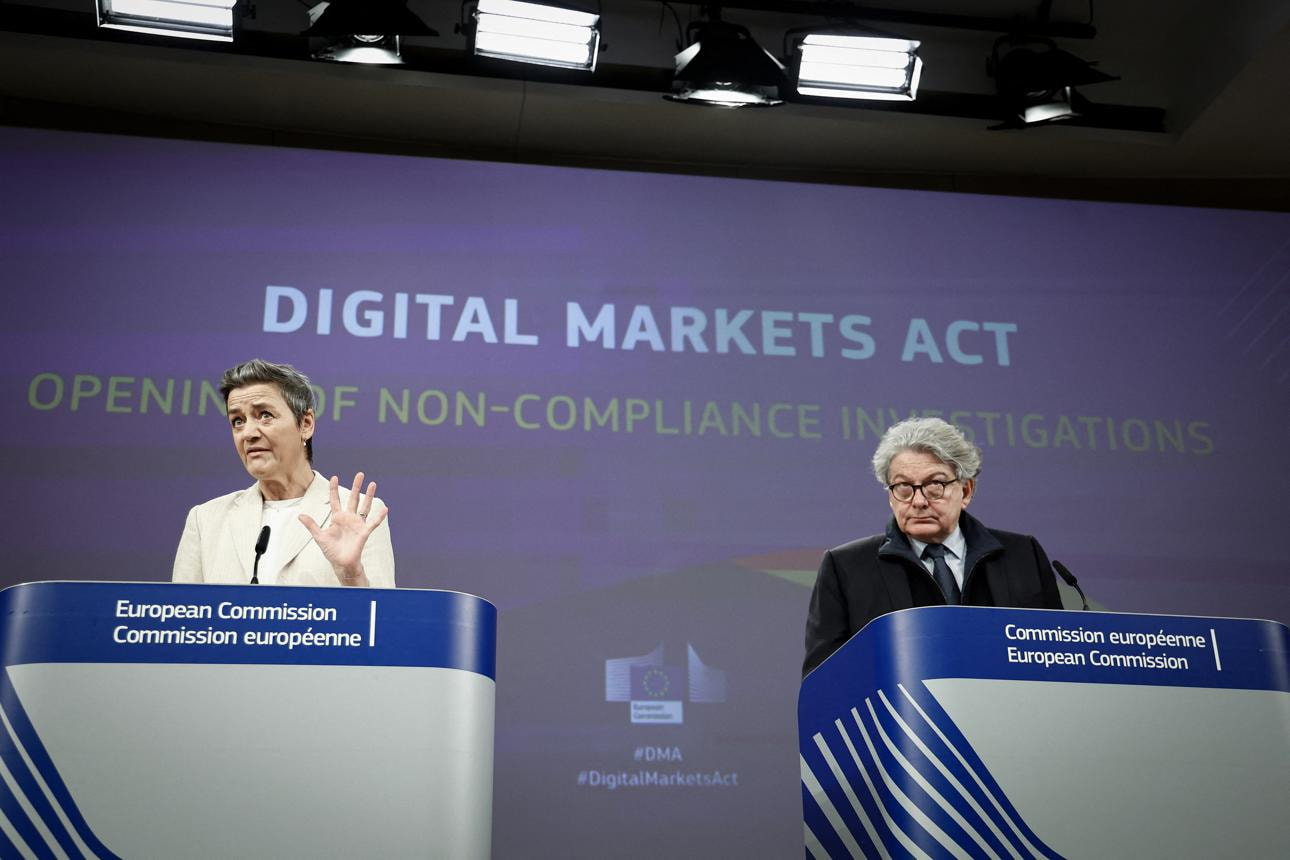
Brussels: For most of the past decade the European Union wrote rules for the digital economy faster than it enforced them. That sequence has now reversed. With the Digital Markets Act and Digital Services Act fully in force, the Commission has shifted from drafting landmark legislation to applying it, and the early penalties show what that change looks like in practice. Apple and Meta have been fined 500 million and 200 million euros respectively for failing to comply with the markets rulebook, and Google has been hit with a fine of nearly three billion euros over its conduct in advertising technology. The era of negotiation is giving way to an era of enforcement.

The instruments matter because they change the calculus for the companies. Traditional antitrust fines, however large, were often treated as a cost of doing business by firms with vast cash reserves. The Digital Markets Act carries penalties of up to 10 percent of global turnover for breaches, rising for repeat offences, and the power to impose behavioural and even structural remedies. That is a different order of threat, one aimed less at punishing past conduct than at forcing changes to how the largest platforms operate. The open investigations point in the same direction: scrutiny of whether Meta is restricting rival artificial-intelligence developers’ access to its messaging service, a review of how Google uses content to train its models, and a parallel look at competition in cloud computing. These are inquiries into the architecture of digital markets, not isolated infractions.

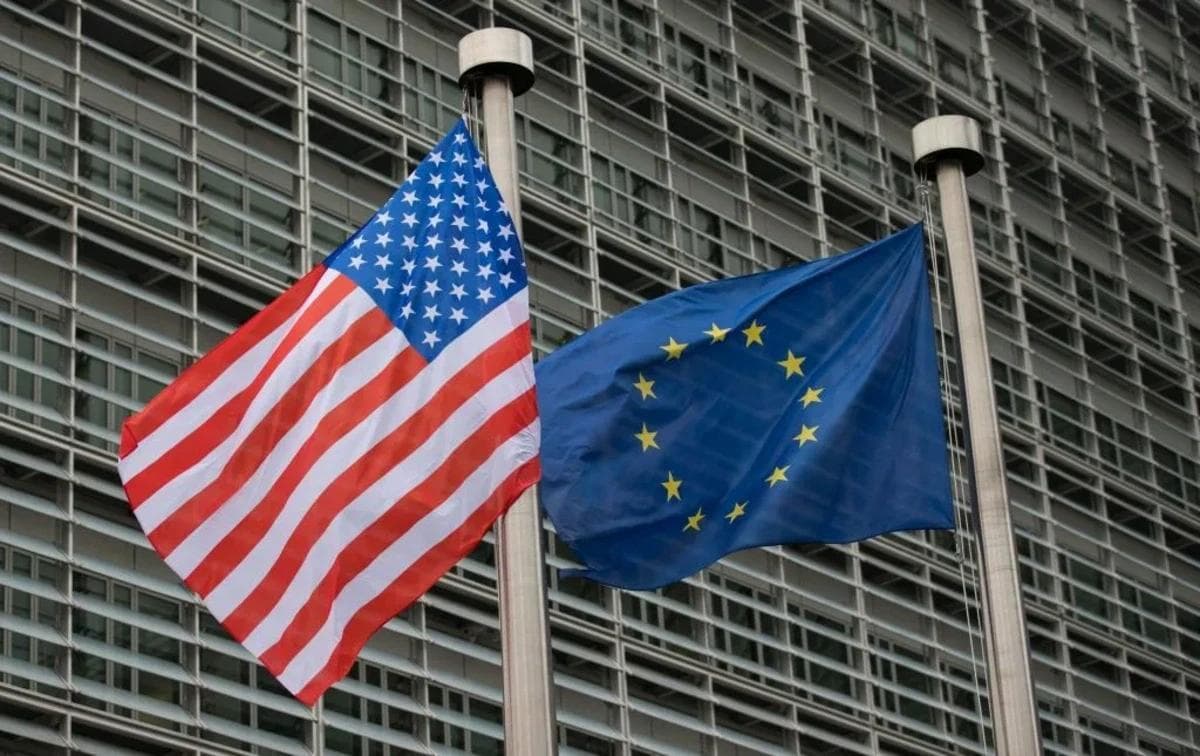
What complicates the picture is that enforcement no longer plays out on purely legal terrain. The targets are overwhelmingly American firms, and Washington has made clear it views the campaign as discriminatory. The Trump administration has warned of retaliatory tariffs, including levies aimed specifically at technology, if Brussels presses ahead. That turns a question of competition law into a question of transatlantic trade, and it puts the Commission in an awkward position. Backing off under pressure would gut the credibility of rules the bloc spent years constructing; pushing forward risks a tariff confrontation at a moment when Europe can ill afford one.

The Commission’s competition leadership has so far chosen continuity, defending what it calls a discreet but firm handling of the big cases and insisting that the rules on the books will be applied without regard to the nationality of the firm. The logic is straightforward. The legitimacy of the entire digital rulebook rests on the principle that it binds the dominant players, and the dominant players are American. To carve out exceptions under diplomatic pressure would be to concede that the law applies only when it is convenient, which would invite every large platform to treat compliance as negotiable.

Yet credibility cuts both ways, and this is where the analysis turns cautious. Fines are only as powerful as the behavioural change they produce. If penalties are levied, contested for years in the courts, and ultimately absorbed without altering how platforms treat rivals and users, then the bloc will have demonstrated resolve without achieving results. The harder test is not whether Brussels can impose a headline number but whether it can compel a gatekeeper to open its messaging service, change its advertising stack, or share data with competitors, and make those changes stick. Structural remedies are legally fraught and slow, and the companies have every incentive to litigate.

There is also a strategic counter-argument worth stating. Critics contend that aggressive enforcement, layered on top of dense regulation, risks deterring investment and entrenching the very incumbents it targets, because only the largest firms can absorb the compliance burden. Supporters reply that contestable markets are precisely what give smaller European challengers room to grow, and that predictable rules are an asset, not a deterrent. Both claims will be tested in the coming months. What is already clear is that the Union has decided the answer to a decade of writing rules is to enforce them, and that it is prepared to do so even when the bill arrives in the form of a trade dispute.