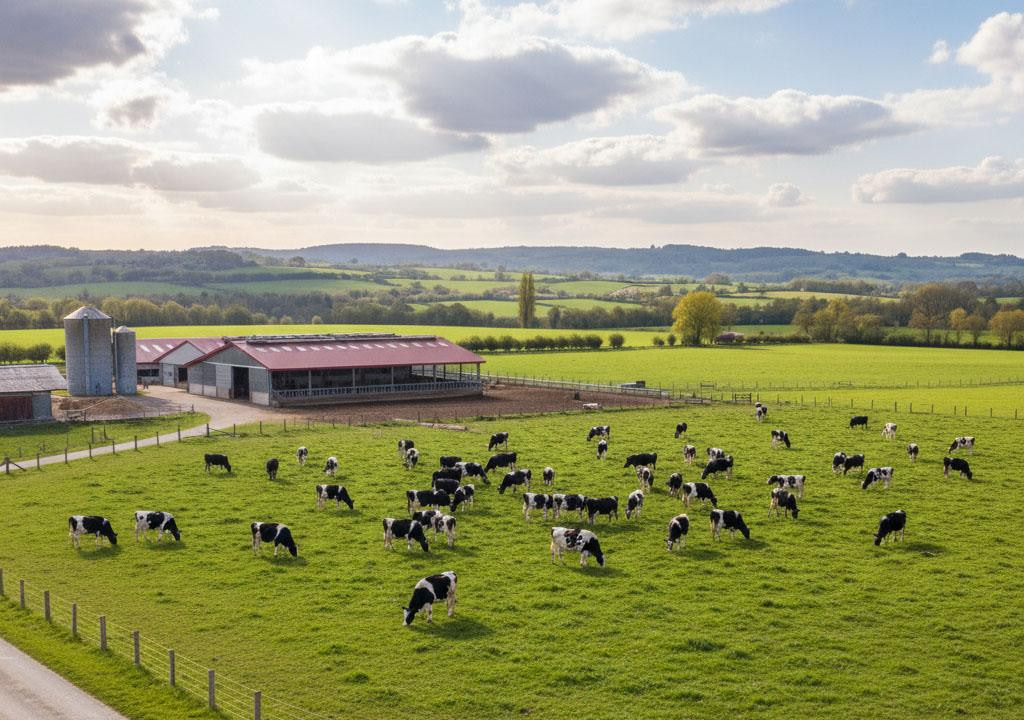
Brussels: The European Commission has unveiled its first-ever livestock strategy, and the document quietly rewrites the political frame around Europe’s cows, pigs and poultry. For a decade the sector featured in Brussels mostly as a climate liability. The new livestock strategy treats it instead as a strategic asset worth protecting, and that shift in language carries real budgetary and regulatory weight.
The numbers explain the urgency. Livestock generates roughly 400 billion euros in annual turnover, supplies about 40 percent of the Union’s agricultural added value, and employs some seven million people across four million farms. Yet margins have thinned, herds have shrunk, and younger farmers have walked away. The Commission argues that letting the sector drift would simply hand market share to producers abroad who face looser welfare and environmental rules.
Where the money goes
The strategy estimates the sector needs about 18 billion euros to modernise barns, cut emissions and meet tighter standards. Brussels does not promise that sum from its own budget. Instead it proposes to mobilise a mix of public and private money, strengthen farmers’ bargaining position in the supply chain, and open new markets for meat, dairy and eggs. A voluntary “European excellence” label would let producers charge more for high-standard goods, and the Commission wants processors and retailers to share the cost of the upgrade rather than pushing it entirely onto the farm gate.
That financing model is the plan’s biggest gamble. Promising private capital while naming no binding public envelope leaves farmers to wonder who actually pays for the transition. Critics from the environmental camp and the farm lobby, groups that rarely agree, both judged the plan short on firm commitments.
Methane by measurement, not mandate
The strategy’s treatment of methane marks its sharpest break with past thinking. Rather than imposing a herd-level emissions cap, the Commission proposes to measure emissions farm by farm in enough detail to reward producers who switch feed additives or breed lower-emitting animals. The headline goal is a 16 percent cut in agricultural greenhouse gases by 2040 against a 2025 baseline, achieved through methane reduction, more circular nutrient use and better animal welfare.
Measurement instead of mandate has obvious political appeal. It avoids the farmer protests that torched earlier green files, and it hands producers a carrot rather than a stick. The risk is that a target without an enforcement mechanism drifts, and that 2040 arrives with emissions barely moved. The European Environmental Bureau warned that the plan keeps the sector stuck in the past.
What the strategy gets right is its diagnosis. Europe cannot regulate its livestock farmers out of existence and then import the same products from countries with lower standards, because that would raise global emissions while hollowing out rural economies. Recasting the sector as something to defend, not merely to shrink, is a defensible starting point, and it aligns Europe’s food-security instincts with its climate ambitions instead of pitting the two against each other. Whether Brussels can attach real money and measurable outcomes to that framing will decide if the strategy becomes a turning point or another well-drafted document. For now the Commission has changed the conversation. It has not yet changed the balance sheet.