August 9, 2026
LATEST
Korean Weapons and EU Loans Now Bankroll Europe’s RearmamentNew EU Gas Market Rules Take Effect With Consumer SafeguardsDeforestation Regulation Holds Its December Deadline Despite CutsDigital Omnibus Delays Europe’s High-Risk AI Deadline to 2027Europe’s Schools Confront a Widening Basic Skills GapRule of Law Report Finds Progress but Trust Still LagsIRIS2 Gains 66 Satellites as Brussels Signs the Rollout DealNature Restoration Plans Come Due as Member States Race a DeadlineECB Rates Hold at 2.25 Percent as Frankfurt Waits on the DataEU Budget Talks Turn to Cohesion as Ireland Takes OverWildfire Response Stretches Europe’s Emergency Fleet ThinCan Europe’s Quantum Plan Match Its Big Ambitions?Armenia Edges West as Moscow’s Grip Slips AwayEurope Inherits the World’s Aid Bill It Cannot Fully PayAir Passenger Rights Get Their First Overhaul in Two DecadesErasmus Opens a 5 Billion Euro Round for Skills and MobilityCeuta Crisis Pushes the EU Toward Faster Migrant ReturnsBulky Parcels Face a Packaging Crackdown From August 12Can Europe Build Its Drone Wall Before 2030 Arrives?Indonesia’s Trade Deal With Europe Nears Its Final SignatureKorean Weapons and EU Loans Now Bankroll Europe’s RearmamentNew EU Gas Market Rules Take Effect With Consumer SafeguardsDeforestation Regulation Holds Its December Deadline Despite CutsDigital Omnibus Delays Europe’s High-Risk AI Deadline to 2027Europe’s Schools Confront a Widening Basic Skills GapRule of Law Report Finds Progress but Trust Still LagsIRIS2 Gains 66 Satellites as Brussels Signs the Rollout DealNature Restoration Plans Come Due as Member States Race a DeadlineECB Rates Hold at 2.25 Percent as Frankfurt Waits on the DataEU Budget Talks Turn to Cohesion as Ireland Takes OverWildfire Response Stretches Europe’s Emergency Fleet ThinCan Europe’s Quantum Plan Match Its Big Ambitions?Armenia Edges West as Moscow’s Grip Slips AwayEurope Inherits the World’s Aid Bill It Cannot Fully PayAir Passenger Rights Get Their First Overhaul in Two DecadesErasmus Opens a 5 Billion Euro Round for Skills and MobilityCeuta Crisis Pushes the EU Toward Faster Migrant ReturnsBulky Parcels Face a Packaging Crackdown From August 12Can Europe Build Its Drone Wall Before 2030 Arrives?Indonesia’s Trade Deal With Europe Nears Its Final Signature
August 9, 2026
LATEST
Korean Weapons and EU Loans Now Bankroll Europe’s RearmamentNew EU Gas Market Rules Take Effect With Consumer SafeguardsDeforestation Regulation Holds Its December Deadline Despite CutsDigital Omnibus Delays Europe’s High-Risk AI Deadline to 2027Europe’s Schools Confront a Widening Basic Skills GapRule of Law Report Finds Progress but Trust Still LagsIRIS2 Gains 66 Satellites as Brussels Signs the Rollout DealNature Restoration Plans Come Due as Member States Race a DeadlineECB Rates Hold at 2.25 Percent as Frankfurt Waits on the DataEU Budget Talks Turn to Cohesion as Ireland Takes OverWildfire Response Stretches Europe’s Emergency Fleet ThinCan Europe’s Quantum Plan Match Its Big Ambitions?Armenia Edges West as Moscow’s Grip Slips AwayEurope Inherits the World’s Aid Bill It Cannot Fully PayAir Passenger Rights Get Their First Overhaul in Two DecadesErasmus Opens a 5 Billion Euro Round for Skills and MobilityCeuta Crisis Pushes the EU Toward Faster Migrant ReturnsBulky Parcels Face a Packaging Crackdown From August 12Can Europe Build Its Drone Wall Before 2030 Arrives?Indonesia’s Trade Deal With Europe Nears Its Final SignatureKorean Weapons and EU Loans Now Bankroll Europe’s RearmamentNew EU Gas Market Rules Take Effect With Consumer SafeguardsDeforestation Regulation Holds Its December Deadline Despite CutsDigital Omnibus Delays Europe’s High-Risk AI Deadline to 2027Europe’s Schools Confront a Widening Basic Skills GapRule of Law Report Finds Progress but Trust Still LagsIRIS2 Gains 66 Satellites as Brussels Signs the Rollout DealNature Restoration Plans Come Due as Member States Race a DeadlineECB Rates Hold at 2.25 Percent as Frankfurt Waits on the DataEU Budget Talks Turn to Cohesion as Ireland Takes OverWildfire Response Stretches Europe’s Emergency Fleet ThinCan Europe’s Quantum Plan Match Its Big Ambitions?Armenia Edges West as Moscow’s Grip Slips AwayEurope Inherits the World’s Aid Bill It Cannot Fully PayAir Passenger Rights Get Their First Overhaul in Two DecadesErasmus Opens a 5 Billion Euro Round for Skills and MobilityCeuta Crisis Pushes the EU Toward Faster Migrant ReturnsBulky Parcels Face a Packaging Crackdown From August 12Can Europe Build Its Drone Wall Before 2030 Arrives?Indonesia’s Trade Deal With Europe Nears Its Final Signature

Wildfire Airlift Grows as Flames Chase Thousands From Home

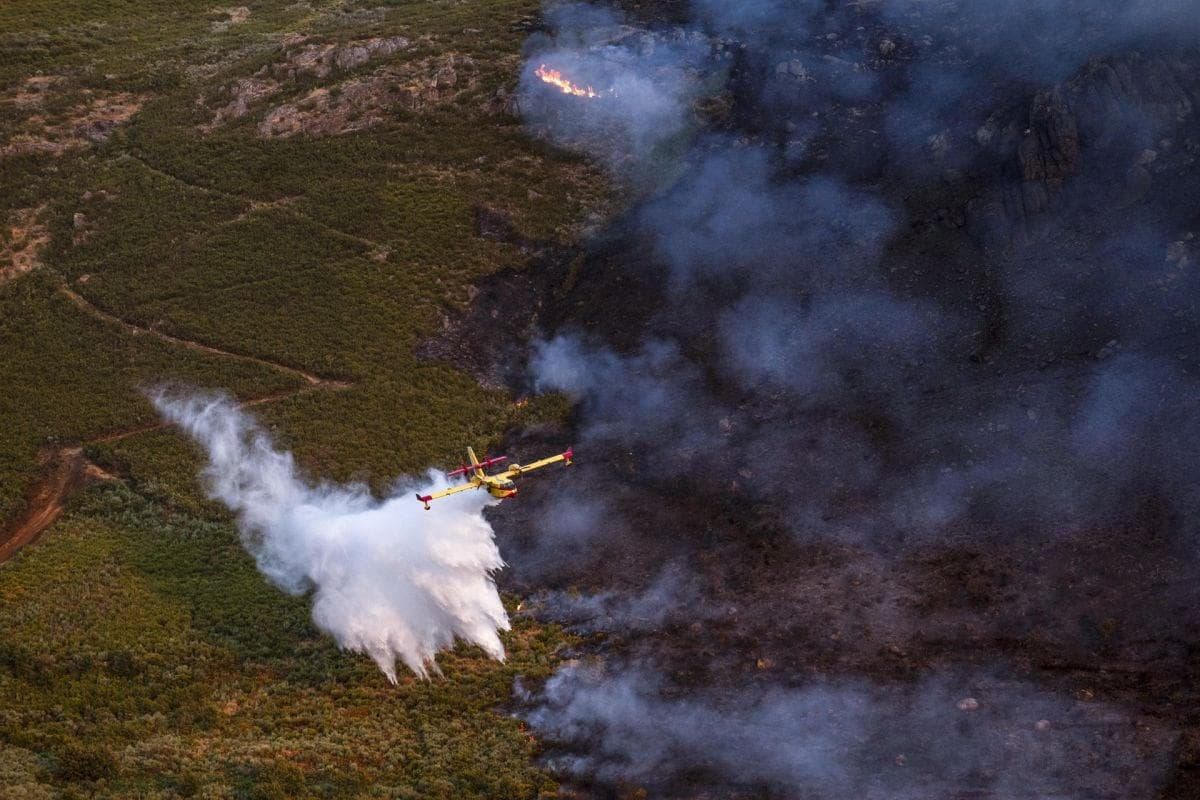
Marseille: A summer of relentless heat has turned the Union’s wildfire response into its largest aerial operation yet, as fires tore through southern France and Spain in late July and forced more than 300,000 people from their homes. The scale of the evacuation pushed both governments to lean on the EU Civil Protection Mechanism, the pooling arrangement that lets a stricken country call on aircraft and crews from across the bloc.

The answer came fast and from many directions. Seven planes and four helicopters reached France from Czechia, Croatia, Germany, Portugal, Slovakia, Sweden and Turkiye, while Spain received six planes from Greece, Italy and Turkiye alongside 134 personnel and 41 vehicles sent by Portugal. The Commission confirmed the deployments in a statement on 27 July, describing the effort as one of the season’s most demanding.

Much of the muscle came from rescEU, the standing reserve of firefighting aircraft that the Union funds and positions itself rather than borrowing case by case. The reserve exists precisely because national fleets, sized for a normal summer, buckle when several countries burn at once. When fires strike simultaneously around the Mediterranean, the pooled fleet becomes the difference between a contained blaze and an overwhelmed one.

Behind the headline flights sits a quieter piece of planning. From 1 July to 15 September the Union prepositions 777 firefighters from 14 countries, stationing them in high-risk regions before the flames arrive. Ground teams, vehicles and assessment units wait on standby so that help does not depend on a scramble once smoke is already on the horizon. Details of the latest missions sit on the Commission’s civil protection newsroom.

The pattern raises a harder question about permanence. A mechanism built for occasional disasters increasingly runs at full stretch every summer, and officials privately concede that a hotter climate has turned the exceptional into the routine. That strains budgets, wears out aircraft and tests the goodwill of countries that lend crews while watching their own forests.

Solidarity, too, has limits worth naming. A member state fighting its own fires cannot spare planes, so the system depends on disasters not peaking everywhere at once, an assumption that grows shakier each year. Expanding the permanent rescEU fleet would ease that dependence, yet every new aircraft competes with other climate spending for the same scarce funds.

For the families sheltering in gymnasiums along the coast, the debates in Brussels feel distant against the immediate relief of water dropping from the sky. The measure of this summer will be counted in hectares saved and lives spared, and in whether the Union treats the airlift as a recurring fixture or an emergency it keeps hoping not to repeat.