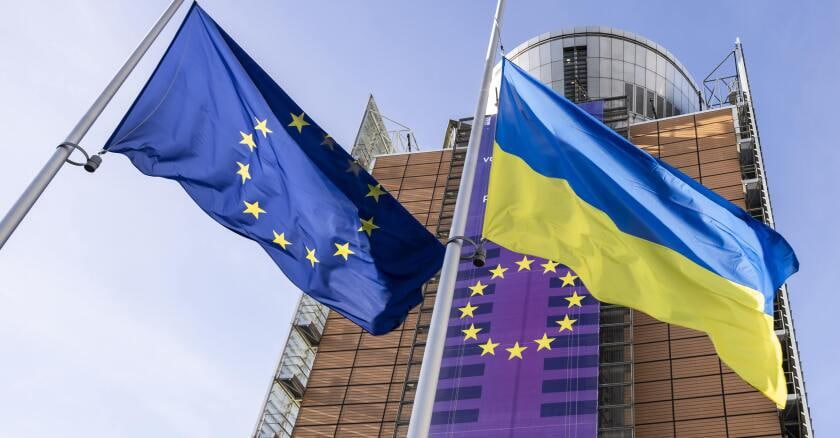
Brussels: Ukraine’s march toward the European Union has slowed to a crawl, and the roadblock sits in a single member state. Hungary, which lifted a 17-month veto on Kyiv’s candidacy in June, now refuses to green-light the next stages of the talks, leaving a process that once looked unstoppable stuck in procedural limbo.
The stall exposes a design flaw at the heart of EU enlargement. Every step of an accession bid requires unanimity, so one capital can freeze the ambitions of a candidate that has already met the political bar. Ukraine’s experience shows how even a reformed process can still fall hostage to national politics.
How the clusters work
The EU splits accession into 33 chapters grouped under six thematic clusters. The first, known as the fundamentals, covers the rule of law, human rights, and the judiciary. It opens first and closes last, because the bloc treats those standards as the foundation for everything else.
Ukraine and Moldova cleared that first hurdle in June, when the Council unanimously opened the fundamentals cluster. The moment carried real symbolism for a country fighting a war while it rewrites its statute books to align with EU law. Yet momentum stopped almost immediately.
At a July meeting of enlargement officials, Hungary declined to back the procedure to open Clusters 2 and 3 for Ukraine, even as it supported movement for Moldova. The split treatment made the political nature of the block plain. Kyiv had done the technical work, and Budapest simply withheld its consent.
A test of the union’s resolve
The episode revives a long-running debate about how the EU should handle awkward vetoes. The European Commission has pressed capitals to keep the two candidates on parallel tracks, arguing that Ukraine’s progress should not hinge on one government’s calculations. The European Parliament went further and adopted a resolution urging ways to override the block.
Overriding a veto, however, is easier to demand than to deliver. The treaties hand each member state a lever at the decisive moments of accession, and no amount of political frustration changes that legal reality. Reformers who want qualified-majority voting for intermediate steps face a wall of their own, since scrapping the veto itself requires unanimity.
For Kyiv, the delay carries a cost beyond wounded pride. Accession talks anchor the reforms that reshape Ukraine’s courts, its markets, and its fight against corruption. When the accession process stalls, so does the external pressure that keeps those changes on track through a punishing war.
The politics may yet shift again. Hungary’s negotiations over its own frozen funds give Brussels quiet leverage, and a deal on that file could loosen the grip on enlargement. Other capitals are also weighing whether to press Budapest harder or to wait for the domestic calculus to change.
What stays clear is the lesson Ukraine’s stalled bid teaches the whole union. Enlargement rewards patience and reform, but it also exposes candidates to the vetoes of governments they cannot control. Until the EU resolves that tension, every hopeful on its waiting list will watch Kyiv’s slow progress and wonder how long its own turn might take.